



在分布式系统中,一次请求可能被重复执行多次,导致数据不一致、资金损失等严重后果。本文将深入探讨Dubbo服务调用如何保证幂等性,从原理到实践,为你提供完整的解决方案。
文章目录
🎯 引言:一个价值百万的教训
先从一个真实的生产事故说起:
2020年,某电商平台在"双十一"大促期间,由于网络抖动和客户端重试机制,同一笔订单被重复扣款3次,导致数千名用户投诉,直接经济损失超过百万元💰。事后排查发现,根本原因是支付服务没有做好幂等性控制。
什么是幂等性?
幂等性(Idempotence) 是分布式系统中的核心概念,它指的是:无论一次操作执行多少次,其结果都应与执行一次相同。
举个生活中的例子:
- ✅ 幂等操作:按下电视遥控器的"关机"按钮,无论按多少次,电视都会关机
- ❌ 非幂等操作:用遥控器将音量调高5格,每按一次音量就增加5格
为什么微服务中幂等性如此重要?
在分布式系统中,网络不可靠是常态。Dubbo服务调用可能因为以下原因产生重复请求:
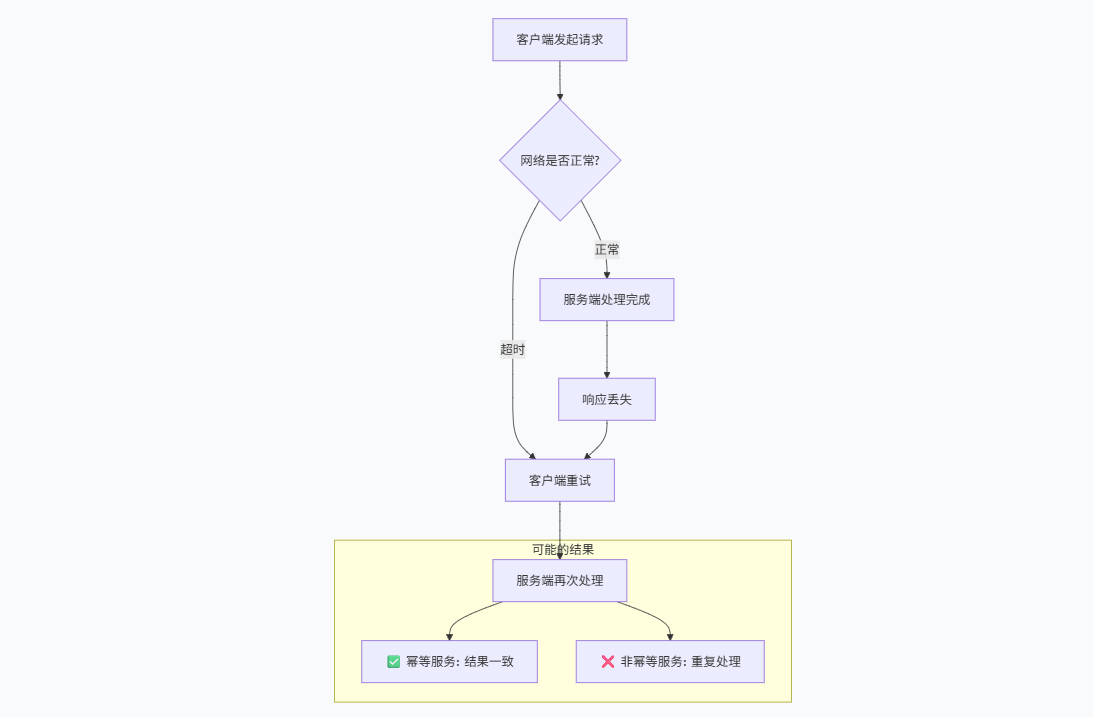
常见的重复请求场景:
| 场景 | 原因 | 影响 |
|---|---|---|
| 网络超时重试 | 客户端未收到响应,自动重试 | 数据重复处理 |
| 负载均衡重试 | Dubbo集群容错机制(如failover) | 同一请求发送到多个实例 |
| 消息队列重投 | 消息中间件重试机制 | 消费者重复消费 |
| 用户重复提交 | 用户连续点击提交按钮 | 业务逻辑重复执行 |
一、Dubbo幂等性基础:为什么需要特殊处理?🤔
1.1 Dubbo的默认行为分析
让我们先看看Dubbo在默认情况下的调用行为:
// 一个简单的Dubbo服务接口
public interface PaymentService {
    /**
     * 支付接口 - 默认情况下是非幂等的!
     * @param orderId 订单ID
     * @param amount 支付金额
     * @return 支付结果
     */
    PaymentResult pay(Long orderId, BigDecimal amount);
}

// Dubbo消费者调用示例
@Service
public class OrderService {

    @DubboReference(retries = 3) // 默认重试3次
    private PaymentService paymentService;

    public void processPayment(Long orderId, BigDecimal amount) {
        // 网络抖动时可能被多次调用!
        PaymentResult result = paymentService.pay(orderId, amount);
        // ...
    }
}
关键问题:当pay()方法因为网络超时被重试时,用户可能会被重复扣款!
1.2 Dubbo重试机制详解
Dubbo提供了丰富的集群容错模式,其中一些会导致重复调用:
@DubboReference(
    cluster = "failover", // 失败自动切换,默认值
    retries = 2,          // 重试2次
    timeout = 1000        // 1秒超时
)
private PaymentService paymentService;
Dubbo重试场景分析:
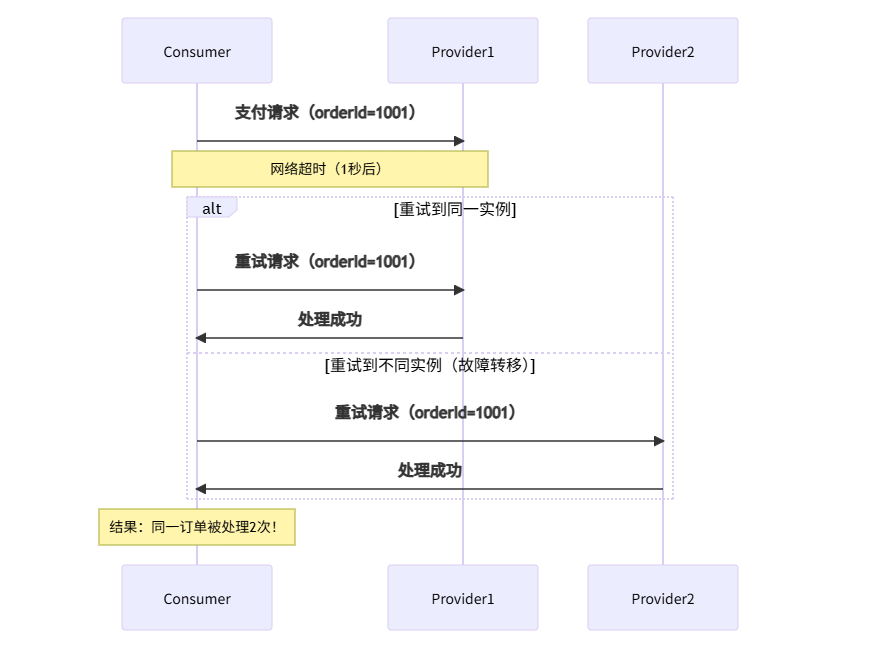
1.3 幂等性的数学原理
从数学角度理解幂等性:
对于函数 f(x),如果满足:f(f(x)) = f(x)
那么函数 f 是幂等的
在Dubbo服务中的体现:
// 幂等服务:多次调用结果相同
paymentService.deductBalance(userId, 100); // 余额减少100
paymentService.deductBalance(userId, 100); // 再次调用,余额不变

// 非幂等服务:多次调用结果累积
paymentService.addBalance(userId, 100); // 余额增加100
paymentService.addBalance(userId, 100); // 再次调用,余额变为200
二、幂等性解决方案全景图 🗺️
在深入Dubbo具体实现前,我们先了解完整的幂等性解决方案体系:
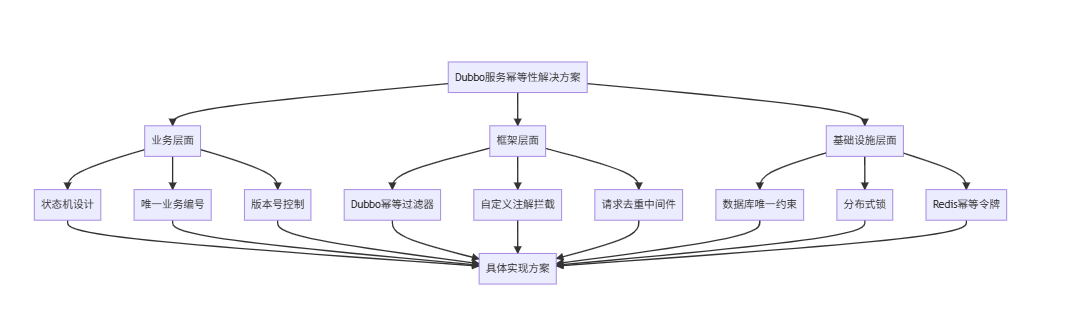
2.1 各类方案对比分析
| 方案类别 | 具体技术 | 优点 | 缺点 | 适用场景 |
|---|---|---|---|---|
| 数据库层 | 唯一索引、乐观锁 | 实现简单,可靠性高 | 数据库压力大,性能影响 | 数据强一致性要求 |
| 分布式锁 | Redis锁、ZooKeeper锁 | 保证强一致性,通用性强 | 实现复杂,可能死锁 | 并发控制,临界资源 |
| 令牌机制 | Redis token、雪花算法 | 轻量级,性能好 | 需要额外存储,有状态 | 高并发,短时操作 |
| 框架拦截 | Dubbo Filter、Spring AOP | 无侵入,透明化 | 需要框架支持,配置复杂 | 全局限流,统一处理 |
| 业务设计 | 状态机、版本号 | 业务语义清晰 | 业务耦合度高 | 复杂业务流程 |
三、基于业务设计的幂等方案 💡
3.1 状态机幂等设计
通过状态流转控制,确保同一状态的操作只执行一次:
// 订单状态定义
public enum OrderStatus {
    CREATED(1, "已创建"),
    PAID(2, "已支付"),
    SHIPPED(3, "已发货"),
    COMPLETED(4, "已完成"),
    CANCELED(5, "已取消");

    // 状态流转规则
    private static final Map<OrderStatus, Set<OrderStatus>> STATE_FLOW = new HashMap<>();

    static {
        STATE_FLOW.put(CREATED, Set.of(PAID, CANCELED));
        STATE_FLOW.put(PAID, Set.of(SHIPPED, CANCELED));
        STATE_FLOW.put(SHIPPED, Set.of(COMPLETED));
        STATE_FLOW.put(COMPLETED, Set.of());
        STATE_FLOW.put(CANCELED, Set.of());
    }

    public static boolean canTransfer(OrderStatus from, OrderStatus to) {
        return STATE_FLOW.getOrDefault(from, Collections.emptySet()).contains(to);
    }
}

// 幂等的订单服务实现
@Service
public class OrderServiceImpl implements OrderService {

    @Override
    @Transactional
    public boolean payOrder(Long orderId, BigDecimal amount) {
        Order order = orderDao.selectById(orderId);

        // 检查当前状态是否允许支付
        if (!OrderStatus.canTransfer(order.getStatus(), OrderStatus.PAID)) {
            // 已经是支付状态,直接返回成功(幂等)
            if (order.getStatus() == OrderStatus.PAID) {
                log.info("订单{}已经是支付状态,幂等返回", orderId);
                return true;
            }
            throw new IllegalStateException("订单当前状态不允许支付");
        }

        // 执行支付逻辑
        boolean paymentResult = paymentGateway.pay(orderId, amount);

        if (paymentResult) {
            // 更新订单状态为已支付
            int rows = orderDao.updateStatus(orderId, OrderStatus.CREATED, OrderStatus.PAID);
            if (rows == 0) {
                // 乐观锁更新失败,说明状态已被其他请求修改
                throw new ConcurrentUpdateException("订单状态并发修改");
            }
        }

        return paymentResult;
    }
}
状态机幂等优势:
- ✅ 业务语义清晰
- ✅ 天然支持幂等(同一状态操作返回相同结果)
- ✅ 容易实现并发控制
3.2 唯一业务编号方案
为每个操作分配全局唯一ID,通过数据库唯一约束保证幂等:
// 支付记录表设计
CREATE TABLE payment_record (
    id BIGINT PRIMARY KEY AUTO_INCREMENT,
    payment_no VARCHAR(64) NOT NULL UNIQUE COMMENT '支付流水号,唯一标识一次支付',
    order_id BIGINT NOT NULL COMMENT '订单ID',
    amount DECIMAL(10, 2) NOT NULL COMMENT '支付金额',
    status TINYINT NOT NULL COMMENT '支付状态',
    create_time DATETIME NOT NULL,
    update_time DATETIME NOT NULL,
    INDEX idx_order_id (order_id),
    INDEX idx_payment_no (payment_no)
) COMMENT='支付记录表';

// Dubbo服务实现
@DubboService
@Service
public class PaymentServiceImpl implements PaymentService {

    @Autowired
    private PaymentRecordDao paymentRecordDao;

    @Override
    @Transactional(rollbackFor = Exception.class)
    public PaymentResult pay(String paymentNo, Long orderId, BigDecimal amount) {
        // 1. 先尝试插入支付记录(利用唯一约束实现幂等)
        try {
            PaymentRecord record = new PaymentRecord();
            record.setPaymentNo(paymentNo);
            record.setOrderId(orderId);
            record.setAmount(amount);
            record.setStatus(PaymentStatus.PROCESSING.getCode());
            record.setCreateTime(new Date());
            record.setUpdateTime(new Date());

            paymentRecordDao.insert(record);
        } catch (DuplicateKeyException e) {
            // 2. 如果记录已存在,说明是重复请求
            PaymentRecord existingRecord = paymentRecordDao.selectByPaymentNo(paymentNo);
            log.info("重复支付请求,paymentNo={}, 返回已有结果", paymentNo);

            // 根据已有状态返回结果
            return buildResultFromRecord(existingRecord);
        }

        // 3. 执行实际的支付逻辑
        try {
            boolean success = thirdPartyPaymentGateway.execute(orderId, amount);

            // 4. 更新支付状态
            PaymentStatus status = success ? PaymentStatus.SUCCESS : PaymentStatus.FAILED;
            paymentRecordDao.updateStatus(paymentNo, status);

            return PaymentResult.builder()
                    .paymentNo(paymentNo)
                    .success(success)
                    .message(success ? "支付成功" : "支付失败")
                    .build();
        } catch (Exception e) {
            // 支付异常,更新为失败状态
            paymentRecordDao.updateStatus(paymentNo, PaymentStatus.FAILED);
            throw e;
        }
    }

    private PaymentResult buildResultFromRecord(PaymentRecord record) {
        boolean success = record.getStatus() == PaymentStatus.SUCCESS.getCode();
        return PaymentResult.builder()
                .paymentNo(record.getPaymentNo())
                .success(success)
                .message(success ? "支付成功(幂等返回)" : "支付失败(幂等返回)")
                .build();
    }
}
客户端调用示例:
@Service
public class OrderPaymentService {

    @DubboReference
    private PaymentService paymentService;

    /**
     * 生成唯一的支付流水号
     */
    private String generatePaymentNo(Long orderId) {
        // 使用订单ID + 时间戳 + 随机数保证唯一性
        return String.format("PAY-%d-%d-%04d",
            orderId,
            System.currentTimeMillis(),
            ThreadLocalRandom.current().nextInt(1000));
    }

    public PaymentResult processPayment(Long orderId, BigDecimal amount) {
        // 为每次支付请求生成唯一ID
        String paymentNo = generatePaymentNo(orderId);

        // 调用支付服务
        PaymentResult result = paymentService.pay(paymentNo, orderId, amount);

        // 如果支付失败且原因是重复请求,记录日志但不抛出异常
        if (!result.isSuccess() && "重复支付请求".equals(result.getMessage())) {
            log.warn("订单{}支付重复请求,paymentNo={}", orderId, paymentNo);
        }

        return result;
    }
}
四、基于Dubbo框架的幂等实现 ⚙️
4.1 Dubbo幂等过滤器(Filter)
Dubbo的Filter机制是实现幂等性的理想位置:
/**
 * Dubbo幂等过滤器
 * 通过请求ID和业务键实现幂等控制
 */
@Activate(group = {CommonConstants.PROVIDER, CommonConstants.CONSUMER})
public class IdempotentFilter implements Filter {

    private static final String HEADER_REQUEST_ID = "X-Request-ID";
    private static final String HEADER_BUSINESS_KEY = "X-Business-Key";

    @Autowired
    private IdempotentService idempotentService;

    @Override
    public Result invoke(Invoker<?> invoker, Invocation invocation) throws RpcException {
        // 1. 只在提供者端进行幂等校验
        if (!RpcContext.getContext().isProviderSide()) {
            return invoker.invoke(invocation);
        }

        // 2. 获取请求ID和业务键
        String requestId = RpcContext.getContext().getAttachment(HEADER_REQUEST_ID);
        String businessKey = RpcContext.getContext().getAttachment(HEADER_BUSINESS_KEY);

        // 3. 如果请求没有幂等标识,直接放行
        if (StringUtils.isBlank(requestId) || StringUtils.isBlank(businessKey)) {
            return invoker.invoke(invocation);
        }

        // 4. 生成幂等键:服务名 + 方法名 + 业务键
        String serviceName = invoker.getInterface().getName();
        String methodName = invocation.getMethodName();
        String idempotentKey = String.format("%s:%s:%s", serviceName, methodName, businessKey);

        // 5. 检查是否已处理过
        IdempotentRecord record = idempotentService.getRecord(idempotentKey, requestId);
        if (record != null) {
            // 已处理过,直接返回之前的结果
            log.info("幂等请求命中,key={}, requestId={}", idempotentKey, requestId);
            return deserializeResult(record.getResultData());
        }

        // 6. 执行前保存处理标记(防止并发)
        boolean acquired = idempotentService.acquireLock(idempotentKey, requestId);
        if (!acquired) {
            // 获取锁失败,说明正在处理中
            throw new RpcException("请求正在处理中,请稍后重试");
        }

        try {
            // 7. 执行业务逻辑
            Result result = invoker.invoke(invocation);

            // 8. 保存处理结果(无论成功还是异常)
            if (result.hasException()) {
                idempotentService.saveFailure(idempotentKey, requestId, result.getException());
            } else {
                idempotentService.saveSuccess(idempotentKey, requestId, serializeResult(result));
            }

            return result;
        } finally {
            // 9. 释放锁
            idempotentService.releaseLock(idempotentKey, requestId);
        }
    }

    private String serializeResult(Result result) {
        // 序列化结果对象
        try {
            return JSON.toJSONString(result.getValue());
        } catch (Exception e) {
            return null;
        }
    }

    private Result deserializeResult(String resultData) {
        // 反序列化结果对象
        if (StringUtils.isBlank(resultData)) {
            return new AppResponse();
        }
        try {
            Object value = JSON.parseObject(resultData, Object.class);
            return new AppResponse(value);
        } catch (Exception e) {
            return new AppResponse();
        }
    }
}
幂等服务实现:
@Service
public class RedisIdempotentServiceImpl implements IdempotentService {

    @Autowired
    private RedisTemplate<String, String> redisTemplate;

    // 请求结果保存时间(24小时)
    private static final long RESULT_EXPIRE_SECONDS = 24 * 60 * 60;

    // 处理锁超时时间(30秒)
    private static final long LOCK_EXPIRE_SECONDS = 30;

    @Override
    public IdempotentRecord getRecord(String idempotentKey, String requestId) {
        String recordKey = buildRecordKey(idempotentKey, requestId);
        String recordJson = redisTemplate.opsForValue().get(recordKey);

        if (StringUtils.isNotBlank(recordJson)) {
            return JSON.parseObject(recordJson, IdempotentRecord.class);
        }
        return null;
    }

    @Override
    public boolean acquireLock(String idempotentKey, String requestId) {
        String lockKey = buildLockKey(idempotentKey);

        // 使用SETNX实现分布式锁
        Boolean acquired = redisTemplate.opsForValue()
                .setIfAbsent(lockKey, requestId, LOCK_EXPIRE_SECONDS, TimeUnit.SECONDS);

        return Boolean.TRUE.equals(acquired);
    }

    @Override
    public void saveSuccess(String idempotentKey, String requestId, String resultData) {
        String recordKey = buildRecordKey(idempotentKey, requestId);

        IdempotentRecord record = new IdempotentRecord();
        record.setIdempotentKey(idempotentKey);
        record.setRequestId(requestId);
        record.setSuccess(true);
        record.setResultData(resultData);
        record.setProcessTime(new Date());

        String recordJson = JSON.toJSONString(record);
        redisTemplate.opsForValue().set(recordKey, recordJson, RESULT_EXPIRE_SECONDS, TimeUnit.SECONDS);

        // 清理锁
        String lockKey = buildLockKey(idempotentKey);
        redisTemplate.delete(lockKey);
    }

    @Override
    public void saveFailure(String idempotentKey, String requestId, Throwable exception) {
        String recordKey = buildRecordKey(idempotentKey, requestId);

        IdempotentRecord record = new IdempotentRecord();
        record.setIdempotentKey(idempotentKey);
        record.setRequestId(requestId);
        record.setSuccess(false);
        record.setErrorMessage(exception.getMessage());
        record.setProcessTime(new Date());

        String recordJson = JSON.toJSONString(record);
        redisTemplate.opsForValue().set(recordKey, recordJson, RESULT_EXPIRE_SECONDS, TimeUnit.SECONDS);

        // 清理锁
        String lockKey = buildLockKey(idempotentKey);
        redisTemplate.delete(lockKey);
    }

    @Override
    public void releaseLock(String idempotentKey, String requestId) {
        String lockKey = buildLockKey(idempotentKey);

        // 只有锁的持有者才能释放锁
        String lockHolder = redisTemplate.opsForValue().get(lockKey);
        if (requestId.equals(lockHolder)) {
            redisTemplate.delete(lockKey);
        }
    }

    private String buildRecordKey(String idempotentKey, String requestId) {
        return String.format("idempotent:record:%s:%s", idempotentKey, requestId);
    }

    private String buildLockKey(String idempotentKey) {
        return String.format("idempotent:lock:%s", idempotentKey);
    }
}
4.2 自定义幂等注解
更优雅的方式是通过注解实现幂等控制:
/**
 * 幂等注解
 * 标注在Dubbo服务方法上,自动实现幂等控制
 */
@Target(ElementType.METHOD)
@Retention(RetentionPolicy.RUNTIME)
@Documented
public @interface DubboIdempotent {

    /**
     * 幂等键的生成策略
     */
    KeyStrategy keyStrategy() default KeyStrategy.BUSINESS_KEY;

    /**
     * 业务键参数位置(从0开始)
     */
    int[] keyParams() default {0};

    /**
     * 结果保存时间(秒)
     */
    long expireSeconds() default 3600;

    /**
     * 错误时的重试策略
     */
    RetryStrategy retryStrategy() default RetryStrategy.FAIL_FAST;

    enum KeyStrategy {
        /**
         * 基于业务参数生成
         */
        BUSINESS_KEY,

        /**
         * 基于请求ID生成
         */
        REQUEST_ID,

        /**
         * 自定义生成器
         */
        CUSTOM
    }

    enum RetryStrategy {
        /**
         * 快速失败,直接抛出异常
         */
        FAIL_FAST,

        /**
         * 返回上次执行结果
         */
        RETURN_PREVIOUS,

        /**
         * 等待重试
         */
        WAIT_RETRY
    }
}

// 使用示例
@DubboService
public class OrderServiceImpl implements OrderService {

    @Override
    @DubboIdempotent(
        keyStrategy = DubboIdempotent.KeyStrategy.BUSINESS_KEY,
        keyParams = {0},  // 使用第一个参数(orderId)作为业务键
        expireSeconds = 7200,
        retryStrategy = DubboIdempotent.RetryStrategy.RETURN_PREVIOUS
    )
    public PaymentResult pay(Long orderId, BigDecimal amount) {
        // 业务逻辑
        return doPay(orderId, amount);
    }
}
注解处理器实现:
/**
 * 幂等注解的AOP处理器
 */
@Aspect
@Component
public class IdempotentAspect {

    @Autowired
    private IdempotentService idempotentService;

    @Autowired
    private IdempotentKeyGenerator keyGenerator;

    @Around("@annotation(idempotentAnnotation)")
    public Object around(ProceedingJoinPoint joinPoint, DubboIdempotent idempotentAnnotation) throws Throwable {
        // 1. 生成幂等键
        String idempotentKey = generateIdempotentKey(joinPoint, idempotentAnnotation);

        // 2. 获取请求ID(从Dubbo上下文或生成)
        String requestId = getRequestId();

        // 3. 检查是否已处理
        IdempotentRecord record = idempotentService.getRecord(idempotentKey, requestId);
        if (record != null) {
            return handleExistingRecord(record, idempotentAnnotation.retryStrategy());
        }

        // 4. 获取处理锁
        boolean lockAcquired = idempotentService.acquireLock(idempotentKey, requestId);
        if (!lockAcquired) {
            return handleLockNotAcquired(idempotentAnnotation.retryStrategy());
        }

        try {
            // 5. 执行业务逻辑
            Object result = joinPoint.proceed();

            // 6. 保存成功结果
            idempotentService.saveSuccess(idempotentKey, requestId, serializeResult(result));

            return result;
        } catch (Throwable throwable) {
            // 7. 保存失败结果
            idempotentService.saveFailure(idempotentKey, requestId, throwable);
            throw throwable;
        } finally {
            // 8. 释放锁
            idempotentService.releaseLock(idempotentKey, requestId);
        }
    }

    private String generateIdempotentKey(ProceedingJoinPoint joinPoint, DubboIdempotent annotation) {
        Method method = ((MethodSignature) joinPoint.getSignature()).getMethod();
        Object[] args = joinPoint.getArgs();

        switch (annotation.keyStrategy()) {
            case BUSINESS_KEY:
                return keyGenerator.generateBusinessKey(method, args, annotation.keyParams());
            case REQUEST_ID:
                return keyGenerator.generateRequestIdKey(method, getRequestId());
            case CUSTOM:
                return keyGenerator.generateCustomKey(method, args);
            default:
                return keyGenerator.generateDefaultKey(method, args);
        }
    }

    private String getRequestId() {
        // 从Dubbo上下文中获取请求ID
        String requestId = RpcContext.getContext().getAttachment("X-Request-ID");
        if (StringUtils.isBlank(requestId)) {
            // 生成新的请求ID
            requestId = UUID.randomUUID().toString();
            RpcContext.getContext().setAttachment("X-Request-ID", requestId);
        }
        return requestId;
    }

    private Object handleExistingRecord(IdempotentRecord record, DubboIdempotent.RetryStrategy retryStrategy) {
        switch (retryStrategy) {
            case RETURN_PREVIOUS:
                if (record.isSuccess()) {
                    return deserializeResult(record.getResultData());
                } else {
                    throw new IdempotentException("前次执行失败: " + record.getErrorMessage());
                }
            case FAIL_FAST:
                throw new IdempotentException("重复请求");
            case WAIT_RETRY:
                // 等待一段时间后重试
                try {
                    Thread.sleep(100);
                } catch (InterruptedException e) {
                    Thread.currentThread().interrupt();
                }
                return null; // 返回null让调用方重试
            default:
                throw new IdempotentException("重复请求");
        }
    }

    private Object handleLockNotAcquired(DubboIdempotent.RetryStrategy retryStrategy) {
        switch (retryStrategy) {
            case WAIT_RETRY:
                // 等待后抛出异常,让Dubbo重试机制处理
                throw new TemporaryException("服务繁忙,请重试");
            case FAIL_FAST:
            case RETURN_PREVIOUS:
            default:
                throw new IdempotentException("请求正在处理中");
        }
    }

    private String serializeResult(Object result) {
        try {
            return JSON.toJSONString(result);
        } catch (Exception e) {
            return null;
        }
    }

    private Object deserializeResult(String resultData) {
        try {
            return JSON.parseObject(resultData, Object.class);
        } catch (Exception e) {
            return null;
        }
    }
}
五、分布式环境下的高级幂等方案 🚀
5.1 基于Redis的分布式锁幂等
/**
 * 基于Redis分布式锁的幂等控制器
 */
@Component
public class RedisIdempotentController {

    @Autowired
    private RedisTemplate<String, String> redisTemplate;

    private static final String IDEMPOTENT_PREFIX = "idempotent:";
    private static final long DEFAULT_EXPIRE_TIME = 3600; // 1小时

    /**
     * 尝试获取幂等锁并执行操作
     */
    public <T> T executeWithIdempotent(String key, Supplier<T> supplier, Class<T> clazz) {
        return executeWithIdempotent(key, supplier, clazz, DEFAULT_EXPIRE_TIME);
    }

    public <T> T executeWithIdempotent(String key, Supplier<T> supplier,
                                      Class<T> clazz, long expireSeconds) {
        String redisKey = IDEMPOTENT_PREFIX + key;

        // 1. 尝试设置NX,如果已存在则直接返回
        Boolean setSuccess = redisTemplate.opsForValue()
                .setIfAbsent(redisKey, "processing", expireSeconds, TimeUnit.SECONDS);

        if (Boolean.FALSE.equals(setSuccess)) {
            // 2. 检查是否已处理完成
            String resultJson = redisTemplate.opsForValue().get(redisKey);
            if (!"processing".equals(resultJson)) {
                // 已处理完成,反序列化返回结果
                return deserializeResult(resultJson, clazz);
            }

            // 3. 还在处理中,根据策略处理
            return handleProcessing(key, clazz);
        }

        try {
            // 4. 执行业务逻辑
            T result = supplier.get();

            // 5. 保存处理结果
            String resultJson = serializeResult(result);
            redisTemplate.opsForValue().set(redisKey, resultJson, expireSeconds, TimeUnit.SECONDS);

            return result;
        } catch (Exception e) {
            // 6. 处理失败,删除key(允许重试)
            redisTemplate.delete(redisKey);
            throw e;
        }
    }

    /**
     * 支持重入的幂等锁
     */
    public <T> T executeWithReentrantIdempotent(String key, String requestId,
                                               Supplier<T> supplier, Class<T> clazz) {
        String redisKey = IDEMPOTENT_PREFIX + key;
        String lockKey = IDEMPOTENT_PREFIX + "lock:" + key;

        // 使用Hash结构存储,支持重入
        String currentRequestId = redisTemplate.<String, String>opsForHash()
                .get(redisKey, "requestId");

        if (requestId.equals(currentRequestId)) {
            // 同一个请求重入,直接返回缓存结果
            String resultJson = redisTemplate.<String, String>opsForHash()
                    .get(redisKey, "result");
            if (resultJson != null) {
                return deserializeResult(resultJson, clazz);
            }
        }

        // 尝试获取分布式锁
        boolean lockAcquired = tryAcquireLock(lockKey, requestId, 30);
        if (!lockAcquired) {
            throw new ConcurrentRequestException("请求正在处理中");
        }

        try {
            // 设置当前请求ID
            redisTemplate.<String, String>opsForHash()
                    .put(redisKey, "requestId", requestId);
            redisTemplate.expire(redisKey, DEFAULT_EXPIRE_TIME, TimeUnit.SECONDS);

            // 执行业务逻辑
            T result = supplier.get();

            // 保存结果
            String resultJson = serializeResult(result);
            redisTemplate.<String, String>opsForHash()
                    .put(redisKey, "result", resultJson);

            return result;
        } finally {
            // 释放锁
            releaseLock(lockKey, requestId);
        }
    }

    private boolean tryAcquireLock(String lockKey, String requestId, long expireSeconds) {
        String script =
            "if redis.call('exists', KEYS[1]) == 0 then " +
            "   redis.call('hset', KEYS[1], 'owner', ARGV[1]) " +
            "   redis.call('hincrby', KEYS[1], 'count', 1) " +
            "   redis.call('expire', KEYS[1], ARGV[2]) " +
            "   return 1 " +
            "elseif redis.call('hget', KEYS[1], 'owner') == ARGV[1] then " +
            "   redis.call('hincrby', KEYS[1], 'count', 1) " +
            "   redis.call('expire', KEYS[1], ARGV[2]) " +
            "   return 1 " +
            "else " +
            "   return 0 " +
            "end";

        Long result = redisTemplate.execute(
            new DefaultRedisScript<>(script, Long.class),
            Collections.singletonList(lockKey),
            requestId,
            String.valueOf(expireSeconds)
        );

        return result != null && result == 1;
    }

    private void releaseLock(String lockKey, String requestId) {
        String script =
            "if redis.call('hget', KEYS[1], 'owner') == ARGV[1] then " +
            "   local count = redis.call('hincrby', KEYS[1], 'count', -1) " +
            "   if count <= 0 then " +
            "       redis.call('del', KEYS[1]) " +
            "   end " +
            "   return 1 " +
            "else " +
            "   return 0 " +
            "end";

        redisTemplate.execute(
            new DefaultRedisScript<>(script, Long.class),
            Collections.singletonList(lockKey),
            requestId
        );
    }

    private String serializeResult(Object result) {
        try {
            return JSON.toJSONString(result);
        } catch (Exception e) {
            return null;
        }
    }

    private <T> T deserializeResult(String resultJson, Class<T> clazz) {
        try {
            return JSON.parseObject(resultJson, clazz);
        } catch (Exception e) {
            return null;
        }
    }

    private <T> T handleProcessing(String key, Class<T> clazz) {
        // 实现等待或快速失败策略
        // 这里实现等待策略,最多等待5秒
        for (int i = 0; i < 50; i++) {
            try {
                Thread.sleep(100);
            } catch (InterruptedException e) {
                Thread.currentThread().interrupt();
                throw new IdempotentException("等待中断");
            }

            String resultJson = redisTemplate.opsForValue()
                    .get(IDEMPOTENT_PREFIX + key);
            if (!"processing".equals(resultJson)) {
                return deserializeResult(resultJson, clazz);
            }
        }

        throw new IdempotentException("处理超时");
    }
}
5.2 数据库乐观锁幂等方案
/**
 * 基于数据库乐观锁的幂等实现
 */
@Service
public class OptimisticLockIdempotentService {

    @Autowired
    private JdbcTemplate jdbcTemplate;

    /**
     * 使用版本号实现乐观锁幂等
     */
    public boolean updateWithVersion(String tableName, Long id,
                                    Map<String, Object> updates,
                                    int expectedVersion) {
        // 构建SET子句
        StringBuilder setClause = new StringBuilder();
        List<Object> params = new ArrayList<>();

        for (Map.Entry<String, Object> entry : updates.entrySet()) {
            if (!"version".equals(entry.getKey())) {
                setClause.append(entry.getKey()).append(" = ?, ");
                params.add(entry.getValue());
            }
        }

        // 添加版本更新
        setClause.append("version = version + 1, update_time = NOW() ");

        // 构建WHERE条件
        String whereClause = "WHERE id = ? AND version = ? AND is_deleted = 0";
        params.add(id);
        params.add(expectedVersion);

        // 执行更新
        String sql = String.format("UPDATE %s SET %s %s", tableName, setClause, whereClause);
        int rows = jdbcTemplate.update(sql, params.toArray());

        return rows > 0;
    }

    /**
     * 使用状态机的乐观锁实现
     */
    public boolean updateOrderStatus(Long orderId, String fromStatus,
                                    String toStatus, String requestId) {
        String sql =
            "UPDATE orders " +
            "SET status = ?, " +
            "    update_time = NOW(), " +
            "    last_request_id = ? " +
            "WHERE id = ? " +
            "  AND status = ? " +
            "  AND (last_request_id IS NULL OR last_request_id != ?) " +
            "  AND is_deleted = 0";

        int rows = jdbcTemplate.update(sql,
            toStatus, requestId, orderId, fromStatus, requestId);

        if (rows > 0) {
            return true;
        } else {
            // 检查是否已经被当前请求处理过
            String checkSql =
                "SELECT COUNT(1) FROM orders " +
                "WHERE id = ? AND status = ? AND last_request_id = ?";
            Integer count = jdbcTemplate.queryForObject(
                checkSql, Integer.class, orderId, toStatus, requestId);

            return count != null && count > 0;
        }
    }

    /**
     * 插入幂等记录表
     */
    public boolean insertIdempotentRecord(String requestId, String businessType,
                                         String businessKey, String initStatus) {
        String sql =
            "INSERT INTO idempotent_record (" +
            "    request_id, business_type, business_key, " +
            "    status, create_time, update_time" +
            ") VALUES (?, ?, ?, ?, NOW(), NOW()) " +
            "ON DUPLICATE KEY UPDATE " +
            "    update_time = NOW()";

        try {
            int rows = jdbcTemplate.update(sql,
                requestId, businessType, businessKey, initStatus);
            return rows > 0;
        } catch (DuplicateKeyException e) {
            // 记录已存在,幂等返回成功
            return true;
        }
    }
}
六、Dubbo幂等性最佳实践 📋
6.1 不同场景下的方案选择
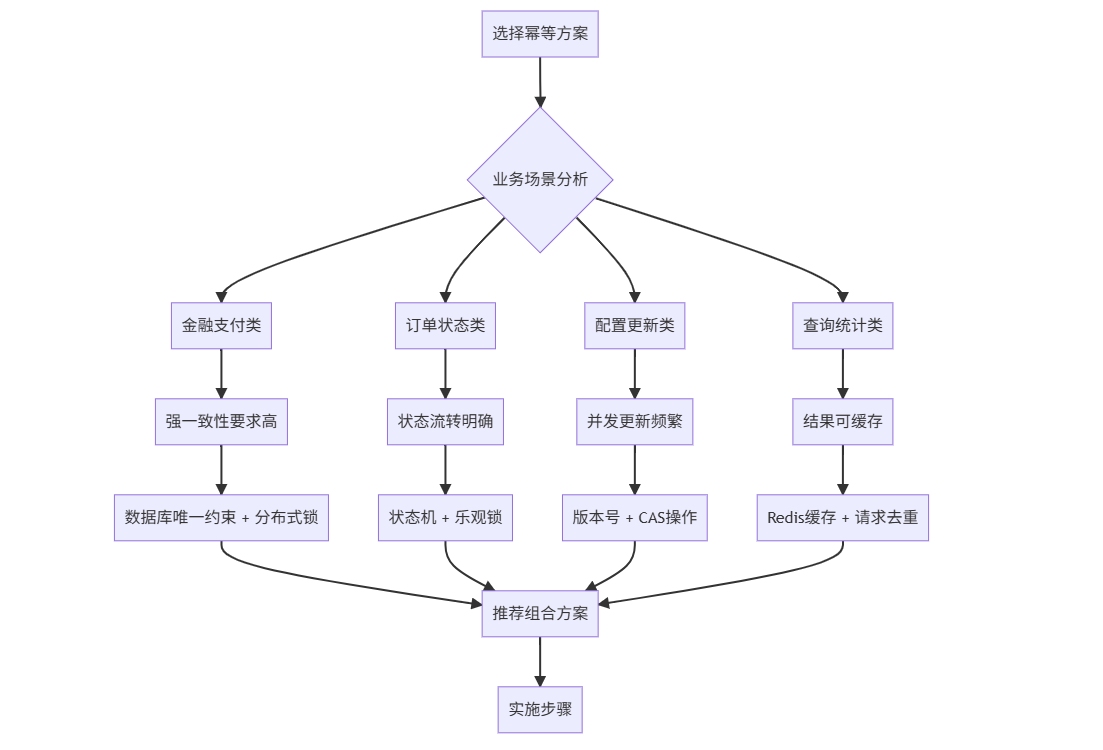
6.2 幂等性实施检查清单
| 检查项 | 是否完成 | 说明 |
|---|---|---|
| 业务分析 | ☐ | 识别出需要幂等性的服务和方法 |
| 方案设计 | ☐ | 选择适合业务场景的幂等方案 |
| 唯一键设计 | ☐ | 设计全局唯一的业务键或请求ID |
| 异常处理 | ☐ | 定义重复请求的响应策略 |
| 并发控制 | ☐ | 实现分布式锁或乐观锁 |
| 结果缓存 | ☐ | 缓存处理结果,支持快速返回 |
| 过期策略 | ☐ | 设置合理的缓存过期时间 |
| 监控告警 | ☐ | 监控幂等拦截情况和重复请求率 |
| 性能测试 | ☐ | 验证幂等方案对性能的影响 |
| 回滚方案 | ☐ | 准备方案失效时的应急措施 |
6.3 配置文件示例
# application-idempotent.yml
dubbo:
  idempotent:
    enabled: true
    # 默认策略配置
    default:
      enabled: true
      strategy: redis                # 使用Redis实现
      expire-time: 3600              # 结果缓存1小时
      lock-timeout: 30               # 锁超时30秒
      retry-strategy: return_previous # 重复请求返回上次结果

    # 服务级配置
    services:
      com.example.PaymentService:
        enabled: true
        methods:
          pay:
            strategy: database       # 支付使用数据库唯一约束
            key-generator: business  # 使用业务键
            key-params: [0, 1]       # 使用前两个参数生成键

          refund:
            strategy: redis_lock     # 退款使用Redis锁
            expire-time: 7200        # 缓存2小时

    # Redis配置
    redis:
      host: ${REDIS_HOST:localhost}
      port: ${REDIS_PORT:6379}
      database: 1                    # 使用专用数据库
      timeout: 2000
      # 集群配置
      cluster:
        nodes: ${REDIS_CLUSTER_NODES:}
      # 哨兵配置
      sentinel:
        master: ${REDIS_SENTINEL_MASTER:}
        nodes: ${REDIS_SENTINEL_NODES:}

    # 监控配置
    monitor:
      enabled: true
      # Prometheus指标
      metrics:
        enabled: true
        path: /actuator/idempotent-metrics
      # 日志记录
      logging:
        enabled: true
        level: INFO
6.4 监控与告警配置
/**
 * 幂等性监控指标
 */
@Component
public class IdempotentMetrics {

    private final MeterRegistry meterRegistry;

    // 计数器指标
    private final Counter totalRequests;
    private final Counter idempotentHits;
    private final Counter concurrentBlocks;
    private final Timer processingTimer;

    public IdempotentMetrics(MeterRegistry meterRegistry) {
        this.meterRegistry = meterRegistry;

        // 初始化指标
        this.totalRequests = Counter.builder("dubbo.idempotent.requests.total")
                .description("总请求数")
                .register(meterRegistry);

        this.idempotentHits = Counter.builder("dubbo.idempotent.hits.total")
                .description("幂等命中数")
                .register(meterRegistry);

        this.concurrentBlocks = Counter.builder("dubbo.idempotent.blocks.total")
                .description("并发阻塞数")
                .register(meterRegistry);

        this.processingTimer = Timer.builder("dubbo.idempotent.processing.time")
                .description("处理时间")
                .publishPercentiles(0.5, 0.95, 0.99)
                .register(meterRegistry);
    }

    public void recordRequest(String service, String method) {
        totalRequests.increment();

        // 添加标签
        meterRegistry.counter("dubbo.idempotent.requests",
                "service", service,
                "method", method).increment();
    }

    public void recordIdempotentHit(String service, String method) {
        idempotentHits.increment();

        meterRegistry.counter("dubbo.idempotent.hits",
                "service", service,
                "method", method).increment();
    }

    public void recordConcurrentBlock(String service, String method) {
        concurrentBlocks.increment();

        meterRegistry.counter("dubbo.idempotent.blocks",
                "service", service,
                "method", method).increment();
    }

    public Timer.Sample startProcessingTimer() {
        return Timer.start(meterRegistry);
    }

    public void stopProcessingTimer(Timer.Sample sample, String service, String method) {
        sample.stop(processingTimer);

        meterRegistry.timer("dubbo.idempotent.processing",
                "service", service,
                "method", method);
    }

    /**
     * 获取幂等命中率
     */
    public double getIdempotentHitRate() {
        double total = totalRequests.count();
        double hits = idempotentHits.count();

        return total > 0 ? hits / total : 0.0;
    }

    /**
     * 获取并发阻塞率
     */
    public double getConcurrentBlockRate() {
        double total = totalRequests.count();
        double blocks = concurrentBlocks.count();

        return total > 0 ? blocks / total : 0.0;
    }
}
七、常见问题与解决方案 ❓
7.1 幂等键冲突问题
问题:不同业务使用相同键导致冲突
解决方案:设计层级化的键结构
public class IdempotentKeyGenerator {

    /**
     * 生成层级化的幂等键
     */
    public String generateHierarchicalKey(String service, String method,
                                         String businessType, String businessKey) {
        // 格式:服务:方法:业务类型:业务键
        return String.format("%s:%s:%s:%s",
            sanitize(service),
            sanitize(method),
            sanitize(businessType),
            sanitize(businessKey));
    }

    /**
     * 支持通配符的键匹配
     */
    public boolean matchKey(String pattern, String key) {
        // 将*替换为正则表达式.*
        String regex = pattern.replace(".", "\\.").replace("*", ".*");
        return key.matches(regex);
    }

    /**
     * 生成带时间窗口的键(防止历史数据影响)
     */
    public String generateTimeWindowKey(String baseKey, long windowMinutes) {
        long windowIndex = System.currentTimeMillis() / (windowMinutes * 60 * 1000);
        return String.format("%s:window:%d", baseKey, windowIndex);
    }

    private String sanitize(String input) {
        if (input == null) return "";
        // 替换可能引起问题的字符
        return input.replace(":", "_").replace("*", "_").replace("?", "_");
    }
}
7.2 分布式环境下的时钟同步问题
问题:不同服务器时钟不同步,导致时间相关逻辑出错
解决方案:使用逻辑时钟或统一时间源
public class DistributedTimeService {

    @Autowired
    private RedisTemplate<String, String> redisTemplate;

    /**
     * 获取分布式递增ID(替代时间戳)
     */
    public long getDistributedId(String businessType) {
        String key = "distributed:id:" + businessType;
        Long id = redisTemplate.opsForValue().increment(key);
        return id != null ? id : 0L;
    }

    /**
     * 获取逻辑时间戳(避免时钟回拨)
     */
    public long getLogicalTimestamp(String instanceId) {
        String key = "logical:timestamp:" + instanceId;
        String current = redisTemplate.opsForValue().get(key);

        long now = System.currentTimeMillis();
        long logicalTime = current != null ? Long.parseLong(current) : now;

        // 确保逻辑时间单调递增
        if (now > logicalTime) {
            logicalTime = now;
        } else {
            logicalTime++; // 如果当前时间小于逻辑时间,递增逻辑时间
        }

        redisTemplate.opsForValue().set(key, String.valueOf(logicalTime));
        return logicalTime;
    }

    /**
     * 使用Redis的时间(相对准确)
     */
    public long getRedisTime() {
        try {
            // Redis TIME命令返回当前服务器时间
            List<Object> time = redisTemplate.execute(
                (RedisCallback<List<Object>>) connection ->
                    connection.serverCommands().time()
            );

            if (time != null && time.size() >= 2) {
                long seconds = Long.parseLong(time.get(0).toString());
                long microSeconds = Long.parseLong(time.get(1).toString());
                return seconds * 1000 + microSeconds / 1000;
            }
        } catch (Exception e) {
            // 降级到本地时间
            log.warn("获取Redis时间失败,使用本地时间", e);
        }

        return System.currentTimeMillis();
    }
}
7.3 幂等结果反序列化问题
问题:缓存的结果无法正确反序列化
解决方案:使用类型安全的序列化方案
public class TypeSafeSerializer {

    private static final String TYPE_INFO_KEY = "__type__";

    /**
     * 带类型信息的序列化
     */
    public String serializeWithType(Object obj) {
        if (obj == null) return null;

        Map<String, Object> data = new HashMap<>();
        data.put(TYPE_INFO_KEY, obj.getClass().getName());
        data.put("data", obj);

        return JSON.toJSONString(data);
    }

    /**
     * 带类型信息的反序列化
     */
    @SuppressWarnings("unchecked")
    public <T> T deserializeWithType(String json) {
        if (json == null) return null;

        try {
            Map<String, Object> data = JSON.parseObject(json, Map.class);
            String className = (String) data.get(TYPE_INFO_KEY);
            Object dataObj = data.get("data");

            if (className != null && dataObj != null) {
                Class<?> clazz = Class.forName(className);
                String dataJson = JSON.toJSONString(dataObj);
                return (T) JSON.parseObject(dataJson, clazz);
            }
        } catch (Exception e) {
            log.error("反序列化失败: {}", json, e);
        }

        return null;
    }

    /**
     * 兼容性反序列化(尝试多种类型)
     */
    public Object deserializeCompatible(String json, Class<?>... candidateTypes) {
        if (candidateTypes == null || candidateTypes.length == 0) {
            return JSON.parseObject(json, Object.class);
        }

        for (Class<?> clazz : candidateTypes) {
            try {
                return JSON.parseObject(json, clazz);
            } catch (Exception e) {
                // 尝试下一个类型
            }
        }

        // 都失败,返回Map
        return JSON.parseObject(json, Map.class);
    }
}
八、总结与展望 🎓
8.1 核心要点回顾
通过本文的详细讲解,我们掌握了Dubbo服务调用幂等性的完整解决方案:
✅ 理解幂等性:无论操作执行多少次,结果都与执行一次相同
✅ 识别幂等场景:支付、下单、状态变更等关键业务
✅ 掌握多种方案:数据库唯一约束、分布式锁、状态机、版本控制
✅ 实现Dubbo集成:通过Filter、注解、AOP等方式无缝集成
✅ 处理复杂情况:分布式环境、时钟同步、反序列化等
✅ 建立监控体系:指标收集、告警设置、性能分析
8.2 幂等性决策矩阵
| 业务特征 | 推荐方案 | 技术实现 | 注意事项 |
|---|---|---|---|
| 强一致性金融业务 | 数据库唯一约束 + 分布式锁 | 唯一索引 + Redis锁 | 注意死锁和性能 |
| 订单状态流转 | 状态机 + 乐观锁 | 状态枚举 + 版本号 | 设计合理的状态流转 |
| 配置批量更新 | 版本号 + CAS操作 | 版本字段 + 条件更新 | 处理更新冲突 |
| 高并发查询 | 请求去重 + 结果缓存 | Redis + 内存缓存 | 缓存一致性问题 |
| 异步消息处理 | 消息ID幂等 + 去重表 | 消息中间件 + 数据库 | 消息顺序和重复 |
8.3 未来发展趋势
随着技术发展,幂等性方案也在不断演进:
- 服务网格集成:通过Istio等服务网格实现透明的幂等控制
- 云原生方案:利用云服务的原生幂等特性(如AWS Lambda)
- 智能幂等:基于AI预测的智能重试和幂等决策
- 标准化协议:HTTP/3等新协议对幂等的原生支持
- 区块链应用:利用区块链的不可篡改性实现天然幂等
8.4 最后的建议
🚨 重要提醒:幂等性不是银弹,需要根据具体业务场景选择合适的方案。建议从小范围试点开始,逐步推广到全系统。同时,完善的监控和告警机制是幂等方案成功的保障。
参考资料 📚
💡 扩展阅读建议:除了本文介绍的技术方案,还可以深入学习分布式事务(如Seata)、事件溯源(Event Sourcing)等高级主题,它们提供了另一种视角来解决数据一致性问题。
标签: Dubbo 幂等性 分布式系统 微服务 Java





 扫一扫
扫一扫


 1140
1140

 被折叠的 条评论
为什么被折叠?
被折叠的 条评论
为什么被折叠?
 到【灌水乐园】发言





