



下面我将详细的案例来展示反转控制(IoC)和依赖注入(DI)在实际开发中的应用。我们将构建一个简单的系统,模拟一个电子商务平台中的 订单处理 过程,并展示如何使用依赖注入来管理不同模块之间的依赖关系。
场景描述:
我们假设在一个电子商务平台中,当一个用户下单时,需要处理订单、支付和发送通知等任务。为了简化示例,订单处理系统包括以下几个组件:
- 订单服务(OrderService):负责处理订单逻辑。
- 支付服务(PaymentService):负责处理支付逻辑。
- 通知服务(NotificationService):负责发送通知。
这些服务之间有一定的依赖关系,但我们希望通过依赖注入来解耦它们,以便实现灵活的配置和扩展。
一、传统方法(没有依赖注入)
在没有依赖注入的情况下,每个服务(例如 OrderService)会直接创建所需要的其他服务实例,例如 PaymentService 和 NotificationService。
// 支付服务
class PaymentService {
    public void processPayment(String orderId) {
        System.out.println("Processing payment for order: " + orderId);
    }
}

// 通知服务
class NotificationService {
    public void sendNotification(String orderId) {
        System.out.println("Sending notification for order: " + orderId);
    }
}

// 订单服务(传统方法,自己创建依赖)
class OrderService {
    private PaymentService paymentService = new PaymentService();  // 直接创建实例
    private NotificationService notificationService = new NotificationService();  // 直接创建实例

    public void processOrder(String orderId) {
        // 处理支付
        paymentService.processPayment(orderId);

        // 发送通知
        notificationService.sendNotification(orderId);

        System.out.println("Order processed: " + orderId);
    }
}

// 测试代码
public class Main {
    public static void main(String[] args) {
        OrderService orderService = new OrderService();  // 创建 OrderService 实例
        orderService.processOrder("12345");  // 处理订单
    }
}
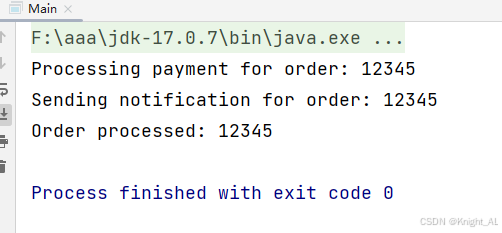
传统方法的问题:
- 耦合性强:
OrderService类直接创建PaymentService和NotificationService实例,无法轻松替换这些服务的实现(例如,切换到第三方支付服务或通知服务)。 - 难以扩展:如果添加新的服务(例如
ShippingService),必须修改OrderService类。 - 不可测试:在单元测试中,我们无法轻松地模拟(mock)
PaymentService或NotificationService,因为它们是在OrderService内部创建的。
二、反转控制(通过依赖注入)
为了实现更松耦合的设计,我们将使用反转控制(IoC)来管理对象的依赖关系。我们会将 PaymentService 和 NotificationService 的实例注入到 OrderService 中,而不是由 OrderService 直接创建它们。
步骤 1:定义服务接口
我们首先定义服务的接口,这样可以方便地进行扩展和替换实现。
// 支付服务接口
interface PaymentService {
    void processPayment(String orderId);
}

// 通知服务接口
interface NotificationService {
    void sendNotification(String orderId);
}
步骤 2:实现具体服务
接下来,我们实现这些接口。
// 支付服务实现类
class CreditCardPaymentService implements PaymentService {
    @Override
    public void processPayment(String orderId) {
        System.out.println("Processing credit card payment for order: " + orderId);
    }
}

// 通知服务实现类
class EmailNotificationService implements NotificationService {
    @Override
    public void sendNotification(String orderId) {
        System.out.println("Sending email notification for order: " + orderId);
    }
}
步骤 3:定义订单服务并通过构造注入依赖
在这里,OrderService 不再负责创建 PaymentService 和 NotificationService 的实例,而是通过构造方法注入这两个依赖。
// 订单服务类,依赖通过构造方法注入
class OrderService {
    private PaymentService paymentService;
    private NotificationService notificationService;

    // 构造方法注入依赖
    public OrderService(PaymentService paymentService, NotificationService notificationService) {
        this.paymentService = paymentService;
        this.notificationService = notificationService;
    }

    public void processOrder(String orderId) {
        paymentService.processPayment(orderId);  // 处理支付
        notificationService.sendNotification(orderId);  // 发送通知
        System.out.println("Order processed: " + orderId);
    }
}
步骤 4:在外部管理依赖关系
现在,OrderService 的依赖关系被交给外部管理。在下面的 Main 类中,我们手动创建这些对象,并将它们注入到 OrderService 中。
public class Main {
    public static void main(String[] args) {
        // 创建依赖
        PaymentService paymentService = new CreditCardPaymentService();  // 选择支付方式
        NotificationService notificationService = new EmailNotificationService();  // 选择通知方式

        // 通过构造方法注入依赖
        OrderService orderService = new OrderService(paymentService, notificationService);

        // 处理订单
        orderService.processOrder("12345");
    }
}
反转控制的优点:
- 松耦合:
OrderService不再直接创建PaymentService和NotificationService,而是通过构造方法注入它们。这样,我们可以轻松更换不同的实现类(如PaypalPaymentService、SMSNotificationService等)。 - 灵活性和可扩展性:只需要传递不同的实现类,我们就可以改变订单服务的行为,而不需要修改
OrderService类本身。 - 可测试性:在单元测试中,我们可以通过模拟(Mock)
PaymentService和NotificationService的实现,轻松测试OrderService类的逻辑。
三、反转控制(更换不同的实现类)
我们可以继续扩展这个案例,加入 SMSNotificationService,并演示如何通过依赖注入灵活地切换通知服务的实现。以下是如何将 SMSNotificationService 添加到之前的代码中,并通过反转控制(IoC)管理不同的通知实现。
步骤 1:定义 SMSNotificationService 类
我们首先实现一个新的通知服务 SMSNotificationService,它实现了 NotificationService 接口,负责通过 SMS 发送通知。
// SMS 通知服务实现类
class SMSNotificationService implements NotificationService {
    @Override
    public void sendNotification(String orderId) {
        System.out.println("Sending SMS notification for order: " + orderId);
    }
}
步骤 2:在 Main 类中添加 SMSNotificationService
现在,我们已经有了 SMSNotificationService,我们可以在 Main 类中动态选择不同的通知服务。你可以根据需要注入不同的通知服务实现。
选择 SMSNotificationService 作为通知服务实现:
public class Main {
    public static void main(String[] args) {
        // 创建依赖
        PaymentService paymentService = new CreditCardPaymentService();  // 选择支付方式
        NotificationService notificationService = new SMSNotificationService();  // 选择 SMS 通知方式

        // 通过构造方法注入依赖
        OrderService orderService = new OrderService(paymentService, notificationService);

        // 处理订单
        orderService.processOrder("12345");
    }
}
运行结果:
Sending SMS notification for order: 12345
Processing credit card payment for order: 12345
Order processed: 12345
步骤 3:通过配置灵活切换服务实现
在这个例子中,你可以看到,OrderService 类并没有硬编码任何特定的通知实现(如 EmailNotificationService 或 SMSNotificationService)。而是通过依赖注入(DI)方式,外部决定使用哪种实现类。这样,你可以在不修改 OrderService 类的情况下轻松切换实现。
选择不同的通知服务实现:
public class Main {
    public static void main(String[] args) {
        // 创建依赖
        PaymentService paymentService = new CreditCardPaymentService();  // 选择支付方式

        // 如果需要使用 Email 通知服务
        NotificationService emailNotificationService = new EmailNotificationService();

        // 如果需要使用 SMS 通知服务
        NotificationService smsNotificationService = new SMSNotificationService();

        // 注入 EmailNotificationService
        OrderService orderService = new OrderService(paymentService, emailNotificationService);
        orderService.processOrder("12345");

        // 切换到 SMSNotificationService
        orderService = new OrderService(paymentService, smsNotificationService);
        orderService.processOrder("67890");
    }
}
运行结果:
Sending email notification for order: 12345
Processing credit card payment for order: 12345
Order processed: 12345

Sending SMS notification for order: 67890
Processing credit card payment for order: 67890
Order processed: 67890
总结:
SMSNotificationService被作为一个新的通知服务实现类添加到系统中,它实现了NotificationService接口,负责通过 SMS 发送通知。- 依赖注入的好处:通过依赖注入,我们可以灵活地选择通知方式,而不需要修改
OrderService类。只需在外部切换通知服务的实现(例如EmailNotificationService、SMSNotificationService),OrderService类本身无需做任何改动。 - 扩展性:通过依赖注入和反转控制(IoC),你可以随时添加新的服务实现,如新的支付方式或通知方式,而不会影响现有的代码结构。
四、总结
- 传统方法中,
OrderService自己创建依赖对象(PaymentService和NotificationService),导致强耦合,不利于扩展和测试。 - 反转控制通过依赖注入(DI)将对象的依赖关系交给外部管理,
OrderService只需要关心业务逻辑,不需要关心如何创建和管理其他服务。这样,我们可以灵活替换不同的服务实现,增加系统的可扩展性和可测试性。





 扫一扫
扫一扫


 1407
1407

 被折叠的 条评论
为什么被折叠?
被折叠的 条评论
为什么被折叠?
 到【灌水乐园】发言





