



 本文详细介绍了队列的概念、基本操作及其实现方法,包括普通队列、循环队列和双端队列,并提供了用队列实现栈以及用栈实现队列的面试题解答。
一、什么是队列?
队列是一种特殊的线性表,特殊之处在于它只允许在表的前端(front)进行删除操作,而在表的后端(rear)进行插入操作,和栈一样,队列是一种操作受限制的线性表。进行插入操作的端称为队尾,进行删除操作的端称为队头。 – 来源百度
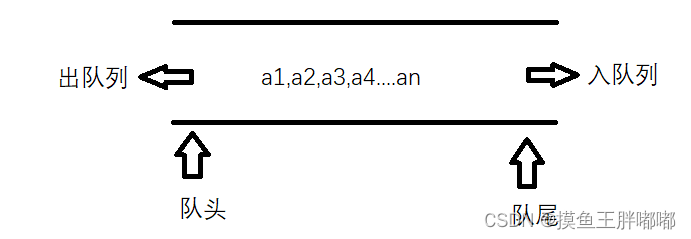
队头(front):允许删除的一端,称为队首
队尾(rear):允许插入的一端
空队列:不包含任何元素的空表
二、 队列的基本操作
在Java中,Queue是个接口,底层是通过链表来实现的。
- offer:入队若队列未满,将x加入,使之称为新的队尾。
- poll:出队,若队列未空,删除队头元素,并用x返回。
- peek:获取队头元素,若队列未空,则将队头元素赋值给x。
- isEmpty:判断队列是否为空,若队列为空返回true,否则返回false。
- size:获取队列中有效元素个数
2.1 offer - 入队
public class Test {
    public static void main(String[] args) {
        Queue<Integer> queue = new LinkedList<>();
        queue.offer(1);
        queue.offer(2);
        queue.offer(3);
        System.out.println(queue);
    }
}
2.2 poll - 出队
public class Test {
    public static void main(String[] args) {
        Queue<Integer> queue = new LinkedList<>();
        queue.offer(1);
        queue.offer(2);
        queue.offer(3);
        System.out.println(queue);
        queue.poll();
        queue.poll();
        System.out.println(queue);
    }
}
2.3 peek - 获取队头元素
public static void main(String[] args) {
        Queue<Integer> queue = new LinkedList<>();
        queue.offer(1);
        queue.offer(2);
        queue.offer(3);

        System.out.println(queue.peek());

    }
2.4 isEmpty - 判断队列是否为空
public static void main(String[] args) {
        Queue<Integer> queue = new LinkedList<>();
        queue.offer(1);
        queue.offer(2);
        queue.offer(3);

        System.out.println(queue.peek());
        System.out.println(queue.isEmpty());
    }
2.5 size - 获取队列长度
public static void main(String[] args) {
        Queue<Integer> queue = new LinkedList<>();
        queue.offer(1);
        queue.offer(2);
        queue.offer(3);

        System.out.println(queue.peek());
        System.out.println(queue.isEmpty());
        System.out.println(queue.size());
    }
三、队列的模拟实现
3.1 isEmpty
public boolean isEmpty() {
        return this.head == null;
    }
3.2 offer
/**
     * 尾插法
     * @param val
     */
    public void offer(int val) {
        Node node = new Node(val);
        if (head == null) {
            head = node;
            last = node;
        } else {
            last.next = node;
            last = last.next;
        }
    }
3.3 poll
/**
     * 出队
     * @return
     */
    public int poll() {
        if (isEmpty()) {
            throw new RuntimeException("队列为空");
        }
        int oldVal = head.val;
        this.head = head.next;
        return oldVal;
    }
3.4 peek
 public int peek() {
        if (isEmpty()) {
            throw new RuntimeException("队列为空");
        }
        return head.val;
    }
3.5 MyQueue.java
@SuppressWarnings({"all"})
class Node {
    public int val;
    public Node next;
    public Node(int val) {
        this.val = val;
    }
}

public class MyQueue {
    public Node head;
    public Node last;

    /**
     * 尾插法
     * @param val
     */
    public void offer(int val) {
        Node node = new Node(val);
        if (head == null) {
            head = node;
            last = node;
        } else {
            last.next = node;
            last = last.next;
        }
    }

    /**
     * 出队
     * @return
     */
    public int poll() {
        if (isEmpty()) {
            throw new RuntimeException("队列为空");
        }
        int oldVal = head.val;
        this.head = head.next;
        return oldVal;
    }

    public boolean isEmpty() {
        return this.head == null;
    }

    public int peek() {
        if (isEmpty()) {
            throw new RuntimeException("队列为空");
        }
        return head.val;
    }
}
四、循环队列
为充分利用向量空间,克服"假溢出"现象的方法是:将向量空间想象为一个首尾相接的圆环,并称这种向量为循环向量。存储在其中的队列称为循环队列(Circular Queue)。循环队列是把顺序队列首尾相连,把存储队列元素的表从逻辑上看成一个环,成为循环队列。 - 来源百度
队列头尾相连的顺序存储结构称为循环队列。
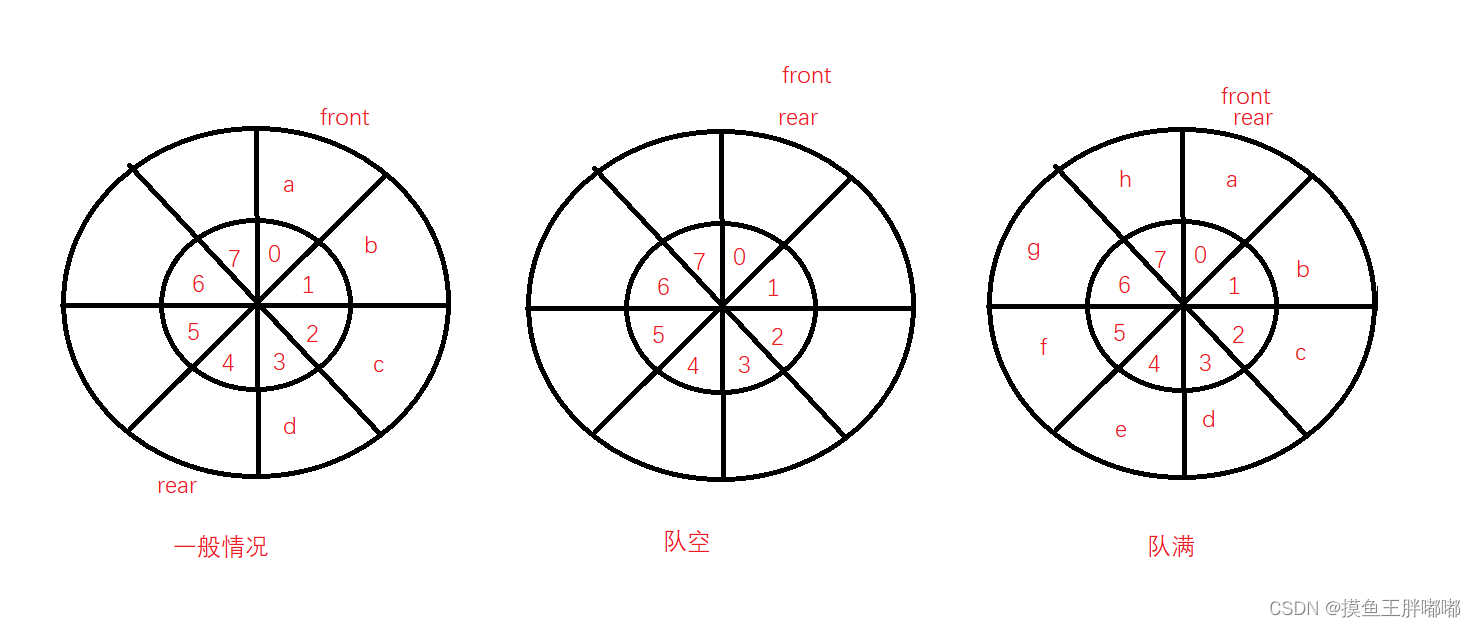
使用循环队列的时候,我们会发现一个问题,如何去区分空与满?其实是有三种解决方法的
- 通过添加size属性记录
- 保留一个位置
- 使用flag标记
我们使用第二种方法来实现
4.1 isEmpty - 判空
 public boolean isEmpty() {
        return front == rear;
    }
4.2 isFull - 判满
public boolean isFull() {
        if ((this.rear+1) % elem.length == front) {
            return true;
        }
        return false;
    }
4.3 front - 队头
public int front() {
        if (isEmpty()) return -1;
        return elem[front];
    }
4.4 rear - 队尾
public int rear() {
        if (isEmpty()) return -1;
        int index = -1;
        if (rear == 0) {
            index = elem.length-1;
        } else {
            index = rear-1;
        }
        return elem[index];
    }
4.5 enQueue - 入队
public boolean enQueue(int value) {
        if (isFull()) return false;
        this.elem[rear] = value;
        rear = (rear + 1) % elem.length;
        return true;
    }
4.6 deQueue - 出队
public boolean deQueue() {
        if (isEmpty()) return false;
        front = (front+1) % elem.length;
        return true;
    }
4.7 MyCircularQueue.java
public class MyCircularQueue {

    public int[] elem;
    public int front;//队头下标
    public int rear;//队尾下标

    public MyCircularQueue(int k) {
        this.elem = new int[k+1];
    }

    /**
     * 入队
     *
     * @param value
     * @return
     */
    public boolean enQueue(int value) {
        if (isFull()) return false;
        this.elem[rear] = value;
        rear = (rear + 1) % elem.length;
        return true;
    }

    public boolean deQueue() {
        if (isEmpty()) return false;
        front = (front+1) % elem.length;
        return true;
    }

    /**
     * 得到队头元素
     * @return
     */
    public int front() {
        if (isEmpty()) return -1;
        return elem[front];
    }

    public int rear() {
        if (isEmpty()) return -1;
        int index = -1;
        if (rear == 0) {
            index = elem.length-1;
        } else {
            index = rear-1;
        }
        return elem[index];
    }

    public boolean isEmpty() {
        return front == rear;
    }

    public boolean isFull() {
        if ((this.rear+1) % elem.length == front) {
            return true;
        }
        return false;
    }

}
五、双端队列
deque(double-ended queue,双端队列)是一种具有队列和栈的性质的数据结构。双端队列中的元素可以从两端弹出,相比list增加[]运算符重载。
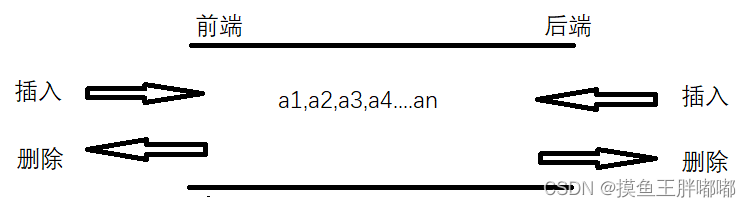
在双端队列进队时,前端进的元素排列在队列中后端进的元素的前面,后端进的元素排列在队列中前端进的元素的后面。在双端队列出队时,无论是前端还是后端出队,先出的元素排列在后出的元素的前面。Deque是一个接口,使用时必须创建LinkedList的对象。由于在实际开发中Deque使用的并不是非常多,所以大家只需了解一下即可!
六、面试题
6.1 用队列实现栈
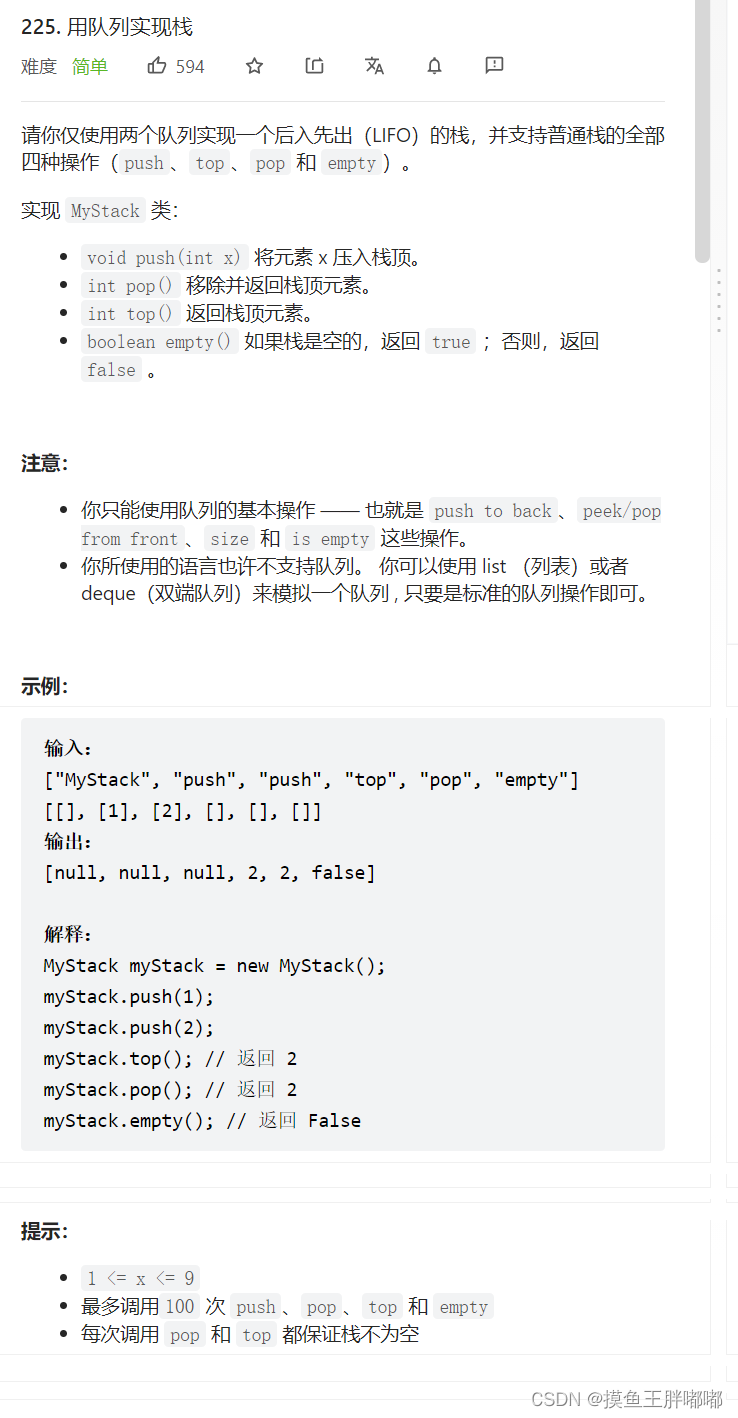
6.1.1 解题思路
因为栈是后进先出结构,而我们的队列是先进先出结构,我们可以用两个队列来模拟实现栈的结构,qu1用来进栈,当我们需要出栈时,将qu1里面的元素出栈size-1个元素,就能得到我们的栈顶元素,注意,进栈的时候先判断两个队列谁不为空往哪个队列进,只有两个队列都为空的时候我们的栈也为空。
6.1.2 代码
class MyStack {

    private Queue<Integer> qu1;
    private Queue<Integer> qu2;

    public MyStack() {
        qu1 = new LinkedList<>();
        qu2 = new LinkedList<>();
    }

    public void push(int x) {
        if (!qu1.isEmpty()) {
            qu1.offer(x);
        } else if (!qu2.isEmpty()) {
            qu2.offer(x);
        } else {
            qu1.offer(x);
        }
    }

    public int pop() {
        if(empty()) return -1;
        if (!qu1.isEmpty()) {
            int size = qu1.size();
            for (int i = 0; i < size-1; i++) {
                int val = qu1.poll();
                qu2.offer(val);
            }
            return qu1.poll();
        }

        if (!qu2.isEmpty()) {
            int size = qu2.size();
            for (int i = 0; i < size-1; i++) {
                int val = qu2.poll();
                qu1.offer(val);
            }
            return qu2.poll();
        }
        return -1;

    }

    public int top() {
        if(empty()) return -1;
        if (!qu1.isEmpty()) {
            int val = -1;
            int size = qu1.size();
            for (int i = 0; i < size; i++) {
                val = qu1.poll();
                qu2.offer(val);
            }
            return val;
        }

        if (!qu2.isEmpty()) {
            int val = -1;
            int size = qu2.size();
            for (int i = 0; i < size; i++) {
                val = qu2.poll();
                qu1.offer(val);
            }
            return val;
        }
        return -1;
    }

    public boolean empty() {
        return qu2.isEmpty() && qu1.isEmpty();
    }
}
6.2 用栈实现队列
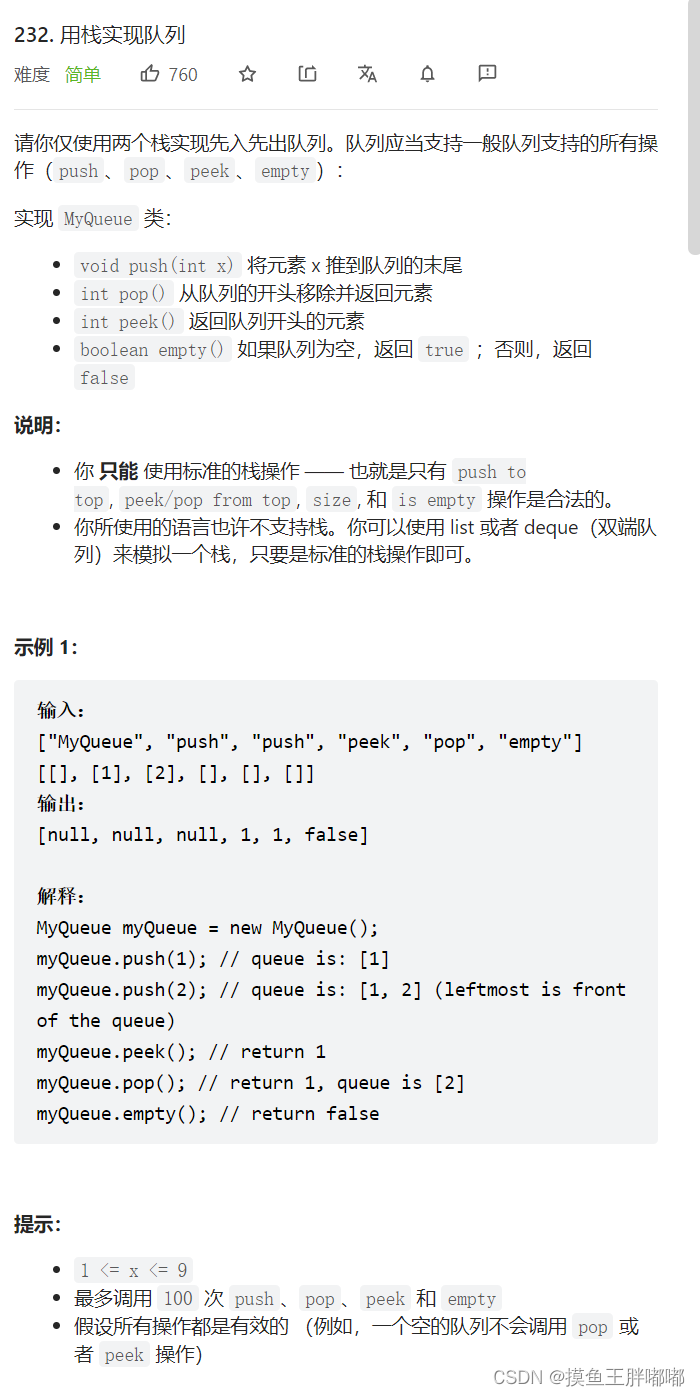
6.2.1 解题思路
- 用两个栈实现队列,先将元素全部入栈到第一个栈s1当中。
- pop()操作,先判断s1是否为空,如果为空则返回-1,接着判断条件为s2为空,s1不为空,将s1中的元素全部进栈到s2当中,然后return s2.pop()便是出队操作。
- 跟操作2类似,最后返回s2.peek()便可!
6.2.2 代码
class MyQueue {

    public Stack<Integer> stack1;
    public Stack<Integer> stack2;

    public MyQueue() {
        stack1 = new Stack<>();
        stack2 = new Stack<>();
    }

    public void push(int x) {
        stack1.push(x);
    }

    public int pop() {
        if (empty()) return -1;
        if (stack2.isEmpty()) {
            while (!stack1.isEmpty()) {
                stack2.push(stack1.pop());
            }
        }
        return stack2.pop();
    }

    public int peek() {
        if (empty()) return -1;
        if (stack2.isEmpty()) {
            while (!stack1.isEmpty()) {
                stack2.push(stack1.pop());
            }
        }
        return stack2.peek();
    }

    public boolean empty() {
        return stack1.isEmpty() && stack2.isEmpty();
    }
}

/**
 * Your MyQueue object will be instantiated and called as such:
 * MyQueue obj = new MyQueue();
 * obj.push(x);
 * int param_2 = obj.pop();
 * int param_3 = obj.peek();
 * boolean param_4 = obj.empty();
 */





 扫一扫
扫一扫


 被折叠的 条评论
为什么被折叠?
被折叠的 条评论
为什么被折叠?
 到【灌水乐园】发言





