





 本文深入探讨了FaceNet人脸识别模型的架构与实现细节,包括其独特的Triplet Loss损失函数及L2正则化输出方法,并通过实验验证了该模型在LFW数据集上的卓越表现。
人脸识别的应用非常广泛,而且进展特别快。如LFW的评测结果上已经都有快接近99.9%的。
| Uni-Ubi60 | 0.9900 ± 0.0032 |
| FaceNet62 | 0.9963 ± 0.0009 |
| Baidu64 | 0.9977 ± 0.0006 |
| AuthenMetric65 | 0.9977 ± 0.0009 |
| MMDFR67 | 0.9902 ± 0.0019 |
| CW-DNA-170 | 0.9950 ± 0.0022 |
| Faceall71 | 0.9967 ± 0.0007 |
| JustMeTalk72 | 0.9887 ± 0.0016 |
| Facevisa74 | 0.9955 ± 0.0014 |
| pose+shape+expression augmentation75 | 0.9807 ± 0.0060 |
| ColorReco76 | 0.9940 ± 0.0022 |
| Asaphus77 | 0.9815 ± 0.0039 |
| Daream78 | 0.9968 ± 0.0009 |
| Dahua-FaceImage80 | 0.9978 ± 0.0007 |
| Easen Electron81 | 0.9978 ± 0.0006 |
| Skytop Gaia82 | 0.9630 ± 0.0023 |
| CNN-3DMM estimation83 | 0.9235 ± 0.0129 |
| Samtech Facequest84 | 0.9971 ± 0.0018 |
| XYZ Robot87 | 0.9895 ± 0.0020 |
| THU CV-AI Lab88 | 0.9973 ± 0.0008 |
| dlib90 | 0.9938 ± 0.0027 |
| Aureus91 | 0.9920 ± 0.0030 |
| YouTu Lab, Tencent63 | 0.9980 ± 0.0023 |
| Orion Star92 | 0.9965 ± 0.0032 |
| Yuntu WiseSight93 | 0.9943 ± 0.0045 |
| PingAn AI Lab89 | 0.9980 ± 0.0016 |
| Turing12394 | 0.9940 ± 0.0040 |
| Hisign95 | 0.9968 ± 0.0030 |
| VisionLabs V2.038 | 0.9978 ± 0.0007 |
| Deepmark96 | 0.9923 ± 0.0016 |
| Force Infosystems97 | 0.9973 ± 0.0028 |
| ReadSense98 | 0.9982 ± 0.0007 |
在上述模型中,有许多是商业公司的排名,所以呢,基本上很少有开源的东西。此处只对谷歌的facenet进行测试。
FaceNet的架构如下所示:

从上面可以看出,没有使用softmax层,而直接利用L2层正则化输出,获取其图像表示,即特征抽象层。而深度学习的框架可以使用现有的成熟模型,如tensorflow slim中的每一种模型。
而最后一个Triplet Loss则是采用了三元组的损失函数。其代码如下所示
def triplet_loss(anchor, positive, negative, alpha):
    """Calculate the triplet loss according to the FaceNet paper

    Args:
      anchor: the embeddings for the anchor images.
      positive: the embeddings for the positive images.
      negative: the embeddings for the negative images.

    Returns:
      the triplet loss according to the FaceNet paper as a float tensor.
    """
    with tf.variable_scope('triplet_loss'):
        pos_dist = tf.reduce_sum(tf.square(tf.subtract(anchor, positive)), 1)
        neg_dist = tf.reduce_sum(tf.square(tf.subtract(anchor, negative)), 1)

        basic_loss = tf.add(tf.subtract(pos_dist,neg_dist), alpha)
        loss = tf.reduce_mean(tf.maximum(basic_loss, 0.0), 0)

return loss从上面代码可以看出,三元组其实就是三个样例,如(anchor, pos, neg),利用距离关系来判断。即在尽可能多的三元组中,使得anchor和pos正例的距离,小于anchor和neg负例的距离。
其学习优化如下图所示:

测试:(代码见:https://github.com/davidsandberg/facenet)
由于facenet无需限制人脸对齐,但是代码中提供了MTCNN的对齐,而且在LFW评分中也发现经过对齐的分数能够提高一个档次。
利用提供的代码,在LFW上进行EVAL,发现其精度高达99.2%
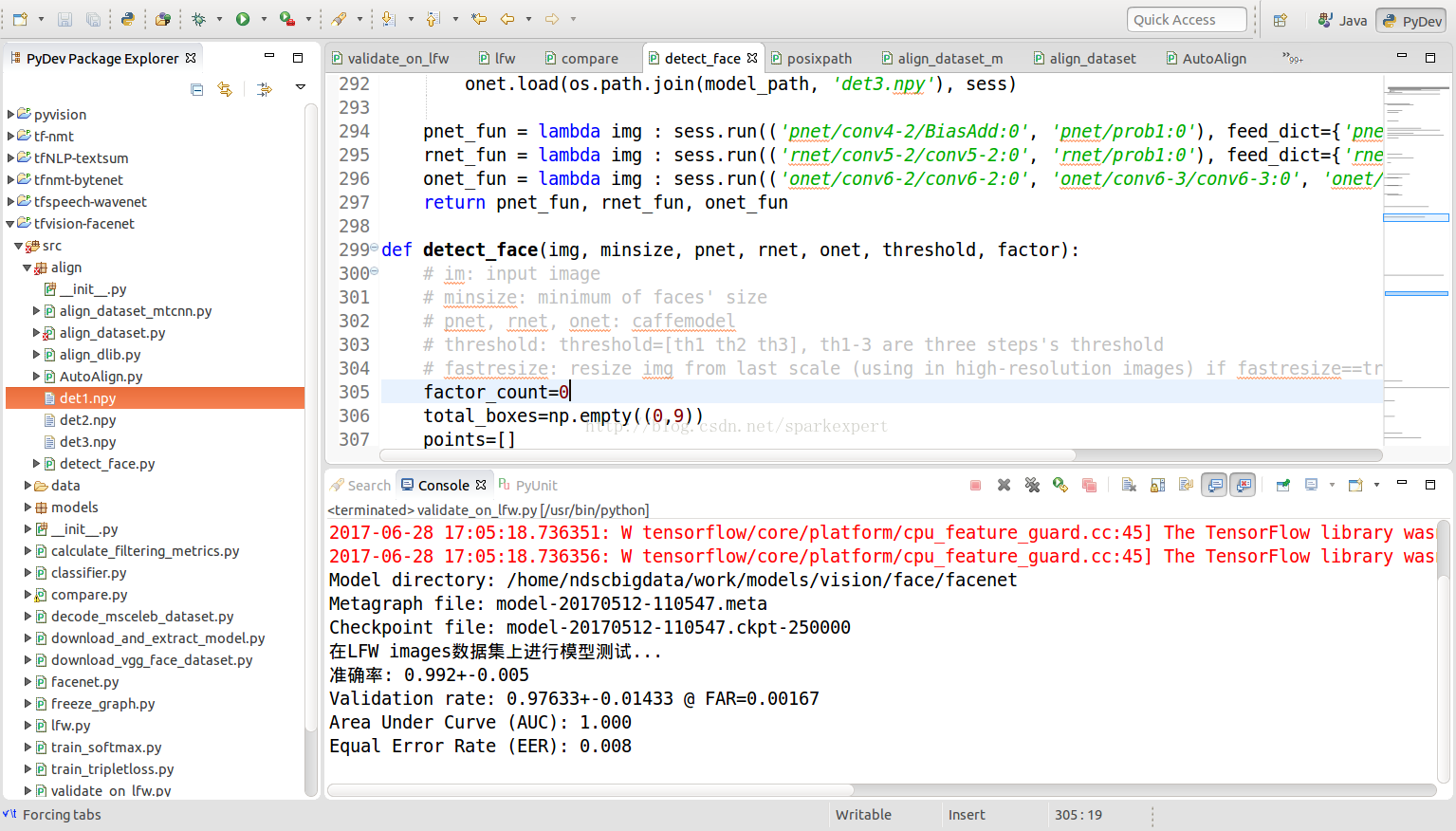
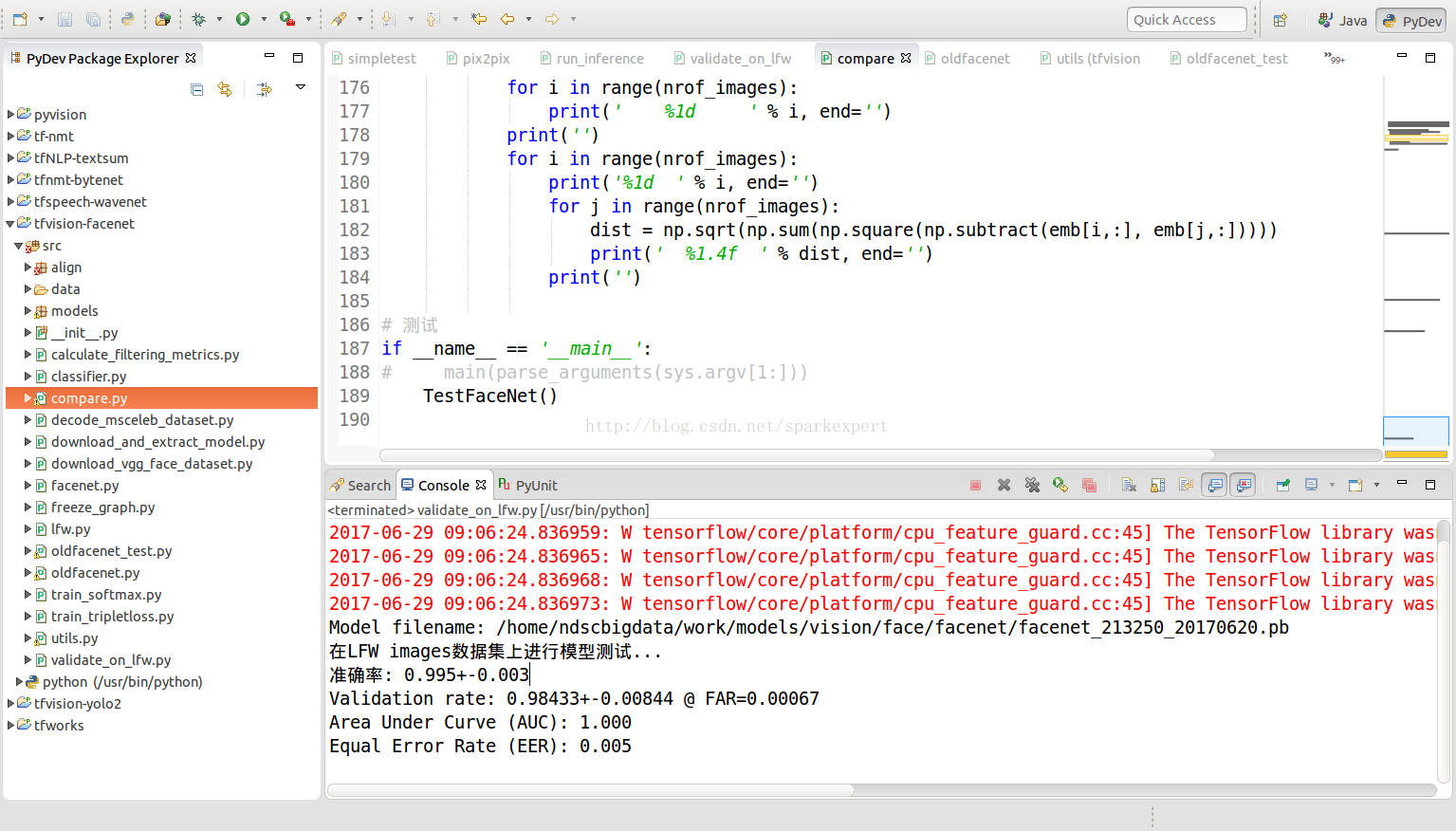
当然,还有更高的。
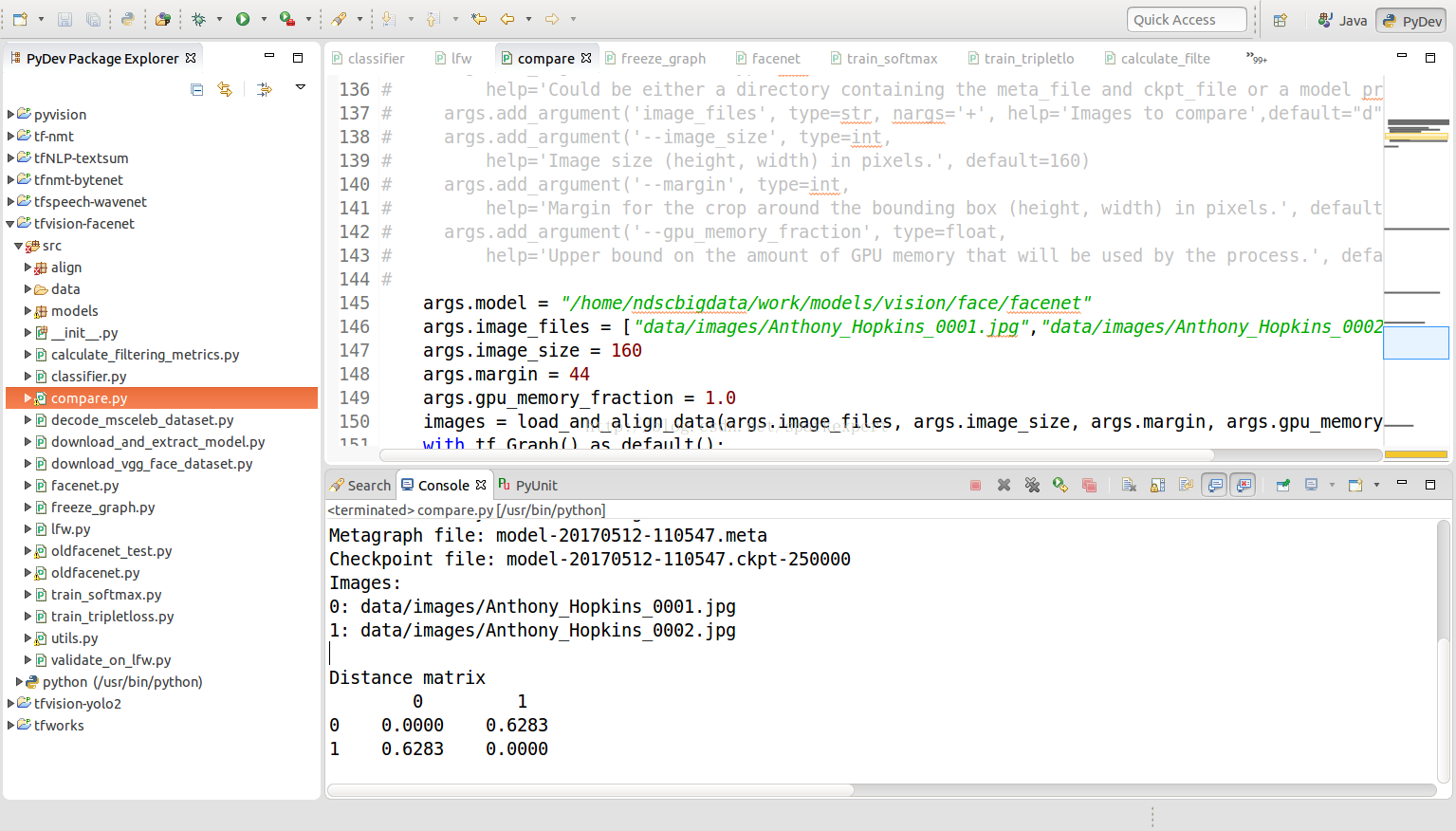
另外,程序中还提供了进行两张图片距离的比较的代码,进行调试,结果如下:






 扫一扫
扫一扫


 到【灌水乐园】发言



