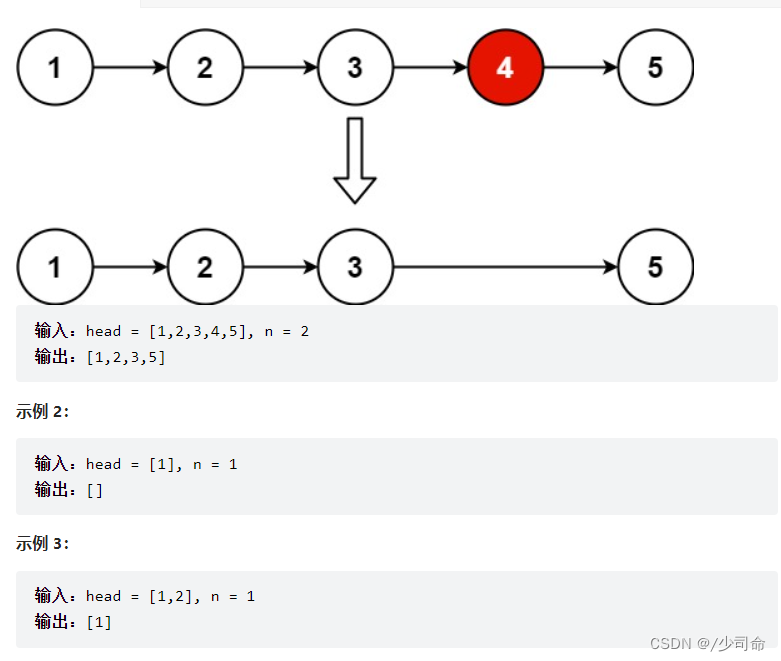
public ListNode removeNthFromEnd(ListNode head, int n) {

        ListNode dummy = new ListNode(0,head);
        Stack<ListNode> stack = new Stack<>();
        ListNode cur = dummy;
        while (cur != null){
            stack.push(cur);
            cur = cur.next;
        }

        for (int i = 0; i < n; i++){
            stack.pop();
        }
        ListNode prev = stack.peek();
        prev.next = prev.next.next;
        return dummy.next;
    }
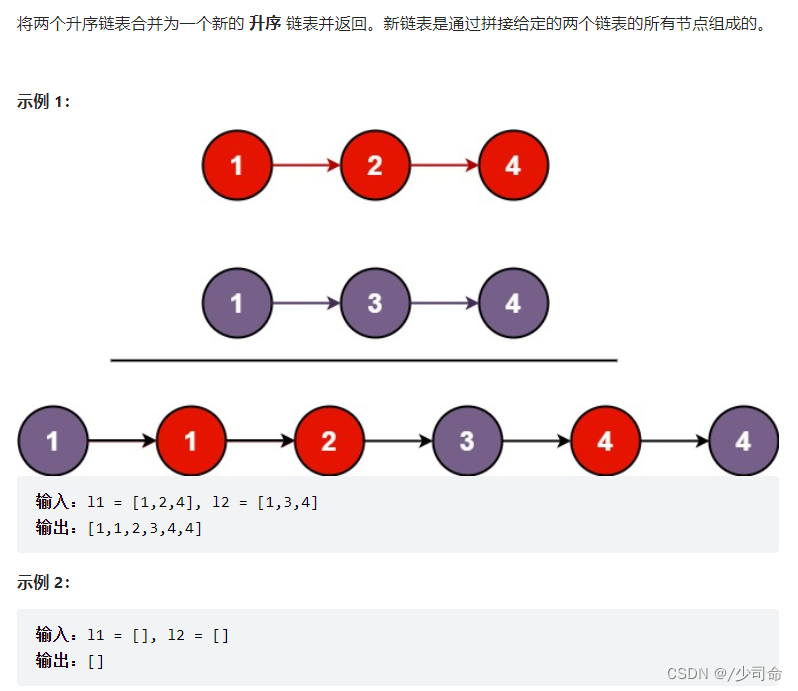
 public ListNode mergeTwoLists(ListNode list1, ListNode list2) {

     if (list1 == null){
            return list2;
        }
        if (list2 == null){
            return list1;
        }

        if (list1.val < list2.val){
            list1.next = mergeTwoLists(list1.next,list2);
            return list1;
        }else {
            list2.next = mergeTwoLists(list1,list2.next);
            return list2;
        }
    }
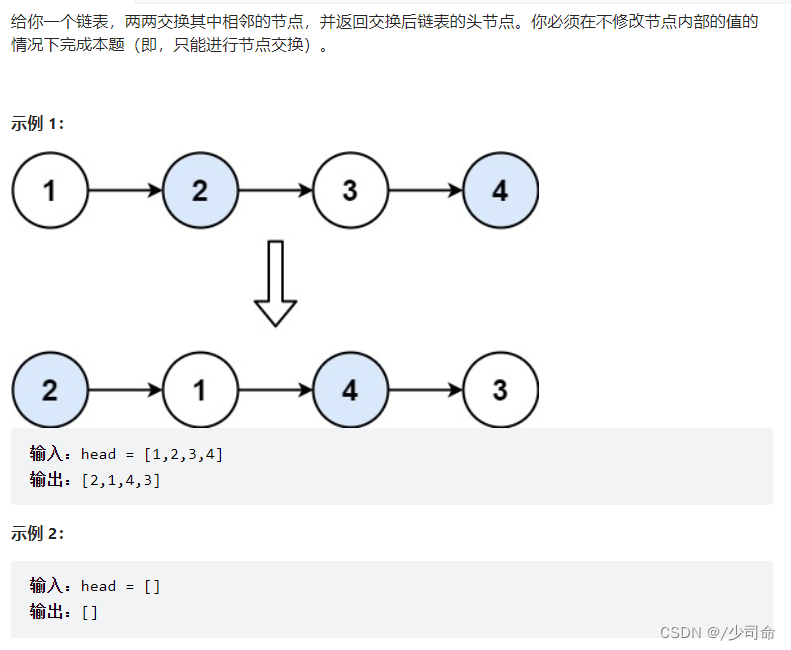
 public ListNode swapPairs(ListNode head) {

        if (head == null){
            return null;
        }
        ListNode newHead = new ListNode(0);
        newHead.next = head;
        ListNode tmp = newHead;
        while (tmp.next != null && tmp.next.next != null){
            ListNode node1 = tmp.next;
            ListNode node2 = tmp.next.next;
            tmp.next = node2;
            node1.next = node2.next;
            node2.next = node1;
            tmp = node1;
        }
        return newHead.next;
    }
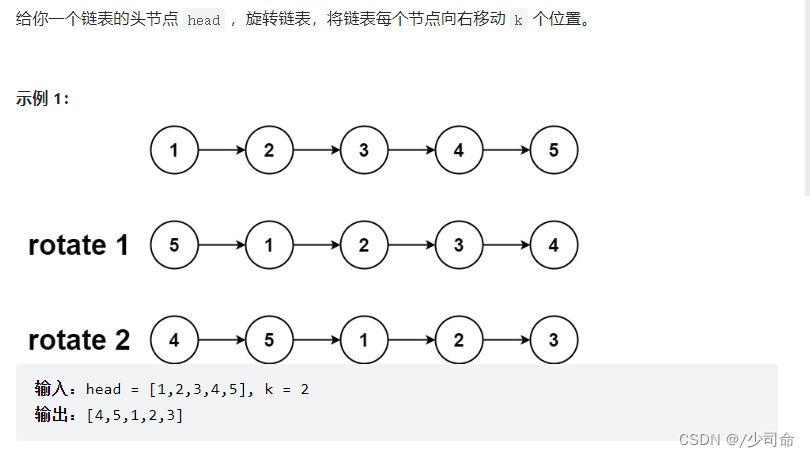
  public ListNode rotateRight(ListNode head, int k) {
        if (head == null || head.next == null || k == 0){
            return head;
        }
        int count = 1;
        ListNode tmp = head;
        while (tmp.next != null){
            count++;
            tmp = tmp.next;
        }
        k %= count;
        if (k == 0){
            return head;
        }
        //首尾相连
        tmp.next = head;
        for (int i = 0;



 最低0.47元/天 解锁文章






 扫一扫
扫一扫


 1670
1670

 被折叠的 条评论
为什么被折叠?
被折叠的 条评论
为什么被折叠?
 到【灌水乐园】发言





