


system函数原型
头文件: #include<stdlib.h>
参数:char的指针
返回值:system()函数的返回值如下: 成功,则返回进程的状态值; 当sh不能执行时,返回127; 失败返回-1;
  #include <stdlib.h>
  int system(const char *command);
//system函数源码
int system(const char * cmdstring)
{
  pid_t pid;
  int status;

  if(cmdstring == NULL){

      return (1);
  }


  if((pid = fork())<0){

        status = -1;
  }
  else if(pid == 0){
    execl("/bin/sh", "sh", "-c", cmdstring, (char *)0);
    -exit(127); //子进程正常执行则不会执行此语句
    }
  else{
        while(waitpid(pid, &status, 0) < 0){
          if(errno != EINTER){
            status = -1;
            break;
          }
        }
    }
    return status;
}
源码讲解:当pid=0时进入子进程,else之后的意思父进程等待子进程退出,进入子进程调用exec,执行cmd,所以说system函数是exec族函数封装
根据之前所学exec配合fork的代码可以进行修改
//q3.c
#include <stdio.h>
#include <sys/types.h>
#include <unistd.h>
#include <unistd.h>
#include <sys/types.h>
#include <sys/stat.h>
#include <fcntl.h>
#include <stdlib.h>
#include <string.h>
#include <stdio.h>
#include <sys/wait.h>

int main()
{
        pid_t pid;
        int data = 10;

        while(1)
        {
                printf("please inputa data\n");
                scanf("%d",&data);
                if(data == 1){
                        pid = fork();
                        if(pid >0){
                                wait(NULL);
                        }
                        if(pid == 0){
                                system("./changedata config.txt");
                                exit(1);
                        }

                }
        }
        return 0;
}
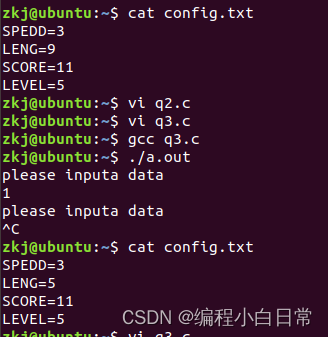
实验结果





 扫一扫
扫一扫


 1831
1831

 被折叠的 条评论
为什么被折叠?
被折叠的 条评论
为什么被折叠?
 到【灌水乐园】发言





