


前言
本人以笔记的方式来记录学习过程,仅当学习的输出,加深自己学习印象
手写spring的思路
通过手写spring,虽然和源码有差别,但有助于了解整体过程
(1)了解spring启动过程
(2)了解BeanDefinition、BeanPostProcessor的概念
(3)了解Spring依赖注入、Aware回调的工作原理
(4)了解AOP的工作原理
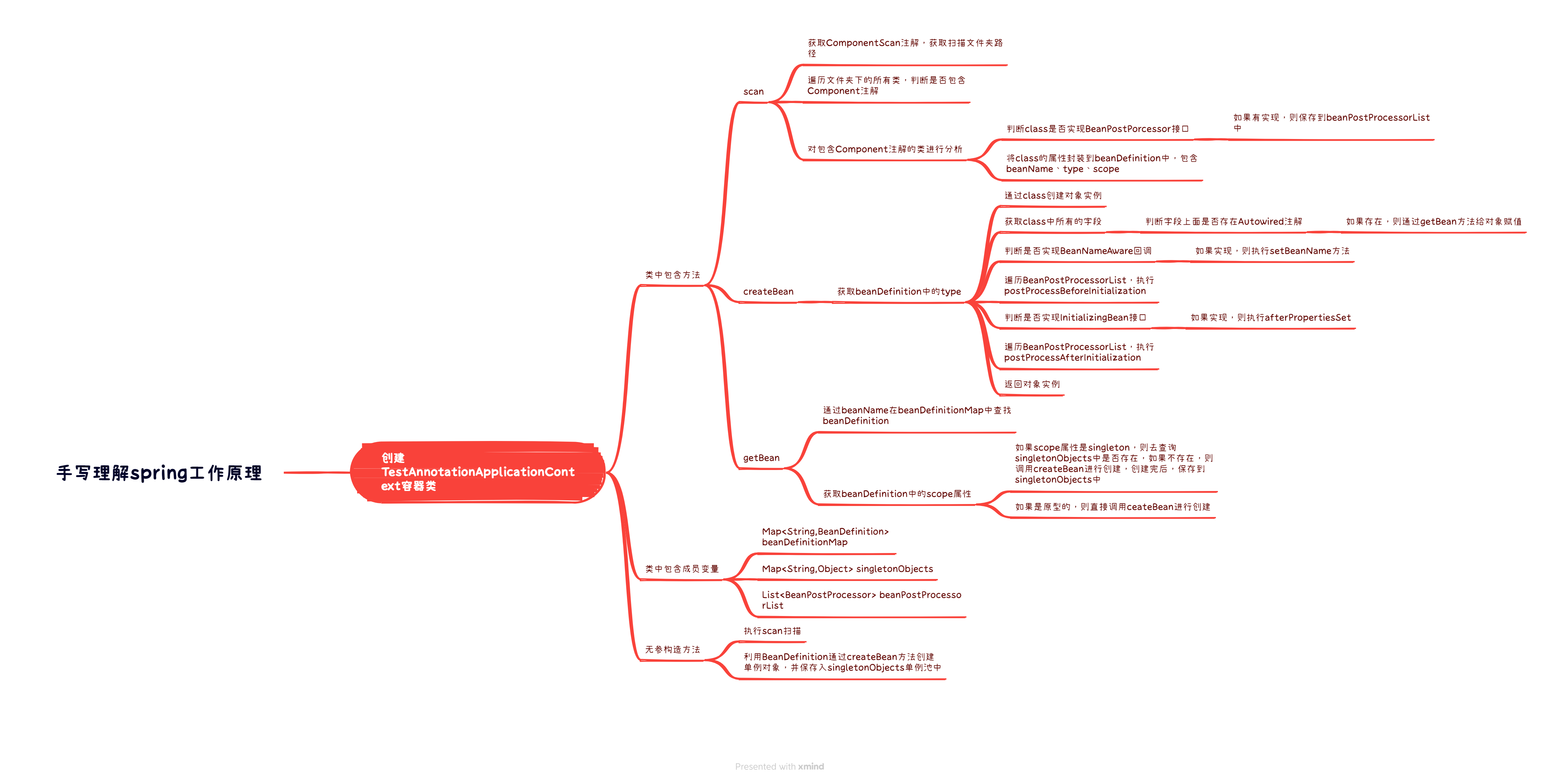
以下是applicationContext的思维导图
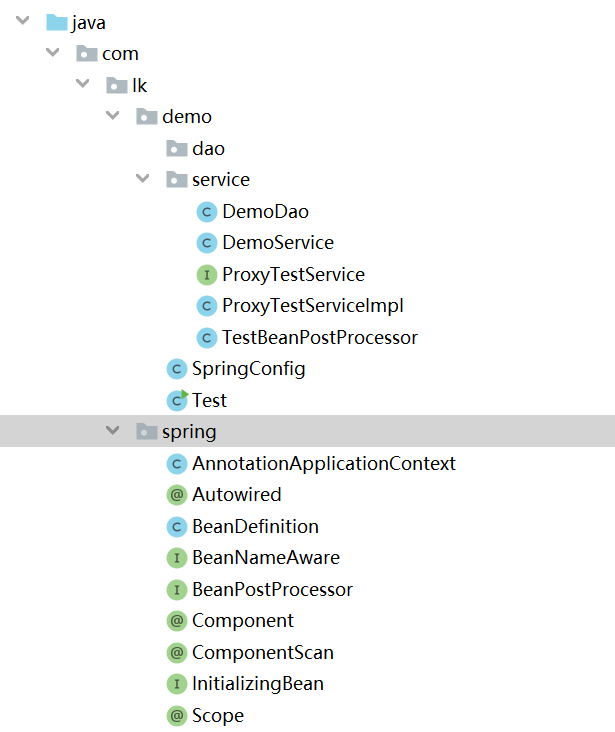
 包目录结构如下:
代码
1. 首先创建spring相关的类
创建AnnotationApplicationContext
package com.lk.spring;

import java.beans.Introspector;
import java.io.File;
import java.lang.reflect.Field;
import java.net.URL;
import java.util.ArrayList;
import java.util.HashMap;
import java.util.List;
import java.util.Map;

public class AnnotationApplicationContext {

    private Class configClass;

    private Map<String, BeanDefinition> beanDefinitionMap = new HashMap<String, BeanDefinition>();

    private Map<String, Object> singletonObjects = new HashMap<String, Object>();

    private List<BeanPostProcessor> beanPostProcessorList = new ArrayList<BeanPostProcessor>();

    public AnnotationApplicationContext(Class configClass) throws Exception {
        this.configClass = configClass;

        // 扫描
        scan(configClass);

        // 创建单例bean
        for (Map.Entry<String, BeanDefinition> entry : beanDefinitionMap.entrySet()) {
            String beanName = entry.getKey();
            BeanDefinition beanDefinition = entry.getValue();
            if ("singleton".equals(beanDefinition.getScope())){
                Object bean = createBean(beanName, beanDefinition);
                singletonObjects.put(beanName, bean);
            }
        }

    }

    private Object createBean(String beanName, BeanDefinition beanDefinition) throws Exception{
        Class aClass = beanDefinition.getType();
        Object instance = null;

        instance = aClass.getConstructor().newInstance();

        // 获取所有Autowired注解的字段,并注入
        for (Field field : aClass.getDeclaredFields()) {
            if (field.isAnnotationPresent(Autowired.class)) {
                field.setAccessible(true);
                field.set(instance, getBean(field.getName()));
            }
        }

        // 执行 BeanNameAware 回调
        if (instance instanceof BeanNameAware) {
            ((BeanNameAware) instance).setBeanName(beanName);
        }

        // 遍历beanPostProcessor执行postProcessBeforeInitialization
        for (BeanPostProcessor beanPostProcessor : beanPostProcessorList) {
            instance = beanPostProcessor.postProcessBeforeInitialization(instance, beanName);
        }

        // 如果实现InitializingBean接口,执行afterPropertiesSet初始化方法执行
        if (instance instanceof InitializingBean) {
            ((InitializingBean) instance).afterPropertiesSet();
        }

        // 遍历beanPostProcessor执行postProcessAfterInitialization
        for (BeanPostProcessor beanPostProcessor : beanPostProcessorList) {
            instance = beanPostProcessor.postProcessAfterInitialization(instance, beanName);
        }

        // 返回创建好的对象
        return instance;
    }

    public Object getBean(String beanName) throws Exception{
        // 获取beanDefinition,判断是否为单例bean
        if (!beanDefinitionMap.containsKey(beanName)) {
            throw new Exception();
        }

        BeanDefinition beanDefinition = beanDefinitionMap.get(beanName);
        if ("singleton".equals(beanDefinition.getScope())) {
            Object bean = singletonObjects.get(beanName);
            // 如果单例池中为空,说明还没创建,则调用createBean进行创建,并将创建好的bean放入单例池
            if (null == bean) {
                bean = createBean(beanName, beanDefinition);
                singletonObjects.put(beanName, bean);
            }

            return bean;
        } else {
            // 原型
            Object prototypeBean = createBean(beanName, beanDefinition);
            return prototypeBean;
        }
    }

    private void scan(Class configClass) throws Exception {

        if (configClass.isAnnotationPresent(ComponentScan.class)){

            ComponentScan componentScan = (ComponentScan) configClass.getAnnotation(ComponentScan.class);
            String path = componentScan.value();
            String newPath = path.replace(".", "/");
            System.out.println(newPath);
            ClassLoader classLoader = AnnotationApplicationContext.class.getClassLoader();
            URL resources = classLoader.getResource(newPath);
            File file = new File(resources.getFile());

            if (file.isDirectory()){
                for (File f : file.listFiles()) {
                    String absolutePath = f.getAbsolutePath();
                    System.out.println(absolutePath);
                    absolutePath = absolutePath.substring(absolutePath.indexOf("com"), absolutePath.indexOf(".class"));
                    absolutePath = absolutePath.replace("\\", ".");
                    Class<?> aClass = classLoader.loadClass(absolutePath);
                    if (aClass.isAnnotationPresent(Component.class)){

                        // 判断是否实现接口BeanPostProcessor,如果是,则需要保存到beanPostProcessorList中
                        if (BeanPostProcessor.class.isAssignableFrom(aClass)) {
                            BeanPostProcessor beanPostProcessor = (BeanPostProcessor) aClass.getConstructor().newInstance();
                            beanPostProcessorList.add(beanPostProcessor);
                        }

                        // 如果是普通bean,则创建beanDefinition,并保存到beanDefinitionMap中
                        Component component = aClass.getAnnotation(Component.class);
                        String beanName = component.value();
                        if ("".equals(beanName)) {
                            // 如果没有指定beanName,则默认以类名首字母小写作为beanName
                            beanName = Introspector.decapitalize(aClass.getSimpleName());
                        }

                        BeanDefinition beanDefinition = new BeanDefinition();
                        beanDefinition.setBeanName(beanName);
                        beanDefinition.setType(aClass);

                        // 判断类是否为单例
                        if (aClass.isAnnotationPresent(Scope.class)) {
                            Scope scopeAnnotation = aClass.getAnnotation(Scope.class);
                            String scope = scopeAnnotation.value();
                            if (!"prototype".equals(scope) && !"singleton".equals(scope)) {
                                scope = "singleton";
                            }
                            beanDefinition.setScope(scope);
                        } else {
                            beanDefinition.setScope("singleton");
                        }


                        beanDefinitionMap.put(beanName, beanDefinition);
                    }
                }
            }

        }

    }

}
创建BeanDefinition
package com.lk.spring;

public class BeanDefinition {

    private Class type;

    private String scope;

    private String beanName;

    public Class getType() {
        return type;
    }

    public void setType(Class type) {
        this.type = type;
    }

    public String getScope() {
        return scope;
    }

    public void setScope(String scope) {
        this.scope = scope;
    }

    public String getBeanName() {
        return beanName;
    }

    public void setBeanName(String beanName) {
        this.beanName = beanName;
    }
}
创建Autowired
package com.lk.spring;

import java.lang.annotation.ElementType;
import java.lang.annotation.Retention;
import java.lang.annotation.RetentionPolicy;
import java.lang.annotation.Target;

@Retention(RetentionPolicy.RUNTIME)
@Target(ElementType.FIELD)
public @interface Autowired {
}
创建BeanNameAware
package com.lk.spring;

public interface BeanNameAware {
    void setBeanName(String name);
}
创建BeanPostProcessor
package com.lk.spring;

public interface BeanPostProcessor {

    default Object postProcessBeforeInitialization (Object bean, String beanName){
        return bean;
    }

    default Object postProcessAfterInitialization (Object bean, String beanName) {
        return bean;
    }
}
创建Component
package com.lk.spring;

import java.lang.annotation.ElementType;
import java.lang.annotation.Retention;
import java.lang.annotation.RetentionPolicy;
import java.lang.annotation.Target;

@Retention(RetentionPolicy.RUNTIME)
@Target(ElementType.TYPE)
public @interface Component {
    String value() default "";
}
创建ComponentScan
package com.lk.spring;

import java.lang.annotation.ElementType;
import java.lang.annotation.Retention;
import java.lang.annotation.RetentionPolicy;
import java.lang.annotation.Target;

@Retention(RetentionPolicy.RUNTIME)
@Target(ElementType.TYPE)
public @interface ComponentScan {
    String value() default "";
}
创建InitializingBean
package com.lk.spring;

public interface InitializingBean {
    void afterPropertiesSet();
}
创建Scope
package com.lk.spring;

import java.lang.annotation.ElementType;
import java.lang.annotation.Retention;
import java.lang.annotation.RetentionPolicy;
import java.lang.annotation.Target;

@Retention(RetentionPolicy.RUNTIME)
@Target(ElementType.TYPE)
public @interface Scope {
    String value() default "";
}
创建测试类
1. 创建sringConfig
package com.lk.demo;

import com.lk.spring.Component;
import com.lk.spring.ComponentScan;

@ComponentScan("com.lk.demo.service")
public class SpringConfig {

}
2.创建DemoService
package com.lk.demo.service;

import com.lk.spring.Autowired;
import com.lk.spring.Component;

@Component
public class DemoService {

    @Autowired
    private DemoDao demoDao;

    public void demo() {
        System.out.println(111);
        System.out.println(demoDao);
    }

}
3.创建DemoDao
package com.lk.demo.service;

import com.lk.spring.Component;

@Component
public class DemoDao {
}
4.创建ProxyTestService
package com.lk.demo.service;

public interface ProxyTestService {
}
5.创建ProxyTestServiceImpl
package com.lk.demo.service;

import com.lk.spring.Component;

@Component("proxyTestService")
public class ProxyTestServiceImpl implements ProxyTestService {
}
6.创建TestBeanPostProcessor
package com.lk.demo.service;

import com.lk.spring.BeanPostProcessor;
import com.lk.spring.Component;

import java.lang.reflect.InvocationHandler;
import java.lang.reflect.Method;
import java.lang.reflect.Proxy;

@Component
public class TestBeanPostProcessor implements BeanPostProcessor {
    @Override
    public Object postProcessAfterInitialization(Object bean, String beanName) {
        // 创建代理对象
        if ("proxyTestService".equals(beanName)) {
            Object proxyInstance = Proxy.newProxyInstance(TestBeanPostProcessor.class.getClassLoader(), bean.getClass().getInterfaces(), new InvocationHandler() {
                @Override
                public Object invoke(Object proxy, Method method, Object[] args) throws Throwable {
                    System.out.println("执行代理逻辑");
                    return method.invoke(bean, args);
                }
            });
            return proxyInstance;
        }

        return bean;
    }
}
7.创建Test用于最终测试
package com.lk.demo;

import com.lk.demo.service.DemoService;
import com.lk.demo.service.ProxyTestService;
import com.lk.spring.AnnotationApplicationContext;

public class Test {

    public static void main(String[] args)throws Exception{
        System.out.println(12121);
        AnnotationApplicationContext annotationApplicationContext = new AnnotationApplicationContext(SpringConfig.class);
        DemoService demoService = (DemoService) annotationApplicationContext.getBean("demoService");
        demoService.demo();

        ProxyTestService proxyTestService = (ProxyTestService) annotationApplicationContext.getBean("proxyTestService");
        System.out.println(proxyTestService);
    }
}






 扫一扫
扫一扫


 814
814

 被折叠的 条评论
为什么被折叠?
被折叠的 条评论
为什么被折叠?
 到【灌水乐园】发言





