




一、项目介绍
摘要
本项目开发了一套基于YOLOv8深度学习算法的农田杂草智能检测系统,专门针对五种常见杂草类别('ji'、'caodizaoshuhe'、'shacao'、'li'、'yumi')进行高精度识别与定位。系统采用大规模标注数据集进行训练,包含训练集4971张图像和验证集312张图像,通过优化模型结构和训练策略,实现了在复杂农田环境下的高效杂草检测。该系统能够实时处理农田图像,准确识别杂草种类并标记其位置,为精准农业除草作业提供智能化解决方案。实验结果表明,该系统在验证集上达到了较高的检测精度和召回率,能够满足实际农田场景的应用需求。
项目意义
1. 农业智能化转型的推动力
在传统农业生产中,杂草识别主要依赖农民的经验判断,这种方法效率低下且容易出错。本项目的智能杂草检测系统将先进的计算机视觉技术应用于农业生产,显著提升了杂草识别的自动化水平和准确率,是农业从经验型向数据驱动型转变的重要实践,为智慧农业发展提供了关键技术支撑。
2. 精准农业与可持续种植的实现
系统能够精确区分五种常见杂草及其位置信息,为实现精准除草提供了可能。农民可以根据系统提供的杂草分布图进行定点清除,避免大面积使用除草剂,既降低了农业生产成本,又减轻了化学药剂对土壤和环境的污染,符合绿色农业和可持续发展理念。
3. 农业生产效率的革命性提升
传统人工巡查农田杂草的方式耗时耗力,而本系统可以快速完成大面积农田的杂草检测工作,效率提升数十倍。结合农业机械,可以实现全天候自动化杂草监测,显著降低劳动力需求,解决农业劳动力短缺问题,特别适合大规模农场应用。
4. 作物保护与产量保障
不同杂草对作物的危害程度和方式各异,准确识别杂草种类有助于采取针对性防治措施。例如,'ji'(稗草)与'caodizaoshuhe'(早熟禾)需要不同的管理策略。本系统提供的精细分类能力可以帮助农民及时采取最有效的除草方案,避免杂草与作物争夺养分、水分和阳光,保障作物健康生长。
5. 农业数据化与决策支持
系统运行过程中积累的大量杂草分布数据,可以用于分析杂草发生规律、预测扩散趋势,为农业管理部门提供决策依据。长期数据积累还能反映农田生态环境变化,为研究气候变化对农业的影响提供宝贵资料。
6. 技术示范与推广价值
本项目验证了YOLOv8算法在农业场景中的应用效果,为其他农产品检测、病虫害识别等农业AI应用提供了技术参考。系统架构设计考虑了实际农田环境的复杂性,具有较强的适应性和可扩展性,未来可便捷地增加新的杂草类别或应用于其他作物场景。
7. 经济效益与社会价值
该系统的推广应用将显著降低农业生产成本,提高农产品质量和产量,增加农民收入。同时,减少除草剂使用有助于保障食品安全和生态环境,产生广泛的社会效益。据估算,该系统在大规模应用后,可为中型农场每年节省数万元的除草成本。
综上所述,本项目的杂草智能检测系统不仅是技术创新,更是农业生产方式的重要变革,将对提高农业现代化水平、保障粮食安全、促进农业可持续发展产生深远影响。随着系统的不断完善和推广应用,有望成为智慧农业领域的标杆性解决方案。
基于深度学习的五种杂草检测系统(YOLOv8+YOLO数据集+UI界面+Python项目源码+模型)_哔哩哔哩_bilibili
基于深度学习的五种杂草检测系统(YOLOv8+YOLO数据集+UI界面+Python项目源码+模型)
二、项目功能展示
系统功能
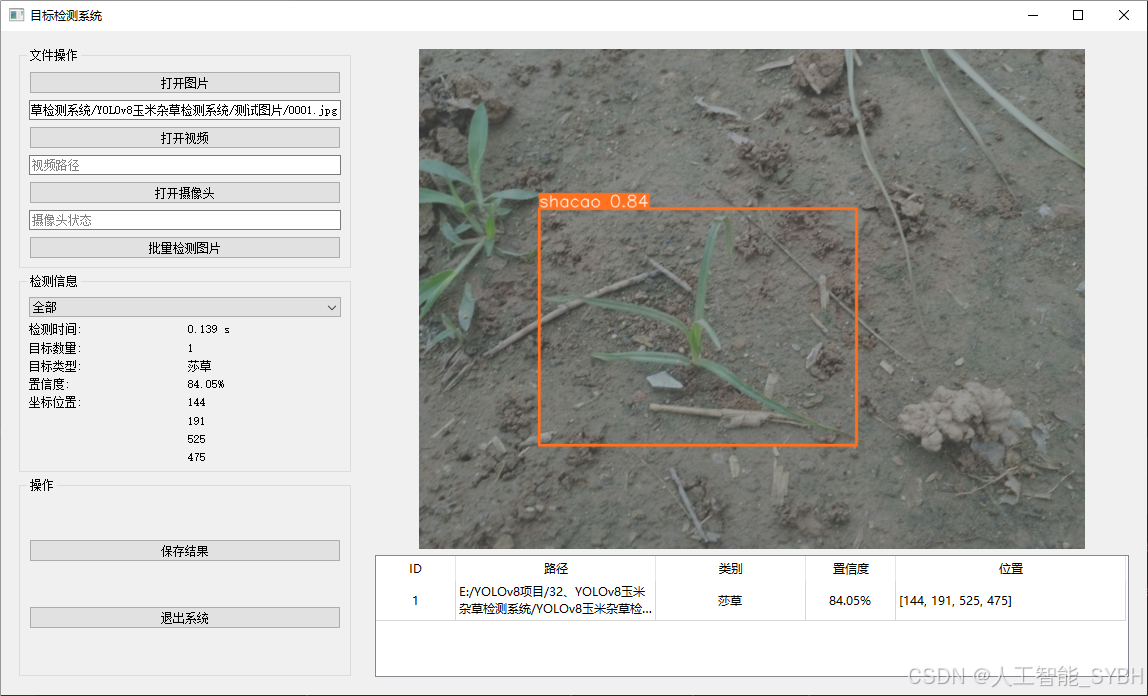
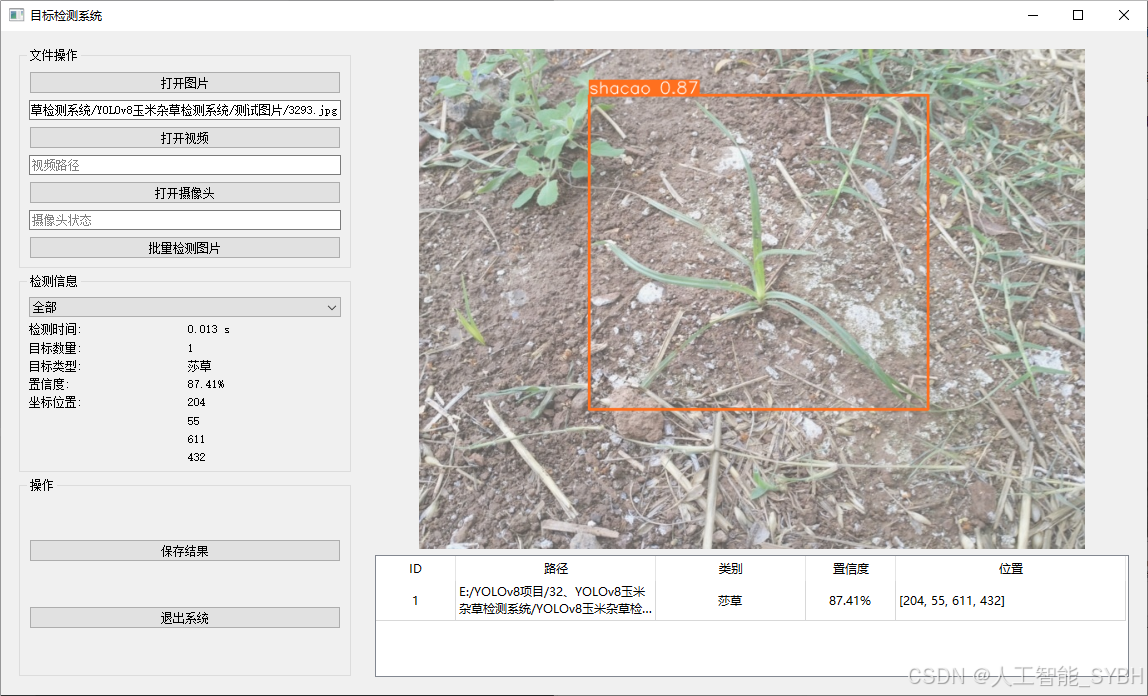
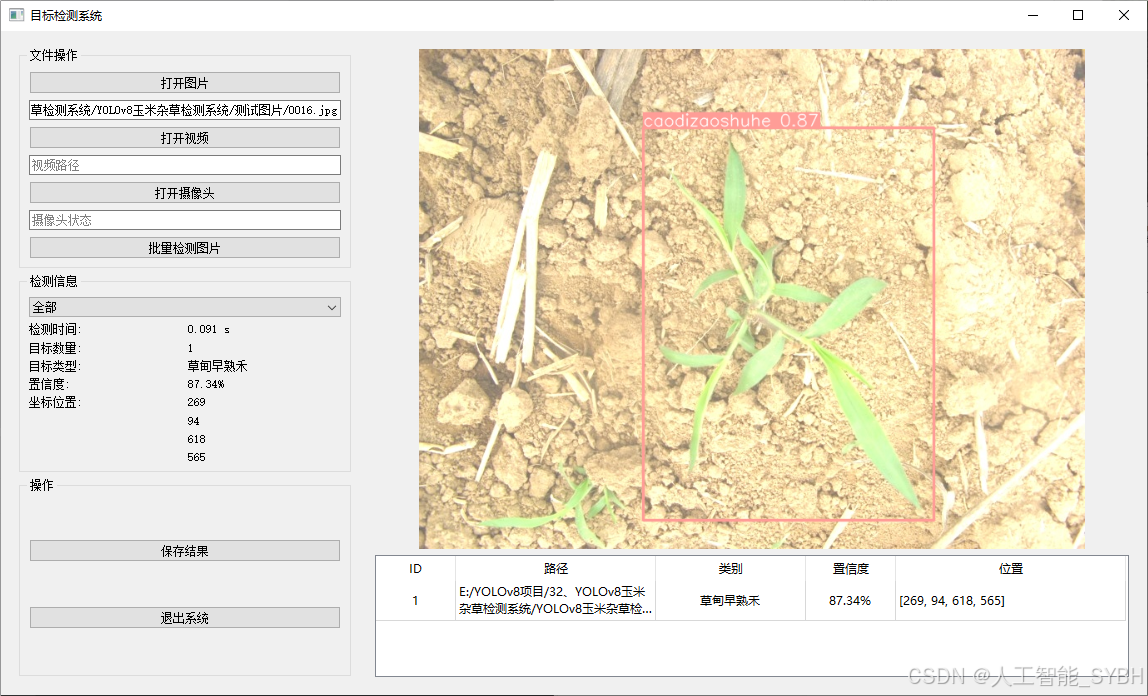
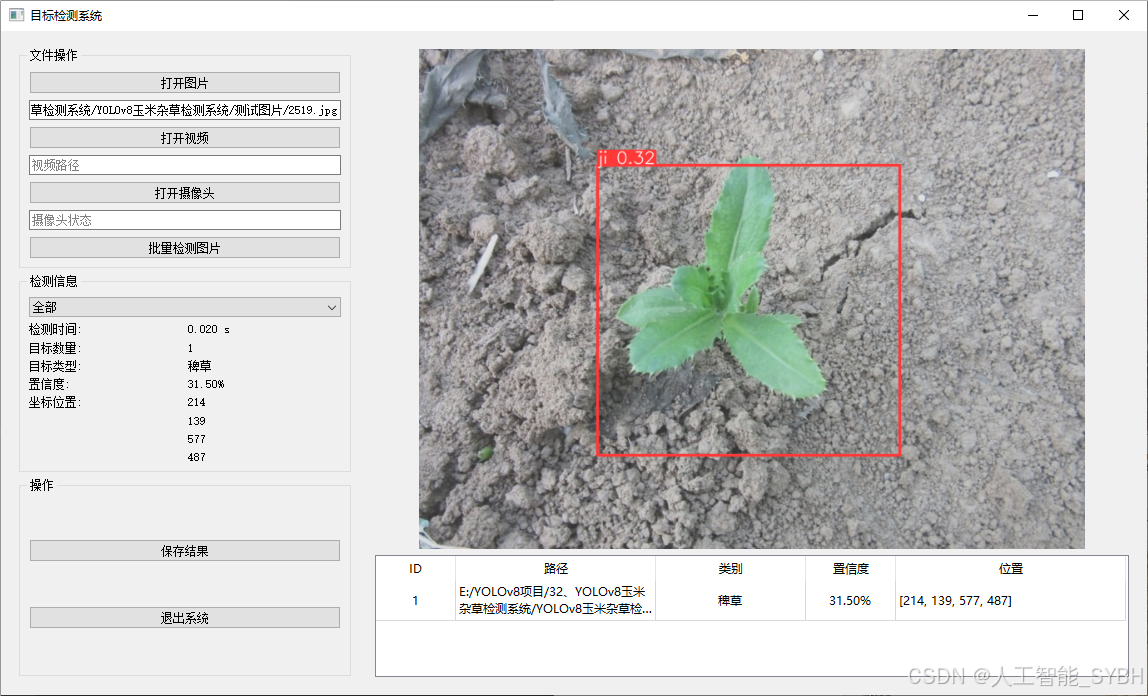
✅ 图片检测:可对单张图片进行检测,返回检测框及类别信息。
✅ 批量图片检测:支持文件夹输入,一次性检测多张图片,生成批量检测结果。
✅ 视频检测:支持视频文件输入,检测视频中每一帧的情况。
✅ 摄像头实时检测:连接USB 摄像头,实现实时监测,
-
图片检测
该功能允许用户通过单张图片进行目标检测。输入一张图片后,YOLO模型会实时分析图像,识别出其中的目标,并在图像中框出检测到的目标,输出带有目标框的图像。批量图片检测
用户可以一次性上传多个图片进行批量处理。该功能支持对多个图像文件进行并行处理,并返回每张图像的目标检测结果,适用于需要大规模处理图像数据的应用场景。
-
视频检测
视频检测功能允许用户将视频文件作为输入。YOLO模型将逐帧分析视频,并在每一帧中标记出检测到的目标。最终结果可以是带有目标框的视频文件或实时展示,适用于视频监控和分析等场景。
-
摄像头实时检测
该功能支持通过连接摄像头进行实时目标检测。YOLO模型能够在摄像头拍摄的实时视频流中进行目标检测,实时识别并显示检测结果。此功能非常适用于安防监控、无人驾驶、智能交通等应用,提供即时反馈。
核心特点:
- 高精度:基于YOLO模型,提供精确的目标检测能力,适用于不同类型的图像和视频。
- 实时性:特别优化的算法使得实时目标检测成为可能,无论是在视频还是摄像头实时检测中,响应速度都非常快。
- 批量处理:支持高效的批量图像和视频处理,适合大规模数据分析。
三、数据集介绍
数据集名称: 五种杂草检测数据集
数据集内容:
-
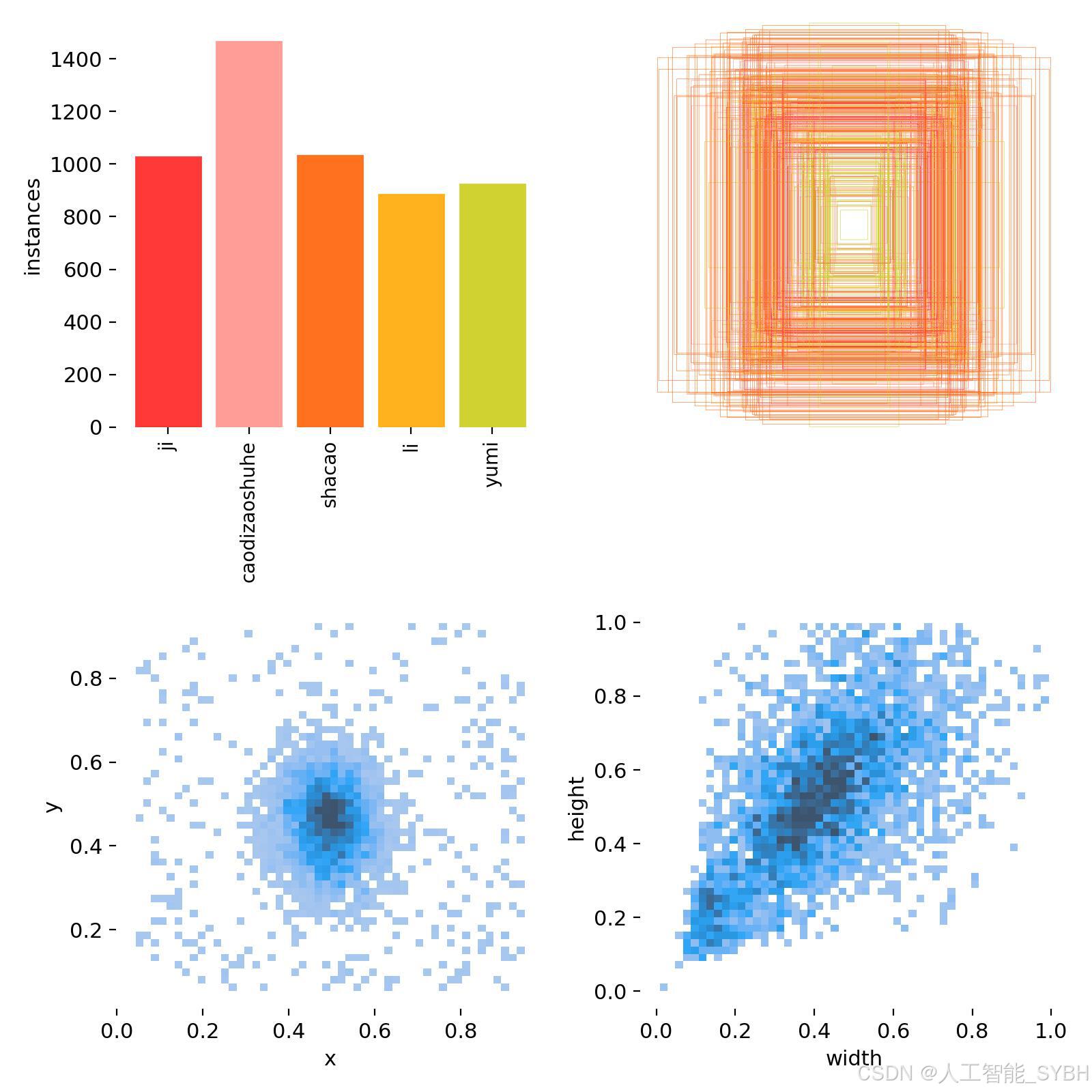
类别: 5类
-
ji(杂草1) -
caodizaoshuhe(杂草2) -
shacao(杂草3) -
li(杂草4) -
yumi(杂草5)
-
-
数据量:
-
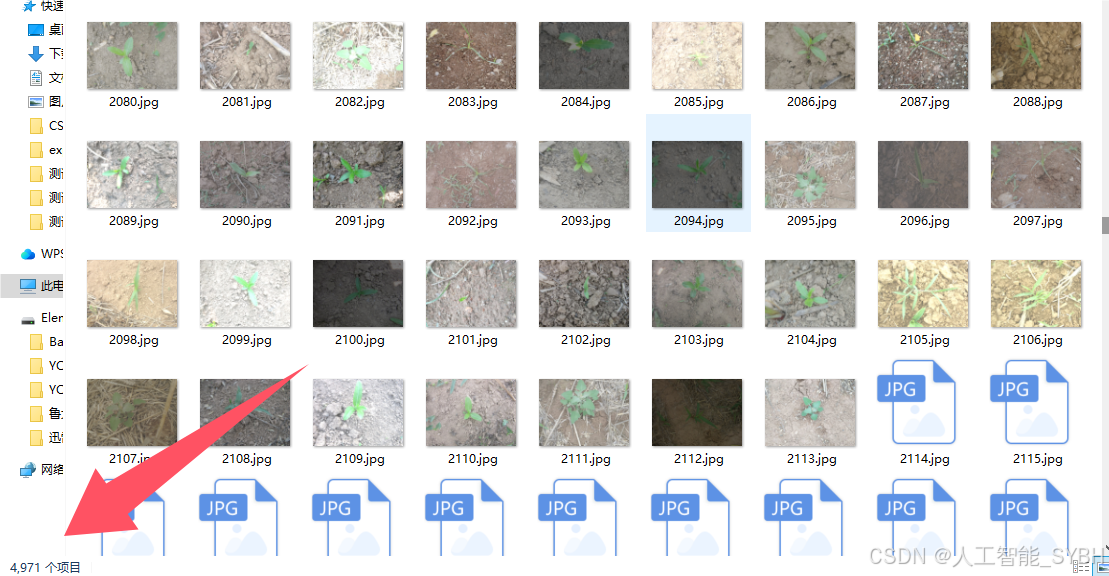
训练集: 4971张图像
-
验证集: 312张图像
-
数据集特点:
-
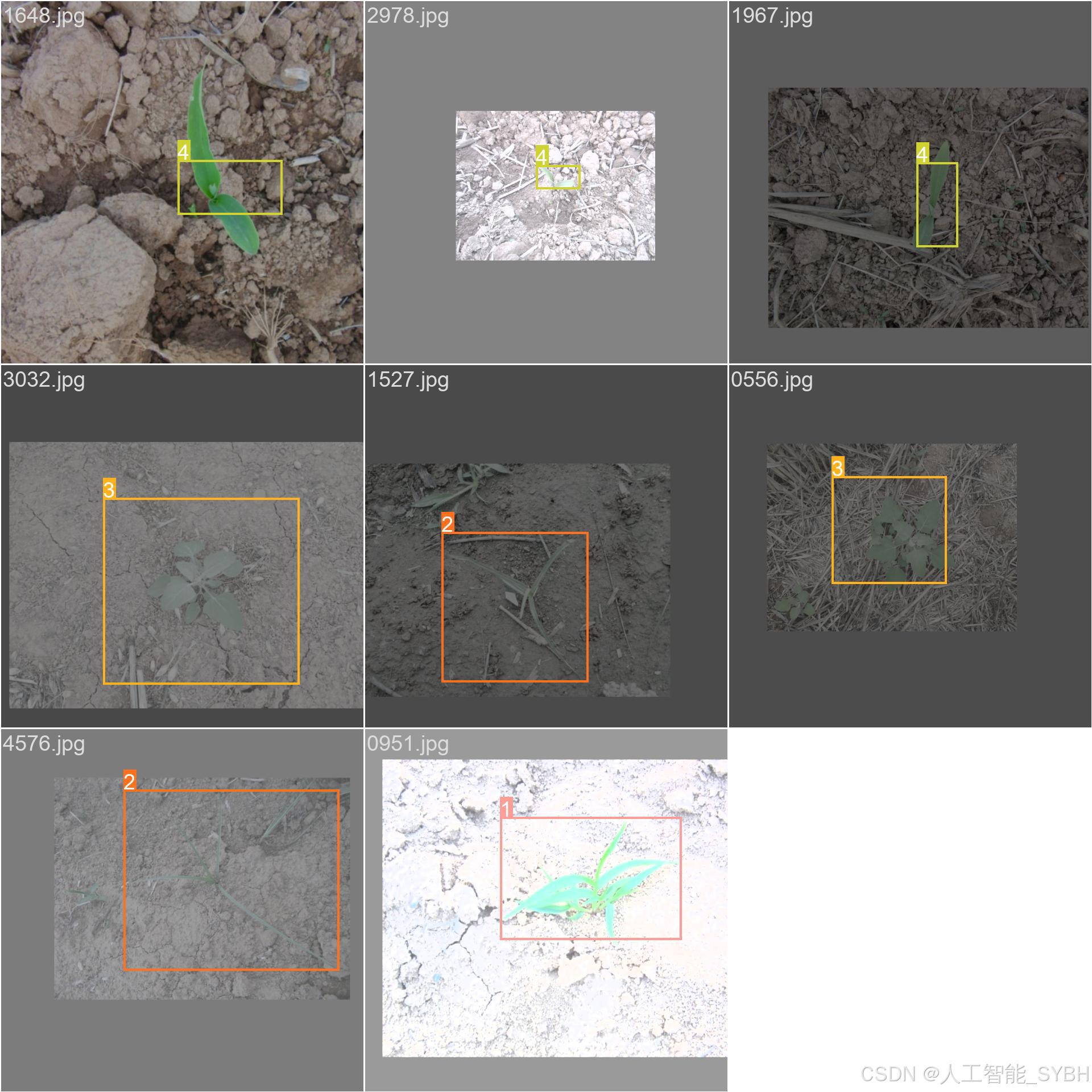
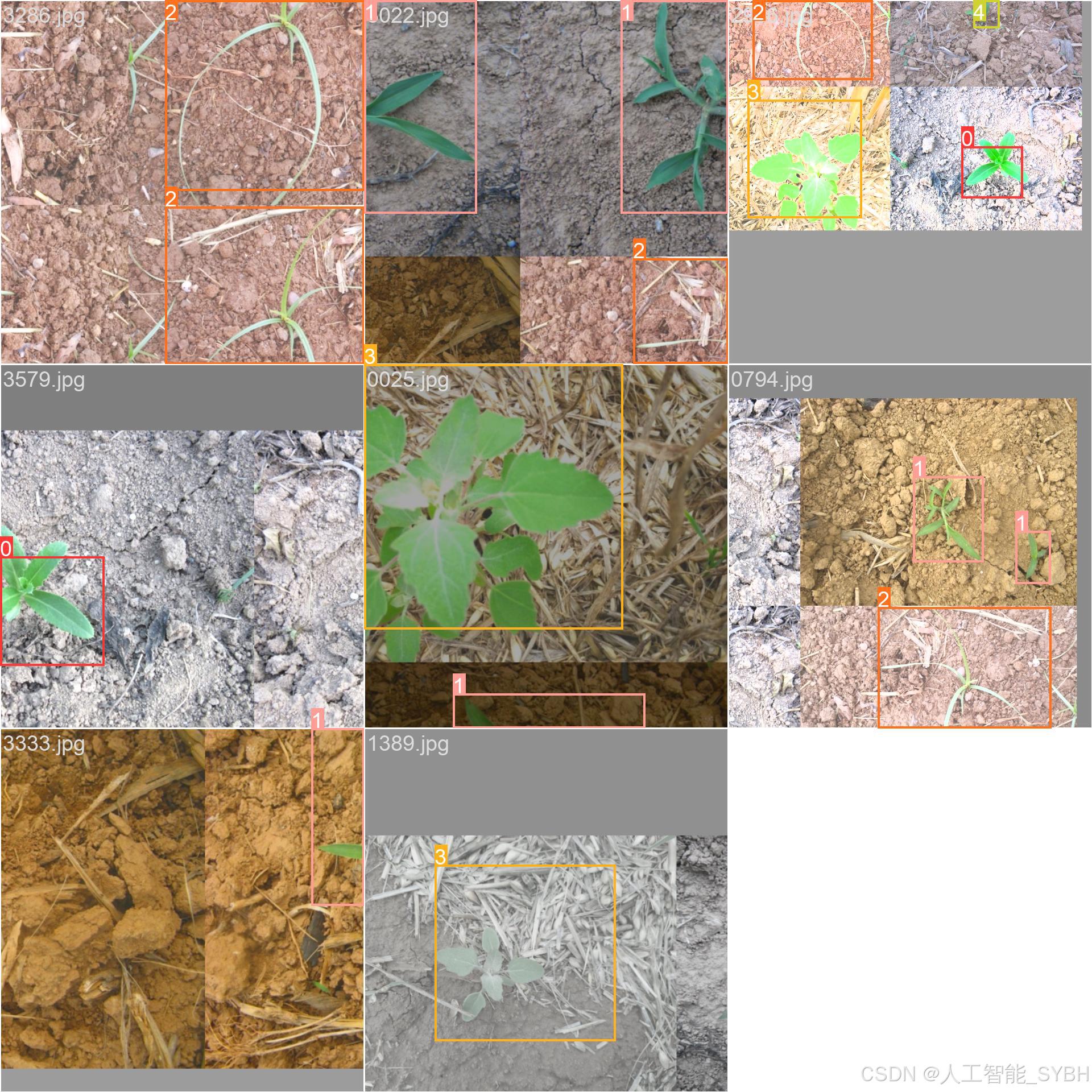
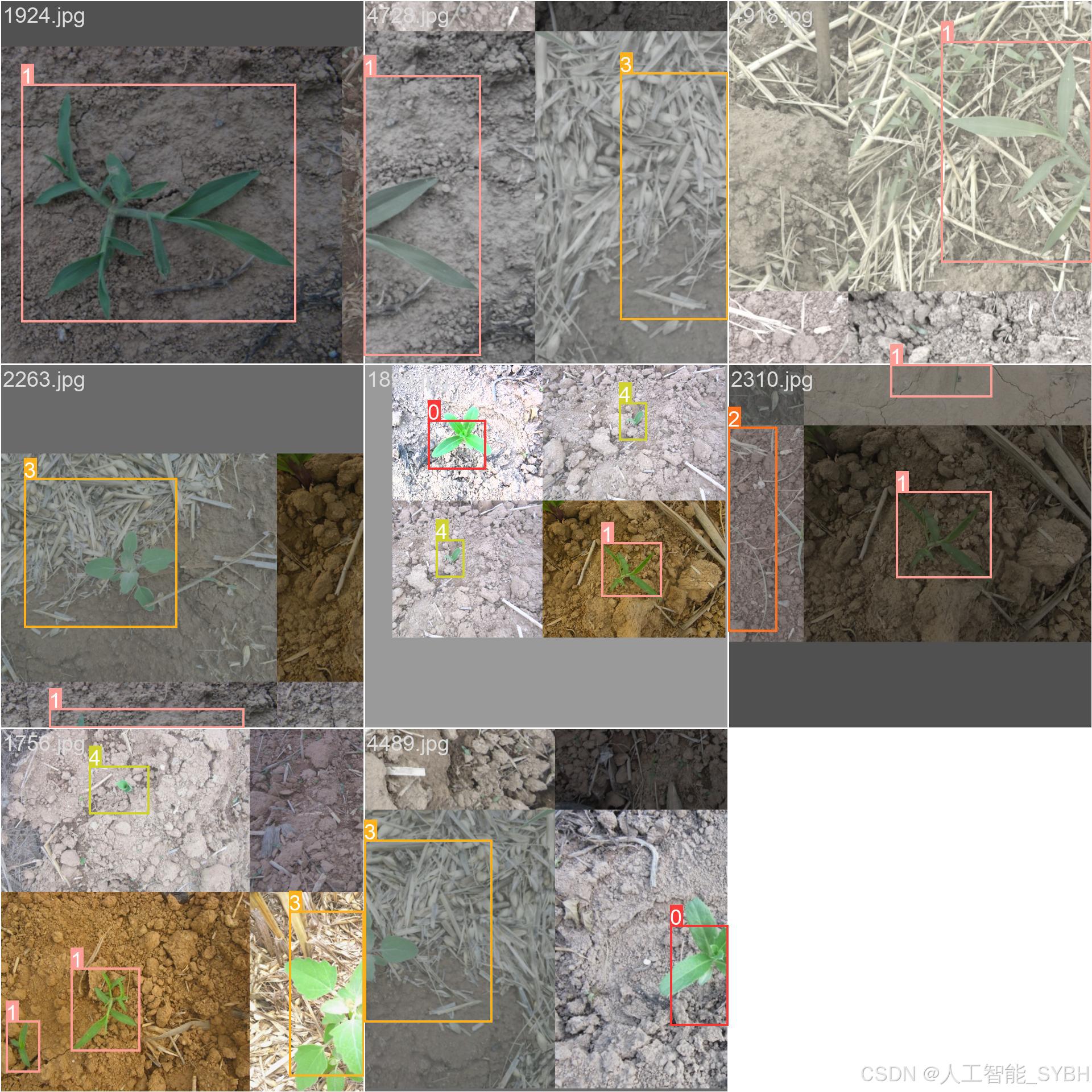
多样性: 数据集涵盖了不同光照条件、背景环境以及杂草生长阶段的图像,确保模型能够适应各种实际场景。
-
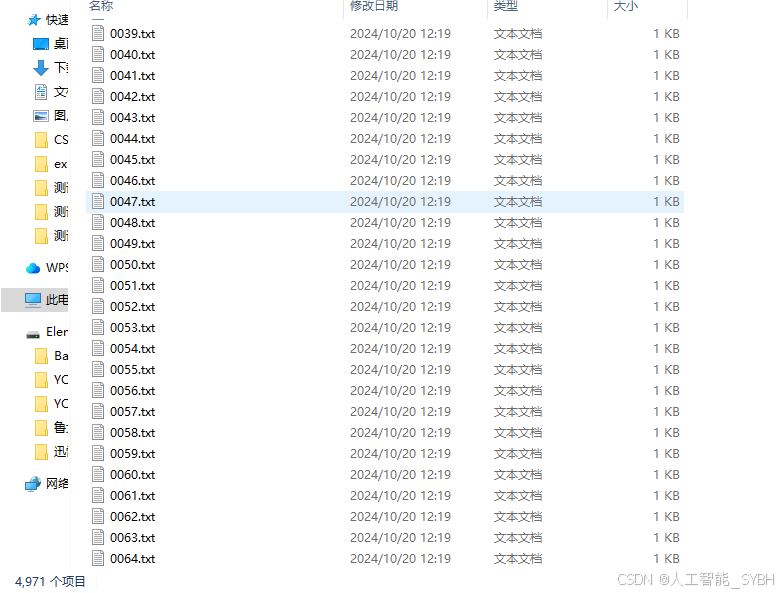
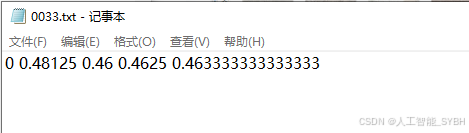
标注格式: 数据集采用YOLO格式标注,每张图像对应一个
.txt文件,包含目标类别和边界框信息(归一化后的中心点坐标、宽度和高度)。 -
数据平衡: 各类别杂草的样本数量经过平衡处理,避免模型训练过程中出现类别偏差。
数据预处理:
-
图像增强: 包括随机裁剪、旋转、翻转、亮度调整等,以提高模型的泛化能力。
-
归一化: 图像像素值归一化到[0, 1]范围,加速模型收敛。
-
数据划分: 数据集已划分为训练集和验证集,确保模型训练和评估的有效性。
数据集配置文件data.yaml
train: .\datasets\images\train
val: .\datasets\images\val
test: .\datasets\images\test


# Classes
nc: 5
names: ['ji','caodizaoshuhe','shacao','li','yumi']
数据集制作流程
-
标注数据:使用标注工具(如LabelImg、CVAT等)对图像中的目标进行标注。每个目标需要标出边界框,并且标注类别。
-
转换格式:将标注的数据转换为YOLO格式。YOLO标注格式为每行:
<object-class> <x_center> <y_center> <width> <height>,这些坐标是相对于图像尺寸的比例。 -
分割数据集:将数据集分为训练集、验证集和测试集,通常的比例是80%训练集、10%验证集和10%测试集。
-
准备标签文件:为每张图片生成一个对应的标签文件,确保标签文件与图片的命名一致。
-
调整图像尺寸:根据YOLO网络要求,统一调整所有图像的尺寸(如416x416或608x608)。
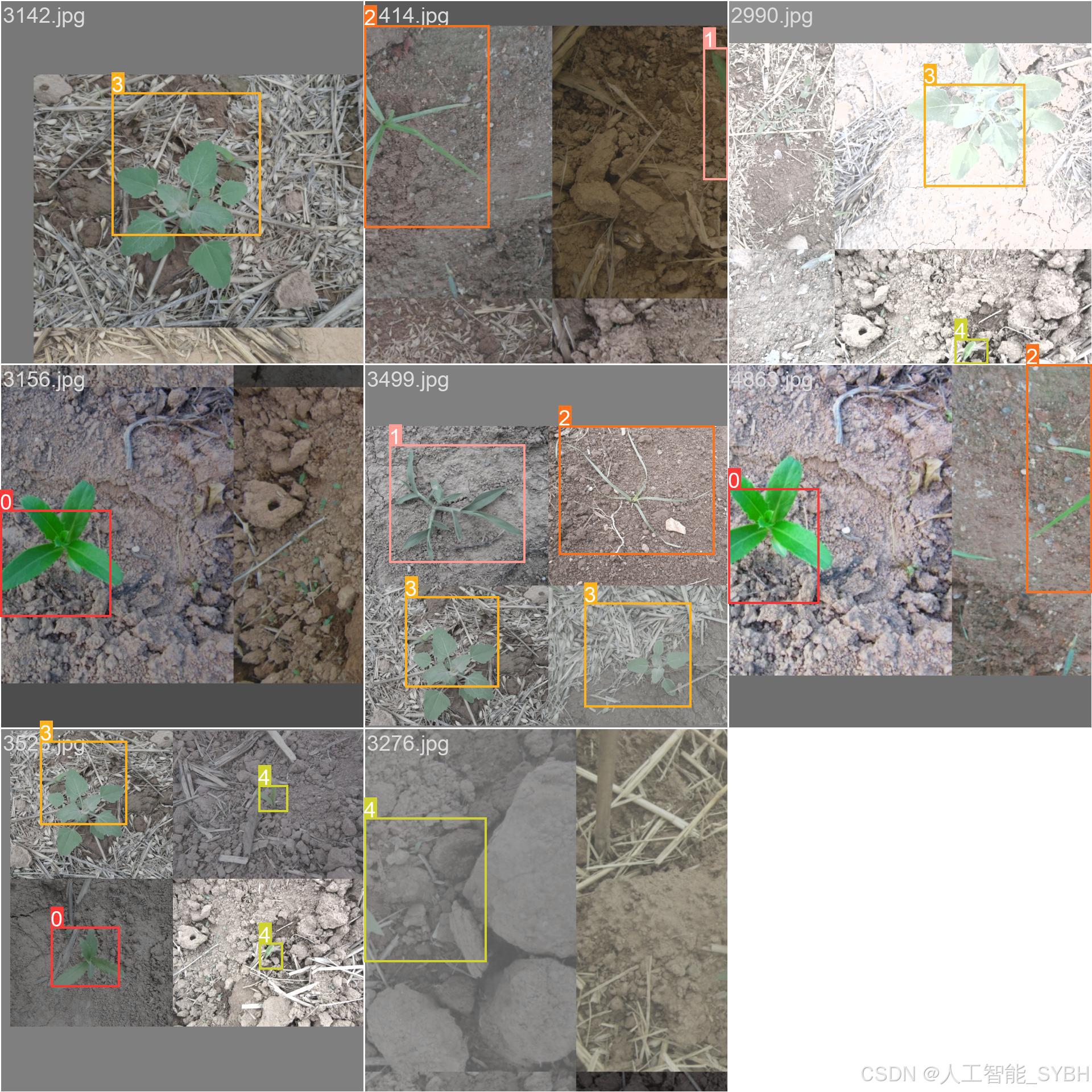
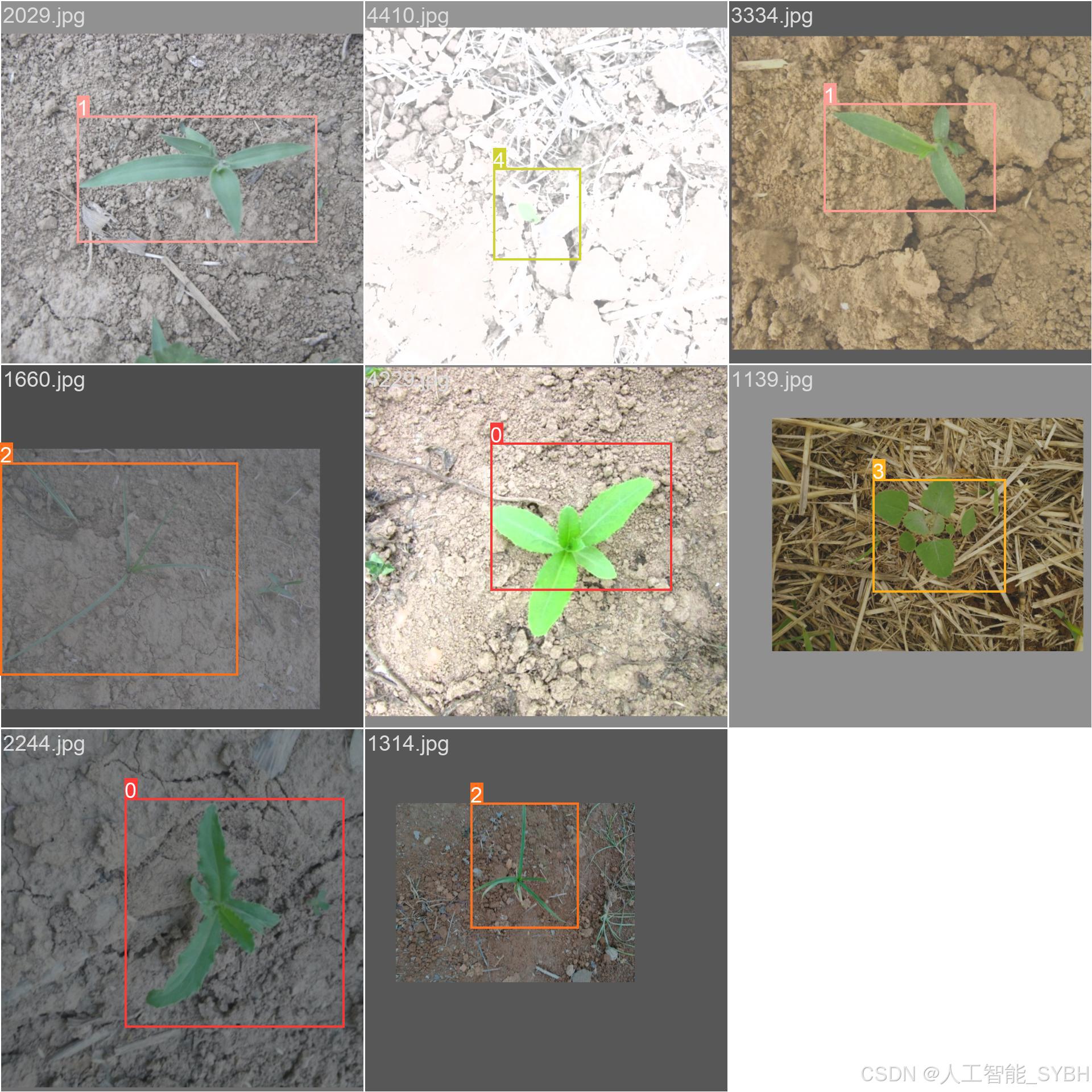
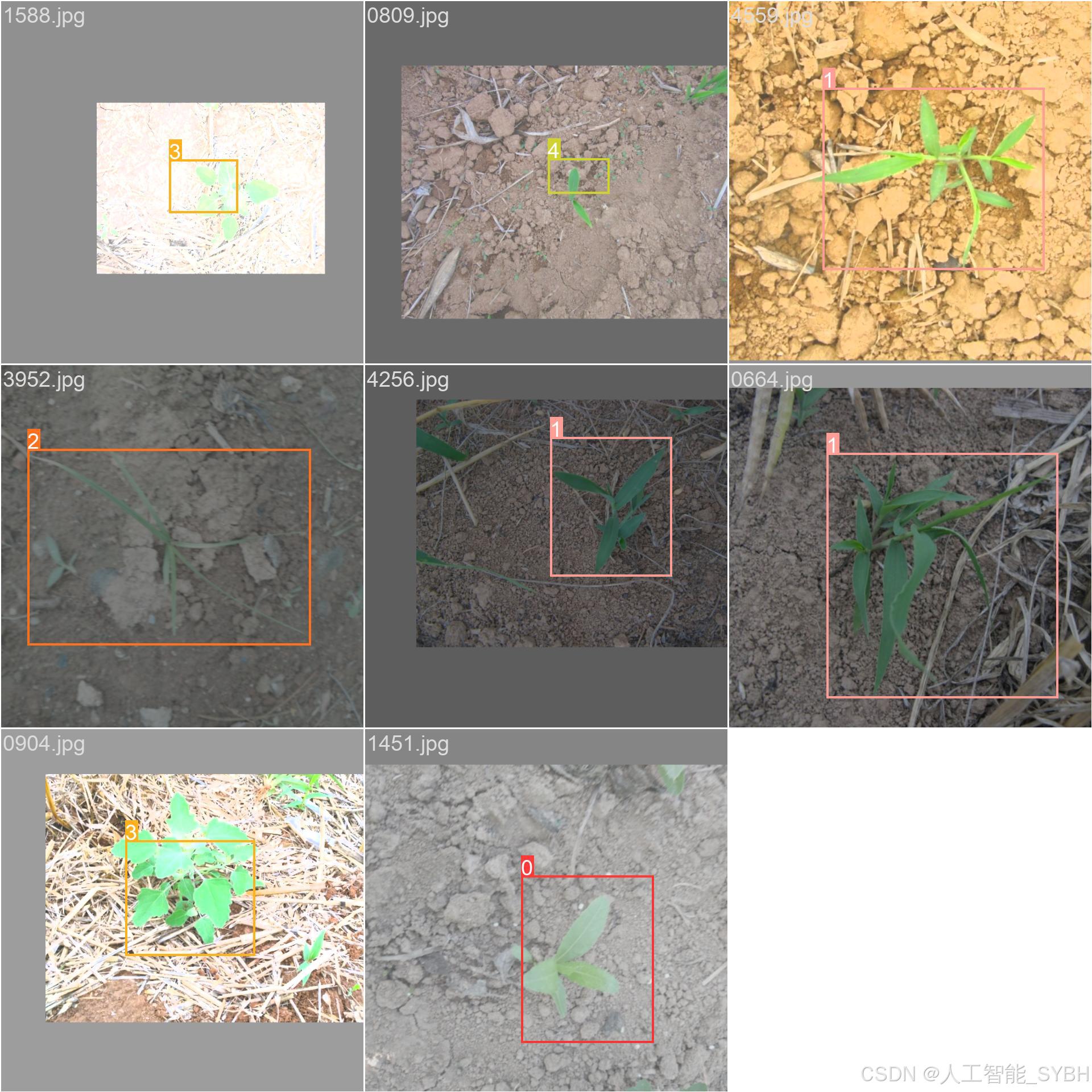
四、项目环境配置
创建虚拟环境
首先新建一个Anaconda环境,每个项目用不同的环境,这样项目中所用的依赖包互不干扰。
终端输入
conda create -n yolov8 python==3.9

激活虚拟环境
conda activate yolov8

安装cpu版本pytorch
pip install torch torchvision torchaudio

pycharm中配置anaconda


安装所需要库
pip install -r requirements.txt

五、模型训练
训练代码
from ultralytics import YOLO

model_path = 'yolov8s.pt'
data_path = 'datasets/data.yaml'

if __name__ == '__main__':
    model = YOLO(model_path)
    results = model.train(data=data_path,
                          epochs=500,
                          batch=64,
                          device='0',
                          workers=0,
                          project='runs/detect',
                          name='exp',
                          )
根据实际情况更换模型 yolov8n.yaml (nano):轻量化模型,适合嵌入式设备,速度快但精度略低。 yolov8s.yaml (small):小模型,适合实时任务。 yolov8m.yaml (medium):中等大小模型,兼顾速度和精度。 yolov8b.yaml (base):基本版模型,适合大部分应用场景。 yolov8l.yaml (large):大型模型,适合对精度要求高的任务。
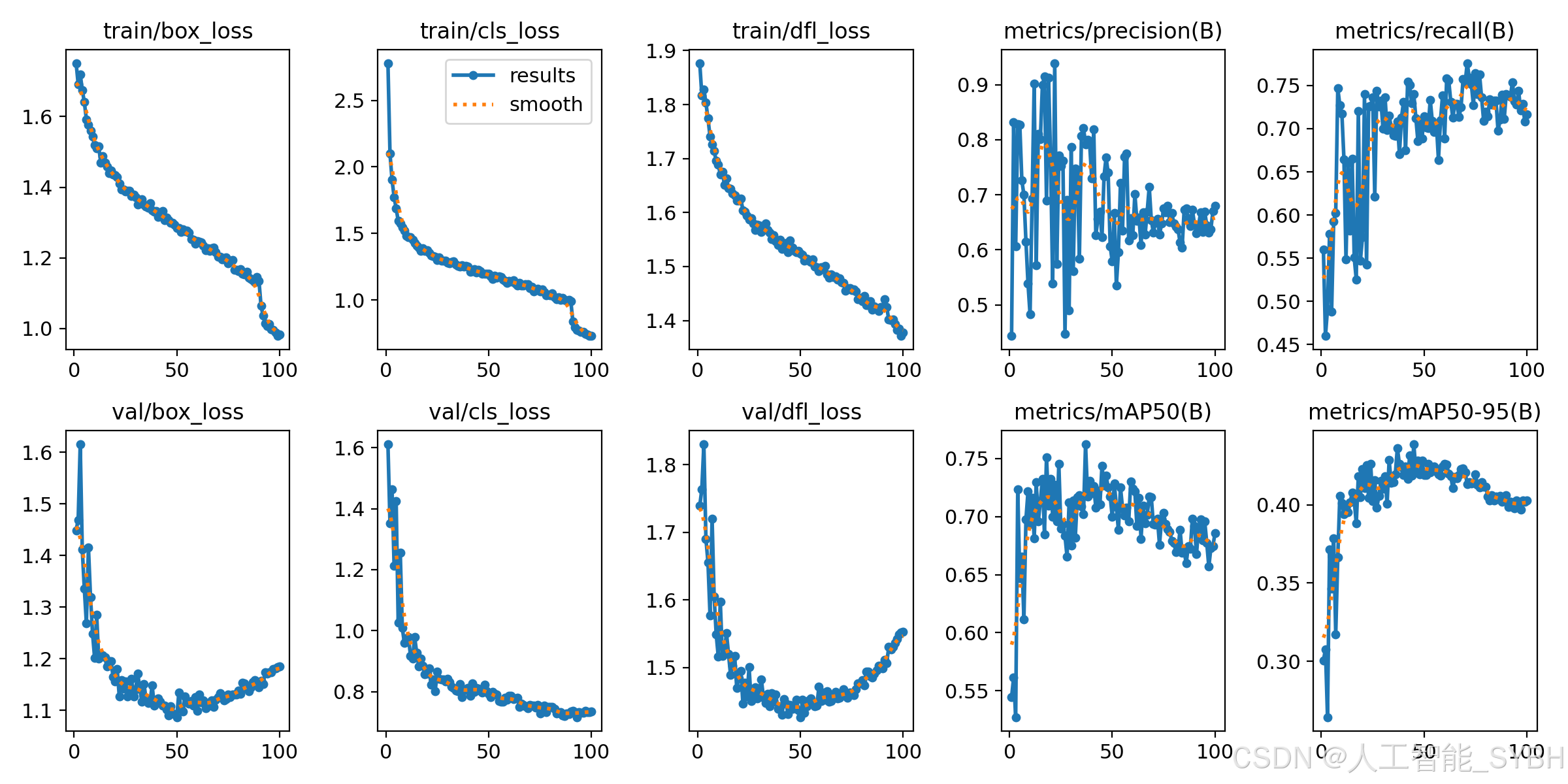
--batch 64:每批次64张图像。--epochs 500:训练500轮。--datasets/data.yaml:数据集配置文件。--weights yolov8s.pt:初始化模型权重,yolov8s.pt是预训练的轻量级YOLO模型。
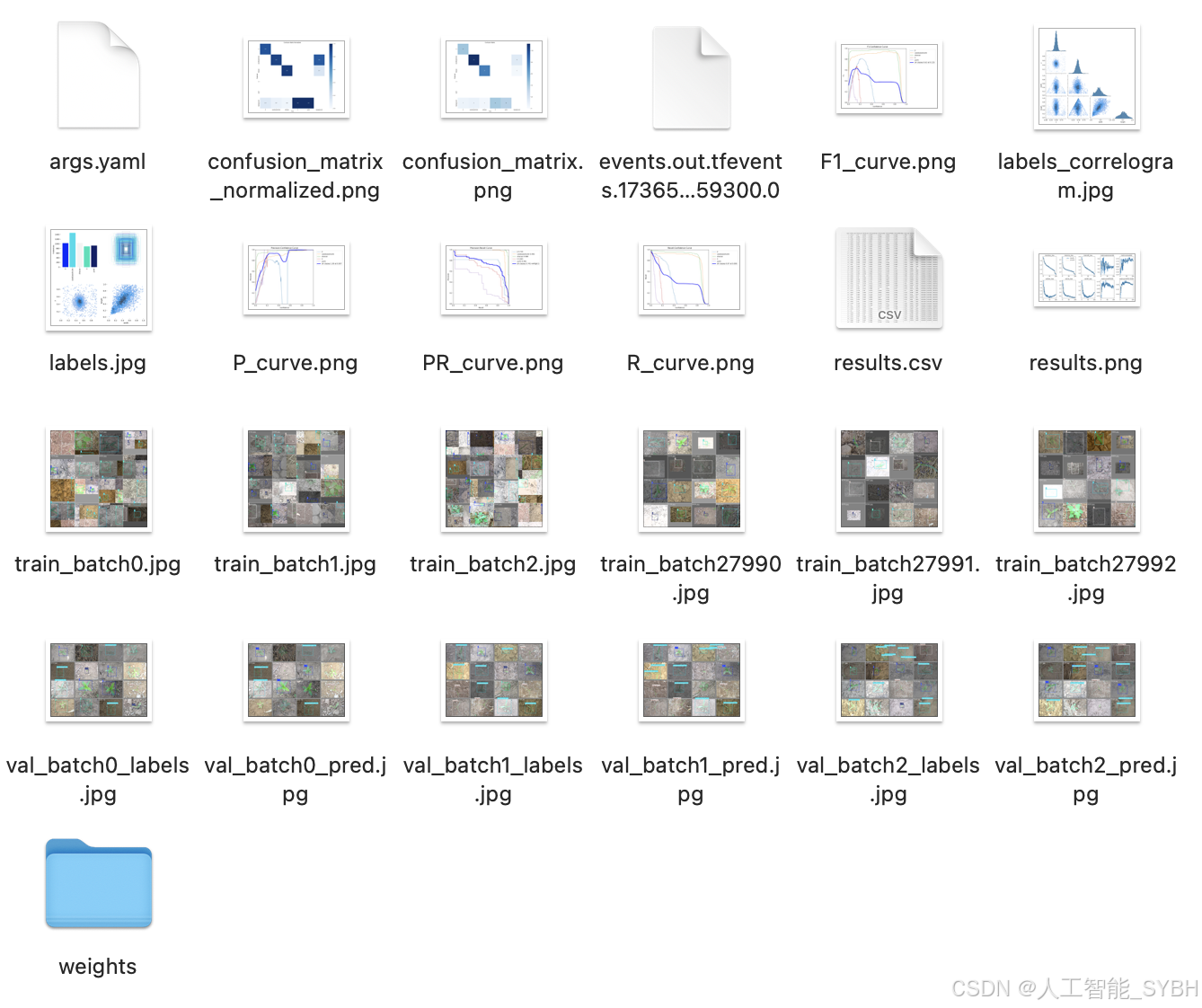
训练结果
六、核心代码
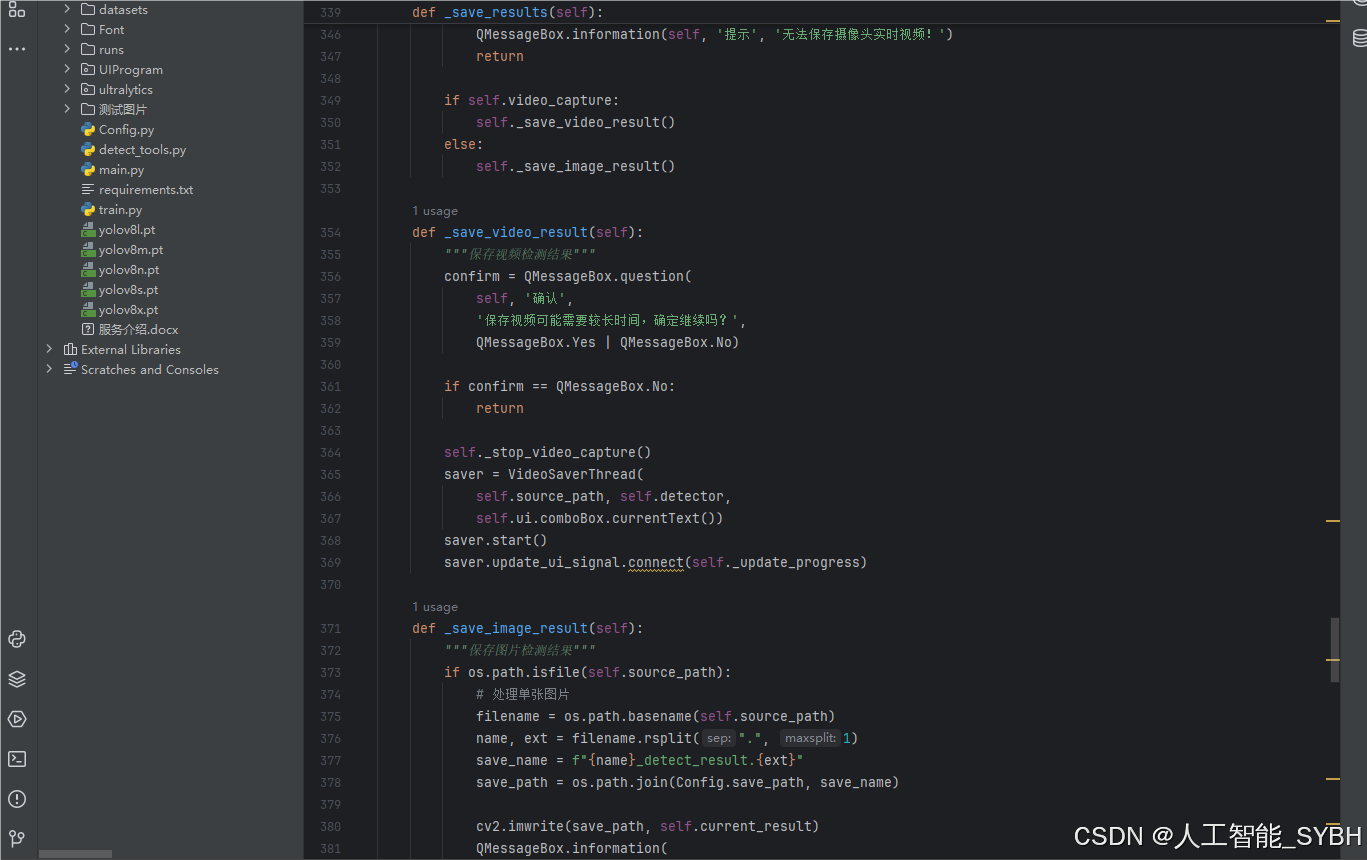
# -*- coding: utf-8 -*-
import os
import sys
import time
import cv2
import numpy as np
from PIL import ImageFont
from PyQt5.QtCore import Qt, QTimer, QThread, pyqtSignal, QCoreApplication
from PyQt5.QtWidgets import (QApplication, QMainWindow, QFileDialog,
                             QMessageBox, QWidget, QHeaderView,
                             QTableWidgetItem, QAbstractItemView)
from ultralytics import YOLO

# 自定义模块导入
sys.path.append('UIProgram')
from UIProgram.UiMain import Ui_MainWindow
from UIProgram.QssLoader import QSSLoader
from UIProgram.precess_bar import ProgressBar
import detect_tools as tools
import Config


class DetectionApp(QMainWindow):
    def __init__(self, parent=None):
        super().__init__(parent)
        self.ui = Ui_MainWindow()
        self.ui.setupUi(self)

        # 初始化应用
        self._setup_ui()
        self._connect_signals()
        self._load_stylesheet()

        # 模型和资源初始化
        self._init_detection_resources()

    def _setup_ui(self):
        """初始化UI界面设置"""
        self.display_width = 700
        self.display_height = 500
        self.source_path = None
        self.camera_active = False
        self.video_capture = None

        # 配置表格控件
        table = self.ui.tableWidget
        table.verticalHeader().setSectionResizeMode(QHeaderView.Fixed)
        table.verticalHeader().setDefaultSectionSize(40)
        table.setColumnWidth(0, 80)  # ID列
        table.setColumnWidth(1, 200)  # 路径列
        table.setColumnWidth(2, 150)  # 类别列
        table.setColumnWidth(3, 90)  # 置信度列
        table.setColumnWidth(4, 230)  # 位置列
        table.setSelectionBehavior(QAbstractItemView.SelectRows)
        table.verticalHeader().setVisible(False)
        table.setAlternatingRowColors(True)

    def _connect_signals(self):
        """连接按钮信号与槽函数"""
        self.ui.PicBtn.clicked.connect(self._handle_image_input)
        self.ui.comboBox.activated.connect(self._update_selection)
        self.ui.VideoBtn.clicked.connect(self._handle_video_input)
        self.ui.CapBtn.clicked.connect(self._toggle_camera)
        self.ui.SaveBtn.clicked.connect(self._save_results)
        self.ui.ExitBtn.clicked.connect(QCoreApplication.quit)
        self.ui.FilesBtn.clicked.connect(self._process_image_batch)

    def _load_stylesheet(self):
        """加载CSS样式表"""
        style_file = 'UIProgram/style.css'
        qss = QSSLoader.read_qss_file(style_file)
        self.setStyleSheet(qss)

    def _init_detection_resources(self):
        """初始化检测相关资源"""
        # 加载YOLOv8模型
        self.detector = YOLO('runs/detect/exp/weights/best.pt', task='detect')
        self.detector(np.zeros((48, 48, 3)))  # 预热模型

        # 初始化字体和颜色
        self.detection_font = ImageFont.truetype("Font/platech.ttf", 25, 0)
        self.color_palette = tools.Colors()

        # 初始化定时器
        self.frame_timer = QTimer()
        self.save_timer = QTimer()

    def _handle_image_input(self):
        """处理单张图片输入"""
        self._stop_video_capture()

        file_path, _ = QFileDialog.getOpenFileName(
            self, '选择图片', './', "图片文件 (*.jpg *.jpeg *.png)")
        if not file_path:
            return

        self._process_single_image(file_path)

    def _process_single_image(self, image_path):
        """处理并显示单张图片的检测结果"""
        self.source_path = image_path
        self.ui.comboBox.setEnabled(True)

        # 读取并检测图片
        start_time = time.time()
        detection_results = self.detector(image_path)[0]
        processing_time = time.time() - start_time

        # 解析检测结果
        boxes = detection_results.boxes.xyxy.tolist()
        self.detection_boxes = [list(map(int, box)) for box in boxes]
        self.detection_classes = detection_results.boxes.cls.int().tolist()
        confidences = detection_results.boxes.conf.tolist()
        self.confidence_scores = [f'{score * 100:.2f}%' for score in confidences]

        # 更新UI显示
        self._update_detection_display(detection_results, processing_time)
        self._update_object_selection()
        self._show_detection_details()
        self._display_results_table(image_path)

    def _update_detection_display(self, results, process_time):
        """更新检测结果显示"""
        # 显示处理时间
        self.ui.time_lb.setText(f'{process_time:.3f} s')

        # 获取带标注的图像
        annotated_img = results.plot()
        self.current_result = annotated_img

        # 调整并显示图像
        width, height = self._calculate_display_size(annotated_img)
        resized_img = cv2.resize(annotated_img, (width, height))
        qimage = tools.cvimg_to_qpiximg(resized_img)

        self.ui.label_show.setPixmap(qimage)
        self.ui.label_show.setAlignment(Qt.AlignCenter)
        self.ui.PiclineEdit.setText(self.source_path)

        # 更新检测数量
        self.ui.label_nums.setText(str(len(self.detection_classes)))

    def _calculate_display_size(self, image):
        """计算适合显示的图像尺寸"""
        img_height, img_width = image.shape[:2]
        aspect_ratio = img_width / img_height

        if aspect_ratio >= self.display_width / self.display_height:
            width = self.display_width
            height = int(width / aspect_ratio)
        else:
            height = self.display_height
            width = int(height * aspect_ratio)

        return width, height

    def _update_object_selection(self):
        """更新目标选择下拉框"""
        options = ['全部']
        target_labels = [
            f'{Config.names[cls_id]}_{idx}'
            for idx, cls_id in enumerate(self.detection_classes)
        ]
        options.extend(target_labels)

        self.ui.comboBox.clear()
        self.ui.comboBox.addItems(options)

    def _show_detection_details(self, index=0):
        """显示检测目标的详细信息"""
        if not self.detection_boxes:
            self._clear_detection_details()
            return

        box = self.detection_boxes[index]
        self.ui.type_lb.setText(Config.CH_names[self.detection_classes[index]])
        self.ui.label_conf.setText(self.confidence_scores[index])
        self.ui.label_xmin.setText(str(box[0]))
        self.ui.label_ymin.setText(str(box[1]))
        self.ui.label_xmax.setText(str(box[2]))
        self.ui.label_ymax.setText(str(box[3]))

    def _clear_detection_details(self):
        """清空检测详情显示"""
        self.ui.type_lb.setText('')
        self.ui.label_conf.setText('')
        self.ui.label_xmin.setText('')
        self.ui.label_ymin.setText('')
        self.ui.label_xmax.setText('')
        self.ui.label_ymax.setText('')

    def _display_results_table(self, source_path):
        """在表格中显示检测结果"""
        table = self.ui.tableWidget
        table.setRowCount(0)
        table.clearContents()

        for idx, (box, cls_id, conf) in enumerate(zip(
                self.detection_boxes, self.detection_classes, self.confidence_scores)):

            row = table.rowCount()
            table.insertRow(row)

            # 添加表格项
            items = [
                QTableWidgetItem(str(row + 1)),  # ID
                QTableWidgetItem(source_path),  # 路径
                QTableWidgetItem(Config.CH_names[cls_id]),  # 类别
                QTableWidgetItem(conf),  # 置信度
                QTableWidgetItem(str(box))  # 位置坐标
            ]

            # 设置文本居中
            for item in [items[0], items[2], items[3]]:
                item.setTextAlignment(Qt.AlignCenter)

            # 添加到表格
            for col, item in enumerate(items):
                table.setItem(row, col, item)

        table.scrollToBottom()

    def _process_image_batch(self):
        """批量处理图片"""
        self._stop_video_capture()

        folder = QFileDialog.getExistingDirectory(self, "选择图片文件夹", "./")
        if not folder:
            return

        self.source_path = folder
        valid_extensions = {'jpg', 'png', 'jpeg', 'bmp'}

        for filename in os.listdir(folder):
            filepath = os.path.join(folder, filename)
            if (os.path.isfile(filepath) and
                    filename.split('.')[-1].lower() in valid_extensions):
                self._process_single_image(filepath)
                QApplication.processEvents()  # 保持UI响应

    def _update_selection(self):
        """更新用户选择的检测目标显示"""
        selection = self.ui.comboBox.currentText()

        if selection == '全部':
            boxes = self.detection_boxes
            display_img = self.current_result
            self._show_detection_details(0)
        else:
            idx = int(selection.split('_')[-1])
            boxes = [self.detection_boxes[idx]]
            display_img = self.detector(self.source_path)[0][idx].plot()
            self._show_detection_details(idx)

        # 更新显示
        width, height = self._calculate_display_size(display_img)
        resized_img = cv2.resize(display_img, (width, height))
        qimage = tools.cvimg_to_qpiximg(resized_img)

        self.ui.label_show.clear()
        self.ui.label_show.setPixmap(qimage)
        self.ui.label_show.setAlignment(Qt.AlignCenter)

    def _handle_video_input(self):
        """处理视频输入"""
        if self.camera_active:
            self._toggle_camera()

        video_path = self._get_video_path()
        if not video_path:
            return

        self._start_video_processing(video_path)
        self.ui.comboBox.setEnabled(False)

    def _get_video_path(self):
        """获取视频文件路径"""
        path, _ = QFileDialog.getOpenFileName(
            self, '选择视频', './', "视频文件 (*.avi *.mp4)")

        if path:
            self.source_path = path
            self.ui.VideolineEdit.setText(path)
            return path
        return None

    def _start_video_processing(self, video_path):
        """开始处理视频流"""
        self.video_capture = cv2.VideoCapture(video_path)
        self.frame_timer.start(1)
        self.frame_timer.timeout.connect(self._process_video_frame)

    def _stop_video_capture(self):
        """停止视频捕获"""
        if self.video_capture:
            self.video_capture.release()
            self.frame_timer.stop()
            self.camera_active = False
            self.ui.CaplineEdit.setText('摄像头未开启')
            self.video_capture = None

    def _process_video_frame(self):
        """处理视频帧"""
        ret, frame = self.video_capture.read()
        if not ret:
            self._stop_video_capture()
            return

        # 执行目标检测
        start_time = time.time()
        results = self.detector(frame)[0]
        processing_time = time.time() - start_time

        # 解析结果
        self.detection_boxes = results.boxes.xyxy.int().tolist()
        self.detection_classes = results.boxes.cls.int().tolist()
        self.confidence_scores = [f'{conf * 100:.2f}%' for conf in results.boxes.conf.tolist()]

        # 更新显示
        self._update_detection_display(results, processing_time)
        self._update_object_selection()
        self._show_detection_details()
        self._display_results_table(self.source_path)

    def _toggle_camera(self):
        """切换摄像头状态"""
        self.camera_active = not self.camera_active

        if self.camera_active:
            self.ui.CaplineEdit.setText('摄像头开启')
            self.video_capture = cv2.VideoCapture(0)
            self._start_video_processing(0)
            self.ui.comboBox.setEnabled(False)
        else:
            self.ui.CaplineEdit.setText('摄像头未开启')
            self.ui.label_show.clear()
            self._stop_video_capture()

    def _save_results(self):
        """保存检测结果"""
        if not self.video_capture and not self.source_path:
            QMessageBox.information(self, '提示', '没有可保存的内容,请先打开图片或视频!')
            return

        if self.camera_active:
            QMessageBox.information(self, '提示', '无法保存摄像头实时视频!')
            return

        if self.video_capture:
            self._save_video_result()
        else:
            self._save_image_result()

    def _save_video_result(self):
        """保存视频检测结果"""
        confirm = QMessageBox.question(
            self, '确认',
            '保存视频可能需要较长时间,确定继续吗?',
            QMessageBox.Yes | QMessageBox.No)

        if confirm == QMessageBox.No:
            return

        self._stop_video_capture()
        saver = VideoSaverThread(
            self.source_path, self.detector,
            self.ui.comboBox.currentText())
        saver.start()
        saver.update_ui_signal.connect(self._update_progress)

    def _save_image_result(self):
        """保存图片检测结果"""
        if os.path.isfile(self.source_path):
            # 处理单张图片
            filename = os.path.basename(self.source_path)
            name, ext = filename.rsplit(".", 1)
            save_name = f"{name}_detect_result.{ext}"
            save_path = os.path.join(Config.save_path, save_name)

            cv2.imwrite(save_path, self.current_result)
            QMessageBox.information(
                self, '完成',
                f'图片已保存至: {save_path}')
        else:
            # 处理文件夹中的图片
            valid_exts = {'jpg', 'png', 'jpeg', 'bmp'}
            for filename in os.listdir(self.source_path):
                if filename.split('.')[-1].lower() in valid_exts:
                    filepath = os.path.join(self.source_path, filename)
                    name, ext = filename.rsplit(".", 1)
                    save_name = f"{name}_detect_result.{ext}"
                    save_path = os.path.join(Config.save_path, save_name)

                    results = self.detector(filepath)[0]
                    cv2.imwrite(save_path, results.plot())

            QMessageBox.information(
                self, '完成',
                f'所有图片已保存至: {Config.save_path}')

    def _update_progress(self, current, total):
        """更新保存进度"""
        if current == 1:
            self.progress_dialog = ProgressBar(self)
            self.progress_dialog.show()

        if current >= total:
            self.progress_dialog.close()
            QMessageBox.information(
                self, '完成',
                f'视频已保存至: {Config.save_path}')
            return

        if not self.progress_dialog.isVisible():
            return

        percent = int(current / total * 100)
        self.progress_dialog.setValue(current, total, percent)
        QApplication.processEvents()


class VideoSaverThread(QThread):
    """视频保存线程"""
    update_ui_signal = pyqtSignal(int, int)

    def __init__(self, video_path, model, selection):
        super().__init__()
        self.video_path = video_path
        self.detector = model
        self.selection = selection
        self.active = True
        self.colors = tools.Colors()

    def run(self):
        """执行视频保存"""
        cap = cv2.VideoCapture(self.video_path)
        fourcc = cv2.VideoWriter_fourcc(*'XVID')
        fps = cap.get(cv2.CAP_PROP_FPS)
        size = (
            int(cap.get(cv2.CAP_PROP_FRAME_WIDTH)),
            int(cap.get(cv2.CAP_PROP_FRAME_HEIGHT)))

        filename = os.path.basename(self.video_path)
        name, _ = filename.split('.')
        save_path = os.path.join(
            Config.save_path,
            f"{name}_detect_result.avi")

        writer = cv2.VideoWriter(save_path, fourcc, fps, size)
        total_frames = int(cap.get(cv2.CAP_PROP_FRAME_COUNT))
        current_frame = 0

        while cap.isOpened() and self.active:
            current_frame += 1
            ret, frame = cap.read()

            if not ret:
                break

            # 执行检测
            results = self.detector(frame)[0]
            frame = results.plot()
            writer.write(frame)
            self.update_ui_signal.emit(current_frame, total_frames)

        # 释放资源
        cap.release()
        writer.release()

    def stop(self):
        """停止保存过程"""
        self.active = False


if __name__ == "__main__":
    app = QApplication(sys.argv)
    window = DetectionApp()
    window.show()
    sys.exit(app.exec_())
七、项目
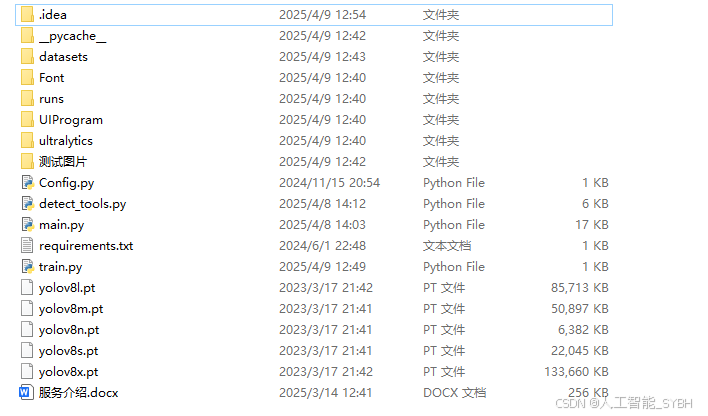
演示与介绍视频:
基于深度学习的五种杂草检测系统(YOLOv8+YOLO数据集+UI界面+Python项目源码+模型)_哔哩哔哩_bilibili
基于深度学习的五种杂草检测系统(YOLOv8+YOLO数据集+UI界面+Python项目源码+模型)






 扫一扫
扫一扫


 995
995

 被折叠的 条评论
为什么被折叠?
被折叠的 条评论
为什么被折叠?
 到【灌水乐园】发言





