


 本文分享了一个将BERT模型应用于英文命名实体识别(NER)的实验过程,包括如何克服资源限制、解决技术难题,最终实现了良好的识别效果。
今天下班了,想着有好多天没更新文章了,就想着把最近做的一点实验给记录下来,实验是关于bert应用于英文命名实体识别的。认真看完,有吐槽也有搞笑。

1 背景
前段时间我在家里办公了小久,被安排去研究bert用于ner识别,心里很是咯噔了一下,心想这么大的模型,我那小破台式机才1060GTX 4G显存,我咋去跑bert这么大的模型,然而公司现在也没机器可用,要是我有块Tesla V100 32G(舔舔口水)该有多好 ! 后来想了想,那就把bert层的参数固定住,不参与训练,反正这么多大佬都说bert预训练词向量的表达已经是很有效的信息了。
2 过程
这么大的项目当然不可能从头开始写撒,于是在github上找了几个bert ner相关的项目,废了九牛二虎之力,终于把bert 层的权重给固定住了。那就开始实验吧,发现这几个项目都是各种报错,这里是要吐槽下,tf1.x确实在调试方面很难用,不过我对torch的工程化一直很嫌弃,所以一直也是在坚持使用和学习tf1.x版本。最后还是借鉴了github上的一个项目,因为就它看起来最靠谱:https://github.com/macanv/BERT-BiLSTM-CRF-NER
它是在官方公布的bert源码上进行了封装,采用的是tf estimator + model_fn回调函数进行封装训练,顺便说一下tf.estimator也是官方极力推荐的tf1.x版本的训练方法。
不过这个项目是做中文NER识别的,因为中文数据经过训练和测试效果都没啥问题,就决定在上面改造成英文NER,改造了下数据输入和最后阶段标签还原模块,因为英文中存在一个wordpiece问题。
插曲,吐槽1min
遇到了不止一个人,把github上面做文本分类或者实体识别的项目,拿过来直接替换成自己的英文数据和英文词库,然后就开始搞起来,然后一堆报错,就开始吐槽人家代码有问题,人家能开源出来一般还是写的很不错的吧,典型的缺乏科学敬畏精神,自己也不看看原来是用来处理中文的,英文和中文数据的前后处理流程能一样吗?Github上的开源项目大多是论文研究中源代码,大多还是外国佬的,一般拿过来在工程中使用多多少少都要做修改,也就是谷歌这种大公司开源出来的项目需要做的改动会比较少,这里对无脑拿来主义真是无可奈何,自己想去吧。
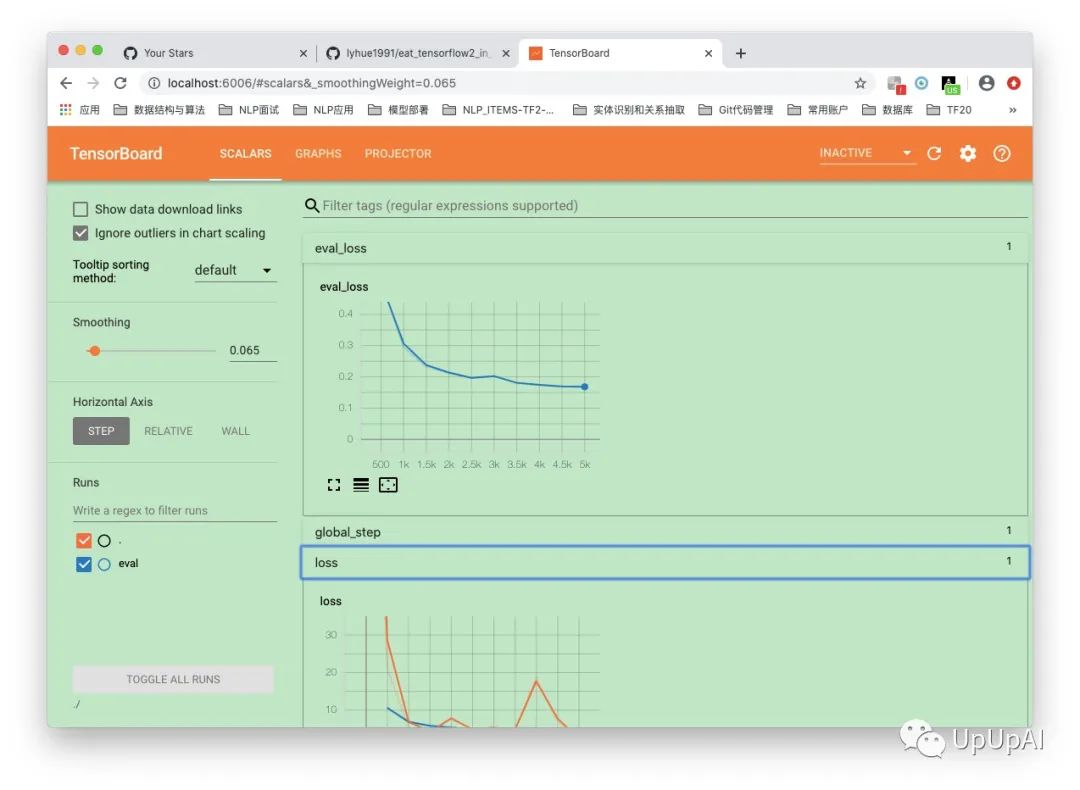
好了,回归正题,上面说到改完英文数据前后处理流程代码后,就开始训练,然后打开了tensorboard每500步骤默默监测损失,发现损失一直降不下去,有点小郁闷,我就纳闷不应该啊,就算我把前面的bert层给固定住了,后面还有一个全连接+CRF呢,参数也不少,也在更新,而且bert预训练模型本身对词的表达已经是相当到位了。后来检查发现,原来在CRF解码之前,代码中使用了tanh激活,这就是问题所在了,相当于是把CRF解码前的结果给限定到了【-1,1】之间了,那Verterbi解码当然要出问题,后来在issue中找到了相同疑问,原来作者忘记改了。找到了问题立马又开始训练,然后我的4G 小显存,电脑风扇呼啦啦的就转起来了,真怕烧坏了,大夏天的。好在只训练后面参数,4小时就训练完了5轮,损失也降下去了。
最后预测了在CoNLL-2003测试集上的结果,实体识别Precision/Recall/F1
分数都达到了85%。这里总结一下,如果是小数据量不建议用bert fine tune,我这里数据不多也不少,有8000多个英文句子,只是因为我没有显存才固定了bert层参数,并不是我想固定住bert权重。为啥呢,因为数据量太少,bert层的参数随着更新可能会过拟合,丢失了泛化学习特征,小数据用 bilstm+crf效果已经很不错了。
3 部署
最后当然是要把训练好的模型拿来部署啦。这里还是首推tensorflow serving。需要在docker中完成部署,首先是要把训练好的ckpt模型转化成saved model pb,也即tf serving支持的模型格式,就是profbuffer。写了部分代码,终于生成了pb,起了tensorflow/serving容器打好了镜像,再启动
docker run -itd -p 8500:8500 -p 8501:8501 tensorflow/serving:bert_ner.
然后就是写客户端请求文件了,上面启动容器的时候暴露了2个调用端口,一个是grpc 8500 ,一个是 rest api 8501。这是两种不同的调用方式,部分调用核心代码如下:
(1)rest api 方式
调用很简洁,但是速度跟不上grpc
def bert_ner(sentence,tokenizer ): def convert(line): feature = convert_single_example(0, line, label_list, 128, tokenizer, 'p') input_ids = np.reshape([feature.input_ids], (batch_size,128)) input_mask = np.reshape([feature.input_mask], (batch_size, 128)) segment_ids = np.reshape([feature.segment_ids], (batch_size, 128)) label_ids = np.reshape([feature.label_ids], (batch_size, 128)) return input_ids, input_mask, segment_ids, label_ids # 处理输入 sentence_token = tokenizer.tokenize(sentence) print('your input is:{}'.format(sentence_token)) input_ids, input_mask, segment_ids, label_ids = convert(sentence_token) input_ids_list = input_ids.tolist() input_mask_list = input_mask.tolist() url = 'http://127.0.0.1:8501/v1/models/bert_ner/:predict' data = json.dumps( { "name": 'bert_ner', "signature_name":'result', "inputs":{ 'input_ids': input_ids_list, 'input_mask': input_mask_list}}) result = requests.post(url, data=data).json() return result(2)grpc方式
调用略微复杂
tf.app.flags.DEFINE_string('server', 'localhost:8500', 'PredictionService host:port')FLAGS = tf.app.flags.FLAGSdef main(sentence, tokenizer): # host, port = FLAGS.server.split(':') # channel = implementations.insecure_channel(host, int(port)) # stub = prediction_service_pb2.beta_create_PredictionService_stub(channel) channel = grpc.insecure_channel(FLAGS.server) stub = prediction_service_pb2_grpc.PredictionServiceStub(channel) # Send request def convert(line): feature = convert_single_example(0, line, label_list, 128, tokenizer, 'p') input_ids = np.reshape([feature.input_ids], (batch_size,128)) input_mask = np.reshape([feature.input_mask], (batch_size, 128)) segment_ids = np.reshape([feature.segment_ids], (batch_size, 128)) label_ids = np.reshape([feature.label_ids], (batch_size, 128)) return input_ids, input_mask, segment_ids, label_ids # 处理输入 sentence_token = tokenizer.tokenize(sentence) print('your input is:{}'.format(sentence_token)) input_ids, input_mask, segment_ids, label_ids = convert(sentence_token) # input_ids = np.expand_dims(input_ids, axis=0) # input_mask = np.expand_dims(input_mask, axis=0) request = predict_pb2.PredictRequest() request.model_spec.name = 'bert_ner' # 这个name跟tensorflow_model_server --model_name="bert_ner" 对应 request.model_spec.signature_name = 'result' # 这个signature_name 跟signature_def_map 对应 request.inputs['input_ids'].CopyFrom( tf.contrib.util.make_tensor_proto(input_ids, shape=[input_ids.shape[0], input_ids.shape[1]])) # shape跟 keras的model.input类型对应 request.inputs['input_mask'].CopyFrom( tf.contrib.util.make_tensor_proto(input_mask, shape=[input_mask.shape[0], input_mask.shape[1]])) result_future = stub.Predict(request, 10.0) # 10 secs timeout # print("result_future",result_future) response1 = np.array(result_future.outputs['pred_label'].int_val) print("label_outcome: ", response1) print(len(response1))





 扫一扫
扫一扫


 3076
3076

 被折叠的 条评论
为什么被折叠?
被折叠的 条评论
为什么被折叠?
 到【灌水乐园】发言





