
XGRAMMAR: FLEXIBLE AND EFFICIENT STRUCTURED GENERATION ENGINE FOR LARGE LANGUAGE MODELS

在这里插入图片描述

论文主要内容与创新点总结

主要内容

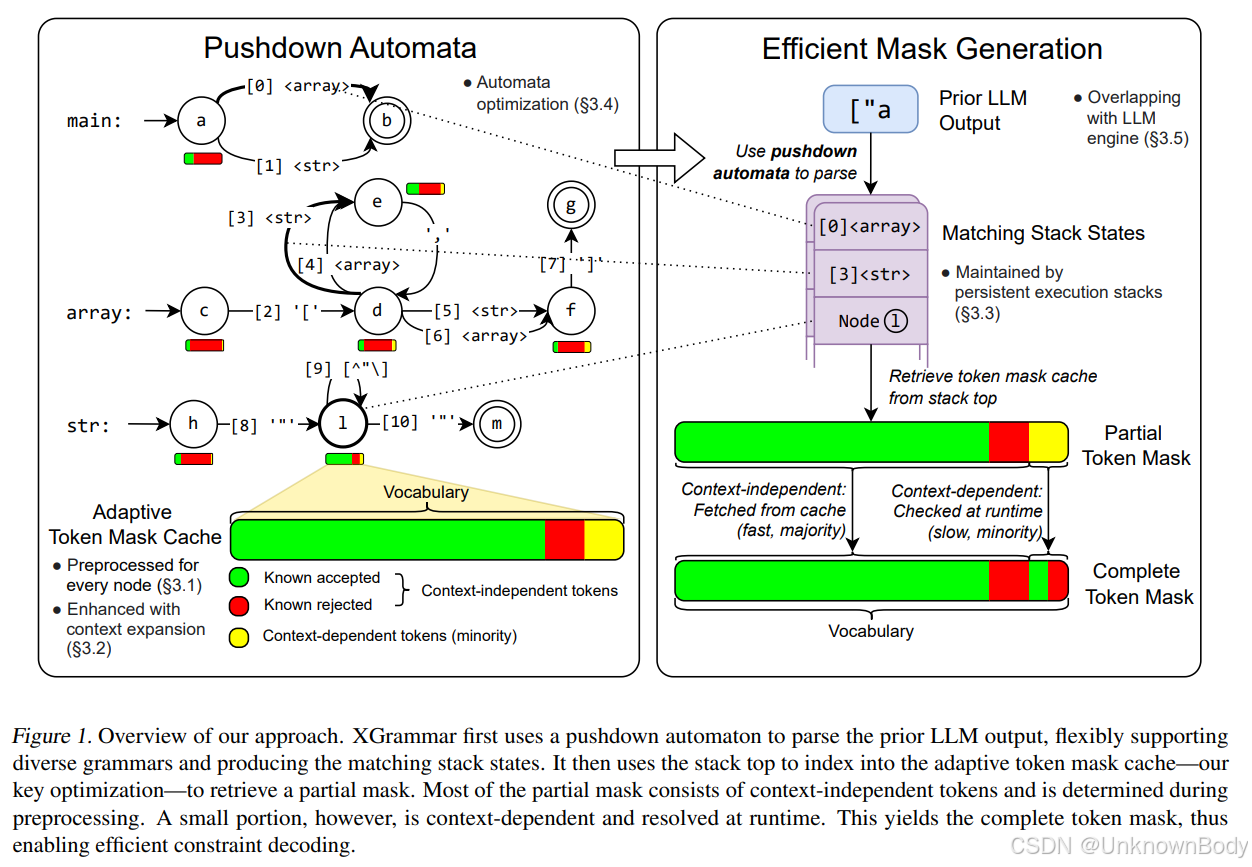
本文提出了XGrammar,一个针对大语言模型(LLM)的灵活高效结构化生成引擎,旨在解决上下文无关文法(CFG)在约束解码中效率低下的问题。XGrammar通过以下方式优化结构化生成:

  1. 词汇分类与缓存:将词汇分为上下文无关token(可预检查)和上下文相关token(运行时解释),构建自适应令牌掩码缓存,减少运行时检查开销。
  2. 上下文扩展:通过预计算规则的扩展后缀,过滤无效的上下文相关令牌,进一步减少运行时处理量。
  3. 持久化栈机制:设计高效的持久化执行栈,支持状态分支和回滚,加速上下文相关令牌的检查。
  4. 与LLM推理引擎协同设计:将文法计算与GPU执行重叠,实现端到端服务中的近零开销结构化生成。

实验结果表明,XGrammar相比现有方案实现了最高100倍的加速,在Llama-3.1模型上结合LLM推理引擎可实现结构化生成的近零开销。

创新点
  1. 自适应令牌掩码缓存:通过分类上下文无关和相关令牌,预计算
### Chain-of-Thought Prompting Mechanism in Large Language Models In large language models, chain-of-thought prompting serves as a method to enhance reasoning capabilities by guiding the model through structured thought processes. This approach involves breaking down complex problems into simpler components and providing step-by-step guidance that mirrors human cognitive processing. The creation of these prompts typically includes selecting examples from training datasets where each example represents part of an overall problem-solving process[^2]. By decomposing tasks into multiple steps, this technique encourages deeper understanding and more accurate predictions compared to traditional methods. For instance, when faced with multi-hop question answering or logical deduction challenges, using such chains allows models not only to generate correct answers but also articulate intermediate thoughts leading up to those conclusions. Such transparency facilitates better interpretability while improving performance on various NLP benchmarks. ```python def create_chain_of_thought_prompt(task_description, examples): """ Creates a chain-of-thought prompt based on given task description and examples. Args: task_description (str): Description of the task at hand. examples (list): List containing tuples of input-output pairs used for demonstration purposes. Returns: str: Formatted string representing the final prompt including both instructions and sample cases. """ formatted_examples = "\n".join([f"Input: {ex[0]}, Output: {ex[1]}" for ex in examples]) return f""" Task: {task_description} Examples: {formatted_examples} Now try solving similar questions following above pattern. """ # Example usage examples = [ ("What color do you get mixing red and blue?", "Purple"), ("If it rains tomorrow, will we have our picnic?", "No") ] print(create_chain_of_thought_prompt("Solve logic puzzles", examples)) ```
评论
添加红包

请填写红包祝福语或标题

红包个数最小为10个

红包金额最低5元

当前余额3.43前往充值 >
需支付:10.00
成就一亿技术人!
领取后你会自动成为博主和红包主的粉丝 规则
hope_wisdom
发出的红包

打赏作者

UnknownBody

你的鼓励将是我创作的最大动力

¥1 ¥2 ¥4 ¥6 ¥10 ¥20
扫码支付:¥1
获取中
扫码支付

您的余额不足,请更换扫码支付或充值

打赏作者

实付
使用余额支付
点击重新获取
扫码支付
钱包余额 0

抵扣说明:

1.余额是钱包充值的虚拟货币,按照1:1的比例进行支付金额的抵扣。
2.余额无法直接购买下载,可以购买VIP、付费专栏及课程。

余额充值




